Protecting plants from cold weather damage
The risk of damaging frost is everpresent here in Louisiana. Most years, temperatures gradually decrease, allowing plants to acclimate or adjust to withstand the cold. If temperatures increase during the winter months, plants may break their dormancy and begin leafing out or flowering. Plants that break bud dormancy become more susceptible to late frost because of their new, tender growth.
 All parts of a plant are susceptible to cold injury, with flowers and fruit being the most susceptible. Normally, very little stem damage and only mild leaf damage will be observed after a cold snap. However, when rapid freezing events or prolonged cold weather occurs, more injures can be witnessed. These injures are caused when the plant cells freeze and shatter. The plant tissue then dies, causing parts of the plant to turn brown and become mushy. Damaged herbaceous tissue that gets mushy and leaks liquid should be removed. Many landscape plants will be fine; they will bud out in spring or return from their roots or crown. The browned plant material may be unsightly, but waiting until spring has arrived before pruning away damaged parts will avoid further damage that may occur from
later frosts. Replanting can take place at this time as well; however,
just like with pruning, less cold hardy plantings should be held off
till the last frost date. In north Louisiana, this date is April 1.
All parts of a plant are susceptible to cold injury, with flowers and fruit being the most susceptible. Normally, very little stem damage and only mild leaf damage will be observed after a cold snap. However, when rapid freezing events or prolonged cold weather occurs, more injures can be witnessed. These injures are caused when the plant cells freeze and shatter. The plant tissue then dies, causing parts of the plant to turn brown and become mushy. Damaged herbaceous tissue that gets mushy and leaks liquid should be removed. Many landscape plants will be fine; they will bud out in spring or return from their roots or crown. The browned plant material may be unsightly, but waiting until spring has arrived before pruning away damaged parts will avoid further damage that may occur from
later frosts. Replanting can take place at this time as well; however,
just like with pruning, less cold hardy plantings should be held off
till the last frost date. In north Louisiana, this date is April 1.
Seasonal Color
Hardy,
cool-season bedding plants that were well established in the garden may
survive. If not, cool-season bedding plants can still be planted now
for color through the spring. Keep in mind that once the temperature
warms, these plants will die off. Cool-season annuals include sweet
alyssum, dianthus, diascia, pansy, petunia, snapdragon and viola.
Wait
until April to plant warm-season bedding plants to avoid late-season
frosts. Warm-season annuals include celosia, coleus, impatiens,
marigolds, petunias and annual salvia.
Trees and Woody Shrubs
Don’t
be too quick to prune right after a freeze event. It can take weeks or
months for all the damage to be evident. Some plants that look damaged
immediately after a freeze may be fine; foliage that looks dark and
water-soaked can turn bright green and healthy again. For large, broken
limbs, immediate pruning may be necessary. Wounds caused by limbs
breaking off can leave openings for pathogens to cause harm. For smaller
trees and shrubs, pruning the damaged area and creating a clean cut is
key to healing. For larger trees or major limb loss, it would be best to
contact a licensed arborist.
To
determine if wood has been injured, check the cambium layer. To do
this, carefully scratch through the bark layer using your fingernail,
but do not scratch a large area or too deeply. Healthy, undamaged
cambial tissue will be green, while damaged tissue will be brown or
black. Prune this wood below the discoloration. The tips of a limb or
branch are more likely to suffer cold injury than older wood. Severely
injured plants may not bud in the spring and may develop a weak
appearance.
Generally,
it is best to delay hard pruning of woody plants until new growth
begins later in the spring, and you can more accurately determine which
parts are alive or dead.
Herbaceous Plants 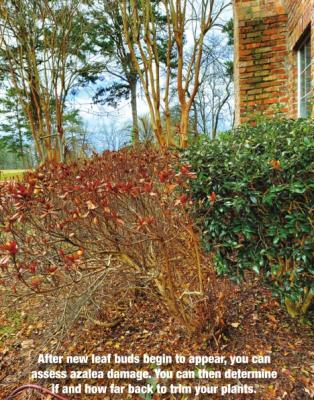
Soft-tissue
perennial plants (also called herbaceous or nonwoody plants) may be
pruned back to living tissue. This includes agapanthus, cannas, day
lilies, elephant ears, gingers and hostas. Pruning is optional and is
done more to neaten things up than to benefit the plants. However, if
the damaged tissue is oozy, mushy, slimy or foul smelling, it should be
removed as these are signs of tissue rot.
Lawn
If
your lawn was overseeded with annual ryegrass, continue to mow
regularly. As warm temperatures increase, ryegrass will die off like
other cold-season plants. This normally coincides with warm-season
turfgrasses coming out of dormancy and turning green.
Applying
a pre-emergent herbicide to combat spring and summer weeds can be done
now, but fertilization should wait until mid-April. Fertilizing now will
do no good and could actually help pathogens in your lawn thrive and
cause more damage.
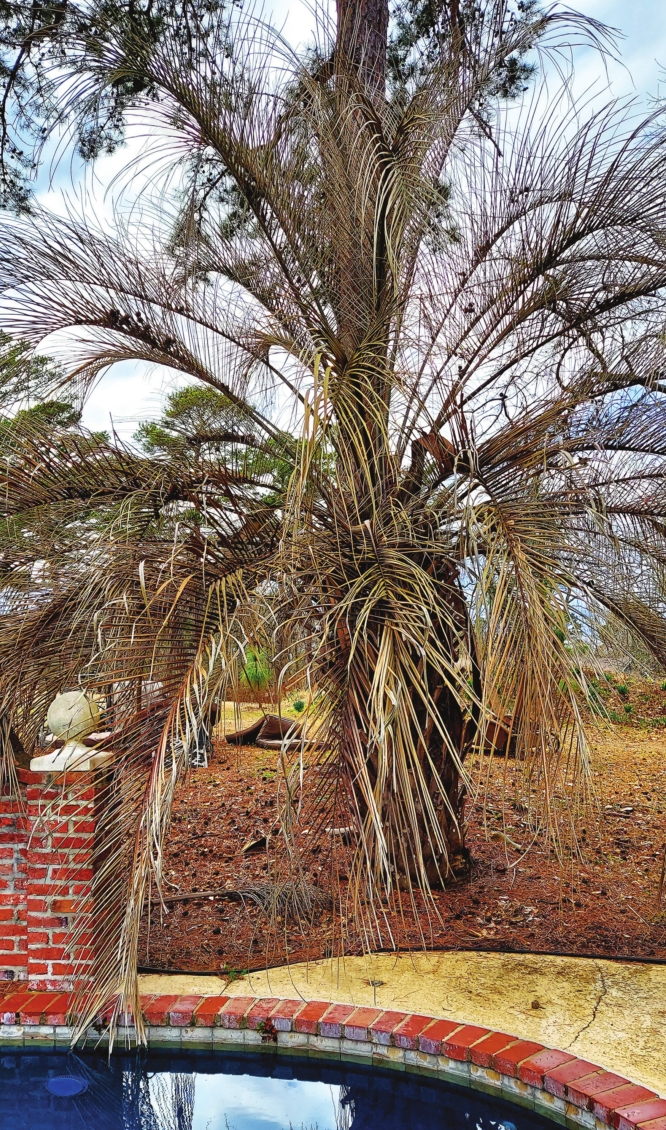
Palms
If
temperatures in the low teens or single digits occurred and it stayed
below freezing for days, there are likely to be losses. Prune off brown
fronds of coldinjured palms anytime in March. Recovery from frost damage
in palms depends on whether the growing point at the top of the trunk
survived. Palms cannot regenerate a new growing point if the original
one dies. Be patient for them to sprout new growth.
After
new leaf buds begin to appear, you can assess azalea damage. You can
then determine if and how far back to trim your plants.
New
fronds may not appear until July. If no new growth has appeared by the
end of July, the palms are likely dead and may be removed. Sago palms,
while not true palms, suffer damage to their fronds just as the true
palms do. But if the growing point at the top is killed, sagos can send
out new growth from lower on the trunk, and you may be able to salvage
them that way.
Mark A Wilson is the assistant extension agent and horticulture specialist at LSU Ag Center Northwest Region.


