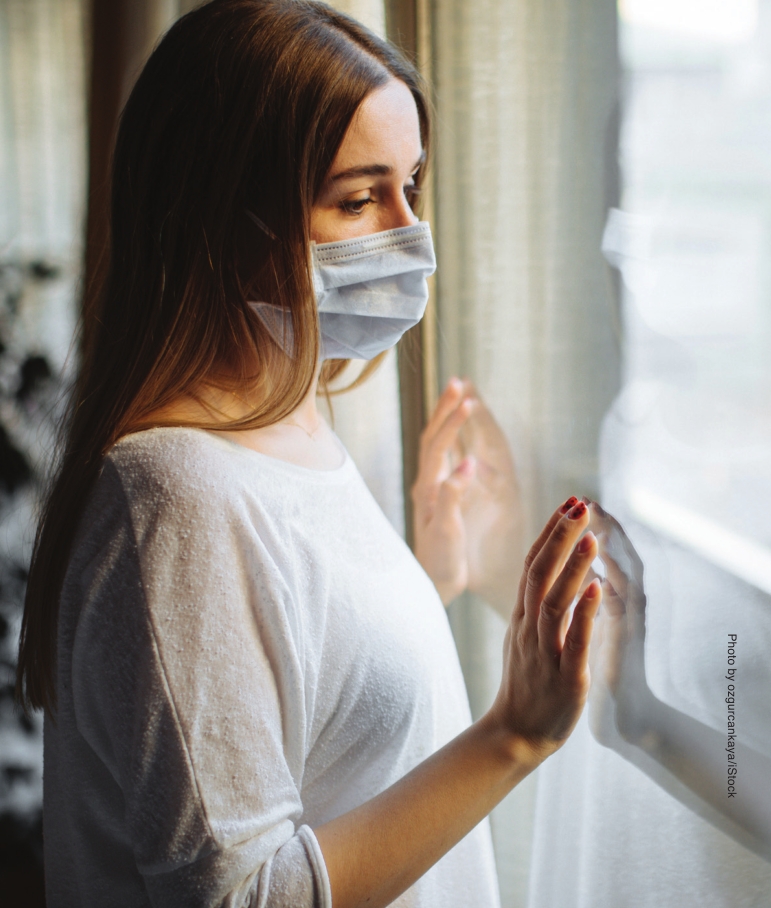
Finding ways to thrive during the pandemic
2020 has brought us so much to deal with. In January, as a counseling practice, we were already full. We were already dealing with a 200% increase in teen self-harm — a 19% increase in first-year college students being diagnosed with anxiety disorders and depression. Pornography addiction, affairs and betrayal had become normative, and we are increasingly desensitized to most of it.
I was going around the country talking about social media’s pitfalls and the risks in using it. As a practice of 17 clinicians in three locations, we felt like we had a pulse of what is destroying our society, and the outlook wasn’t good. But as professionals and clinicians, we had a plan.
We always attempt to help people find balance in their life and get to the root causes. We tell people to exercise. To go out with friends. We ask people to go to the gym and eat better. We give them coping skills galore. We treat symptoms while trying to dig out the roots.
One of the most unfortunate and unique things about COVID is that, as a country already in trouble in the mental health department, it stripped us of all the usual positive coping mechanisms. We had to deal with the incredibly difficult position we find ourselves in as Americans. Gyms were closed; church was canceled; community events, parks and vacations were canceled. You couldn’t go to yoga, jujitsu or any other group activities to relieve life stressors. Heck, we couldn’t even see our therapist face to face.
This has also been unique for us as helping professionals. For maybe the first time, we are all actively surviving the same stressors to our lives while simultaneously trying to help others out of it with no coping skills of our own. With so many things, we can normally say how we have seen people make it out of x, y or z. We can use examples and express hope because we have seen this before, and as I said, we have a plan.
But the pandemic has done a number on us as well. We can no longer see a way back to normal. As helpers, we are trying to figure out school for our kids, isolation fatigue, fears and anxiety and our own faith struggles at the same time as our clients. We have to social distance and watch our friends and family fight
alone. As frontline workers, we live in confusion about what is right
and what we should believe about masks or aliens or which “lesser of two
evil” political choices we will make. Most of us have not gotten a
break from work. If anything, our workload has increased.
As
a counselor, the joy of my job is that I work with some of the
strongest, most resilient people in the world. Every day I see people
finding ways to survive and thrive through this intense and seemingly
impossible season in American and world history, and it has brought me
hope and confidence that we will make it.
I
have seen us all forced to realize that our careers, bank accounts or
ability to perform don’t matter when everything is stripped away. For
the first time, we have been course-corrected to focus on playing at
home with our kids, going on walks with our spouses, and finding peace
in the simple things of life. We have dusted off home gyms, scraped
together meals, and used our grills and stoves more than ever. We have
gotten on our knees and in the Word to find an intimate relationship
with our maker without the classic Sunday morning advantages or
distractions.
I
have seen Americans from all socioeconomic and ethnic classes grow
stronger as the world seems to be falling apart around us. The same
thing is to be said about the first responders and frontline workers we
see in counseling.
How
is this possible, and how can this be possible for you? One thing is
common for all these 2020 survivors. They have minimized their social
media use, if not deleted it completely. They have picked up reading and
learning to be mindful. They are finding real, vulnerable, face-to-face
relationships. (Six feet away, of course.) The people who are thriving
and not just surviving 2020 are seeking help. They are taking this time
to re-evaluate their focus; they are changing their paradigms.
To
come out of this stronger, you must find out what your foundation is
built on, and if it’s sinking sand, you have to build a new one. Build a
foundation that doesn’t seek to find your security or worth in
possessions or external sources, but a foundation that tells you that
you are loved and secure in God’s care. That what matters the most to
you is that you have friends, family and a community that you fight your
battles with together. Stop treating symptoms and find the roots and
rip them out and replant ones that lead to growth and restoration.
We
have two months left in this dumpster fire of a year. I beg us all to
end it well. To hold up four fingers for the fourth quarter and fight
for our lives, because for many of us, they are at stake. The amazing
thing is that we don’t have to do it alone. Find a counselor, pastor or
spiritual leader and start working to put the pieces back together.
Friends, there is hope. Remember what Jesus said in John 16:33: “I have
told you these things, so that in me you may have peace. In this world,
you will have trouble. But take heart! I have overcome the world.”
Clint
Davis MS, LPC, CCTP, CSAT, CCTP, EMDR provider, director of recovery
for the Hub:Urban Ministries. Feel free to give us a call 318-562-6903,
or visit us at www.clintdaviscounseling.com.


