Plan ahead, consult professionals before shopping
Buying a house often is the single most significant investment a person makes. It’s a serious investment that comes with a serious commitment — a mortgage. And while the word “mortgage” translates from French as “death pledge,” it doesn’t have to feel so somber. Understanding what a mortgage is and finding the right lending partner can smooth the process of bringing that dream of owning a house to life.
We asked mortgage officers from several banks, credit unions and mortgage brokers some questions to help potential homeowners understand the process of acquiring a mortgage, as well as some of the lending options available.
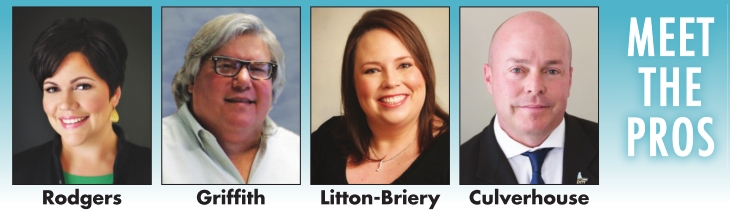
Who we interviewed: Senior Loan Officer Tara Rodgers, Goldwater Bank; Jim Griffith, senior vice president, Standard Mortgage Corporation; Owner/Broker Jaclyn Litton-Briery, Litton Mortgage; Mortgage Loan Officer Trey Culverhouse, AN- ECA FCU; and Mortgage Supervisor Gary Hairston, Barksdale FCU.
Question: What does a mortgage officer provide to the home buyer?
Tara Rodgers, Goldwater Bank:
Here at Goldwater Bank, we are true mortgage bankers. We fund our own loans and have our own underwriters so there is no middle man involved. We simply follow the program guidelines without the overlays that some other companies have. Our number one goal is to make the home buying process simple and streamlined for all parties involved. We also do not charge origination fees, which helps keep costs low and affordable for all buyers.
Jim Griffith, Standard Mortgage Corporation: Guidance and a little hand holding. Every homebuyer has unique needs. Our loan officers are veteran licensed professionals that take pride in giving you the mortgage information, loan options and convenient assistance you’re looking for.
Jaclyn Litton-Briery, Litton Mortgage: We assess a home buyer’s unique situation and work hard to meet their individual needs by helping them choose a loan product and ensuring they get a low-interest rate with minimal fees. At Litton Mortgage, we pride ourselves on being able to offer nationally competitive loan products and rates with local, personal service and quick turn times. Litton Mortgage also has a wonderful “Heroes Program,” where we waive lender fees and guarantee the lowest interest rate for all active military and veterans, law enforcement, firefighters, first responders, medical professionals, teachers and ministers.
Trey Culverhouse, ANECA Federal Credit Union: A mortgage broker/banker is the licensed individual who oversees the entire process of the loan, from start to finish. We work with the borrower to make sure the transaction is as smooth as possible for the purchase or refinance transaction. This entails teaching or coaching the necessary information for an easy transaction and putting them in the proper loan program for their specific needs.
Gary Hairston, Barksdale Federal Credit Union: As a mortgage lender/ loan officer, we help the home buyer to understand the different types of mortgage products available and assist with their mortgage request.
Q: Explain the various available mortgage programs. What factors should a buyer consider when choosing between mortgage products?
Rodgers: There are so many programs available such as FHA, VA, conventional or rural development. We also offer financing for rehab loans, manufactured homes and new construction one-time close programs. Whether you are looking to purchase the home as your primary residence, second home or investment property, we have programs available. The key to finding the best program is definitely communication. With more than 16 years of lending experience, the more I know about the buyer and their specific needs, the more I can help them find the best program. Often, the easiest program for the loan officer isn’t the best program for the client, so it is so important to work with a loan officer who goes the extra step to help the client consider all available options.
Litton-Briery: We have VA loans with zero down for eligible active military and veterans. We also offer USDA Rural Development loans with zero down. Conventional loans start as low as 3% down, and FHA loans at 3.5% down. We have programs for people to purchase primary residences, second homes and investment properties. We can help people purchase or refinance. We even have loan programs that allow for cosigners.
There are numerous loan programs available to borrowers. You have the traditional conventional loan programs provided by Fannie Mae (FNMA) and Freddie Mac (FLMC). There are government programs available also such as FHA, VA and rural development loans. There are also specific types of programs within these such as lower down payment loans. Rural development requires a zero down payment, conventional has 3% down payment option, and FHA has a 3.5% down payment requirement. VA loan programs also offer tremendous benefits to those veterans who qualify. They have a zero down payment requirement and no PMI (Private Mortgage Insurance).
Griffith: There
are many different mortgage products, and your expert loan officer can
help you choose the right mortgage to meet your financial needs. Loan
products may differ in term, whether or not the interest rate is fixed
or adjustable, and certain income or down payment requirements. Some
loan products are backed by the government. Some programs can provide
financial assistance to help with down payments and closing costs.
The
term of your mortgage depends on the loan that you choose. Your loan
officer will help you determine which loan product is best for you.
There are short-term options, which have 10- to 15-year terms as well as
long-term options that extend to 30 years. If you opt for a longer
term, your monthly payment will be less; however, you will pay more
interest over the life of the loan.
Hairston: We
have conventional purchase and refinance options for 15-year, 20-year
and 30-year terms with 5% down and in some cases as low as 3% down. We
also have FHA purchase and refi with 15-, 20- and 30- year terms with as
low as 3.5% down. Lower credit scores are taken into consideration. For
active and retired military personnel, we offer VA loans, with up to
100% on purchases and 90% on refinances, with the same 15-, 20- and
30-year terms. A Construction to Perm/one time close loan offers up to
95% of the cost of construction or appraised value. Savings go to the
borrower with a one-time closing.
We
also have second mortgages with terms available up to 15 years. They
come with fixed interest rates and fixed monthly payments. The funds can
be used for bill consolidation, home improvements, etc. Another option
is a Home Equity Line of Credit (HELOC). They come with variable
interest rates. Monthly payments are calculated on the principal balance
owed. The funds are readily available to the borrower for any reason.
Q: What do you have to offer first-time home buyers?
Rodgers: Knowledge
and guidance. There are multiple layers that determine the borrower’s
ability to purchase – credit score, debt-to-income ratio, credit
history, etc. And all of these factors help determine what’s best for
the buyer. Of course, there are several programs available that offer
100% financing, which are great for first-time home buyers. We have
programs that only require a minimum of 580 credit score. Most programs
also allow gift funds, which helps clients who have some money saved up
but maybe not enough.
Litton-Briery: Litton
Mortgage waives all lender fees for first-time homebuyers and
personally walks through each step of the process with them to ensure
they make a great, informed decision and understand each part of the
process. If there are obstacles with approving for a home loan
immediately, we do not say “no.” Instead, we say, “Let’s work together
on a plan.”
Culverhouse: First-time
home buyers have the ability to do a variety of loan programs from
rural development, conventional, FHA and VA (if they so qualify). All of
these can be worked to have the least amount of down payment possible.
The mortgage broker/ banker will make sure they are put in the best
program to fit their needs.
Griffith: Very
popular mortgage programs are available for participating lenders
through the Louisiana Housing Corporation. These programs can provide
competitive 30-year fixed-rate loans with assistance for down payments
and closing cost. Reduced fees are also often involved.
Hairston: Our
Home Ready loan comes with down payments as low as 3% down with
flexible sources of funds and lower mortgage insurance rates.
Conventional loans come with down payments as low as 3%. FHA loans have
down payments as low as 3.5%. For first-time buyers, we have lower
qualifying credit scores.
Q: What does a buyer need to be prepared for to prequalify?
Rodgers: Getting
started is so simple. Applying for a mortgage is free, and there’s no
obligation. Typically, we just need the following documents: last two
years’ W2s, two most recent pay stubs and two most recent bank
statements. Best case – they can qualify for a mortgage. Also, owning a
home is usually cheaper than renting. Worst case – they do not qualify
right now, but we give them suggestions to get on track to buy later.
Culverhouse: When
preparing to qualify for a mortgage, the first thing the buyer needs to
do is be aware of their budget. They will also need to understand the
documentation necessary for the approval process. The broker or banker
will let them know exactly what documentation is required from
them for the prequalification. But, the list includes standard
information, such as two years of tax returns, two years of W2s (or
1099s), two most recent pay stubs from employment, two most recent bank
statements, driver’s license and Social Security card (if available).
Hairston: Pay stubs covering the most recent 30 days of employment, two months of bank statements, two-year work history.
 Griffith: This
step will involve providing detailed information about your income,
assets and more. This usually includes a credit report, stubs from your
paychecks, income tax returns, W-2 forms and bank statements.
Griffith: This
step will involve providing detailed information about your income,
assets and more. This usually includes a credit report, stubs from your
paychecks, income tax returns, W-2 forms and bank statements.
Q: What does a buyer need to avoid while applying for a mortgage?
Rodgers: There
are definitely some things that you should not do when purchasing a
home. You don’t want to apply for new credit or make late payments on
existing accounts. You don’t want to change your marital status or
employment. And you don’t want to move substantial amounts of asset
funds among your accounts. I always go through these items with clients,
but I also encourage them to call me if something comes up and they are
in doubt if it will affect their loan approval.
Griffith: An
applicant should avoid feeling nervous about the process. Your
information remains secure and confidential. Underwriting decisions are
based on several basic factors, including credit, income, debt-to-income
ratios, cash savings and the property appraisal. Your loan officer is
ready to work with you when issues arise during the application process.
Litton-Briery: It’s
best to avoid shopping for a home until you are prequalified for a home
loan and comfortable with the payments on the price range of homes
you’d like to look at. We recommend avoiding the following: incurring
new debts, making deposits that may be difficult to source (such as
cash), making career changes without talking to your mortgage
professional first, diminishing assets, or missing payments on any
obligations. If you plan to get married, it’s also important to mention
this, as different loan programs could look at spouse obligations in
different ways. It’s best to always consult your mortgage loan officer
and Realtor during the process before making any moves to ensure it will
not affect your home loan approval status.
Culverhouse: The
absolute biggest two “no-no’s” during the mortgage process are changing
employment and taking on new debt. These two things can absolutely make
the transaction stop in its tracks.
Hairston: Avoid multiple credit inquiries, incurring additional debt during the loan process. Do not change employers.
Q: What do buyers need to know that they might not know about the mortgage business?
Rodgers: Buying
a home doesn’t have to be scary or difficult. So many people are
renting because they simply just assume they won’t qualify and never
try! Do your research on which lender is the best fit for you. Check
online reviews for the particular loan officer/ lender (Zillow, Google,
Facebook) and simply call and speak to the loan officer directly!
Realtor recommendations for finding a lender is helpful; however, your
real estate agent may not know your particular scenario. Buying a home
is the largest transaction that most make in their lifetime, so choosing
a lender that fits your needs is key.
Litton-Briery: Buying
a home is one of the biggest financial decisions most people will make,
so it is very important to work with a local company that you can
trust. Make sure when you are shopping to compare “apples to apples.”
It’s also important to feel comfortable with the loan officer and real
estate agent that you will be working with. You shouldn’t feel pressured
during the process, but you should feel informed and taken care of.
Griffith: Mortgage
loan officers are licensed and follow a strict code of ethics. Our
business is highly regulated, with strict rules to follow regarding the
mortgage instruments, rates, fees and timing of disclosure. Most loan
officers are paid on a commission and work hard and long hours to assist
you with your home purchase.
Culverhouse: Getting
a mortgage may just be easier to obtain than people think. There are a
lot of programs available, and a professional can assist in obtaining
financing for your new home, and you may just think it’s impossible. You
never know if you qualify until you try.
Hairston: Mortgage
rates are determined by the credit score of the borrower. The mortgage
process can take between 30 and 45 days, depending on information
received from the borrower, appraisal, title work, etc. You cannot
lock-in an interest rate without a property. Will the borrower’s loan be
sold? Who will be servicing the loan? The difference between a mortgage
company and a mortgage broker.