How to help your child breath easy
Asthma is one of
the leading chronic disease in children, which is characterized by
inflammation (swelling) and narrowing of the airways, and increased
mucus production resulting in obstruction to breathing. Asthma has a
genetic basis but greatly influenced by environmental factors.
Currently, about six million children under the age of 18 have asthma in
the United States. Asthma attacks can be scary, often requiring
treatment in an emergency room, hospitalization and sometimes admittance
to the intensive care unit. Proper treatment and control of asthma are
crucial to have a healthy and happy life for our children.
Symptoms of asthma include wheezing,
cough, trouble breathing and chest tightness. Typically, a child will
have recurrent episodes of wheezing, coughing or both. Parents who have
or had asthma are a major predisposing factor. Other conditions commonly
associated with asthma include eczema, allergies and/or chronic rhinitis
symptoms. The constellation of all these is called atopic diseases. The
National Asthma Education and Prevention Program (NAEPP) has published
guidelines on approach, diagnosis, classification and management of
asthma in adults and children.
The diagnosis of childhood asthma is
mainly clinical. A lung function test or breathing test is performed to
measure the severity of asthma. This test is known as spirometry and
can be done at a specialized pediatric pulmonary center that takes care
of children with lung diseases. We attempt to do spirometry
from the age of 5 years old. Good patient effort and cooperation are
required for this test. Spirometry helps us to understand children’s
lung health and is an important tool to monitor the effectiveness of
asthma treatment. If asthma is suspected based on the typical
presentation as mentioned above, we need to classify the severity of
asthma. Based on the frequency of day/night symptoms, need of rescue
medications, activity limitation, spirometry when available, and the
number of recent asthma exacerbations, asthma will be classified as
intermittent or persistent. Persistent asthma is further classified into
mild, moderate or severe types.
Once asthma is diagnosed and classified, we will initiate appropriate
management for the child, which will be discussed in detail with the
family, and a comprehensive “asthma action plan” will be handed over.
This helps families to provide the long-term asthma care, as well as
emergency treatment at home in case of asthma exacerbation. Mild
exacerbations can be managed at home as per recommendations given by the
asthma care team, which helps to avoid taking the child to an emergency
room or urgent care. However, there are certain warning signs that
should prompt the parents to take the child to the ER immediately. All
these are explained in detail in the action plan.
Asthma management
is very comprehensive as recommended by the childhood asthma care team,
which involves medical providers, nurses, respiratory therapists and a
social worker if required.
Medications:
Medications
include controller and rescue medicines. Controllers work over time to
decrease the airway inflammation and to prevent asthma attacks. Rescue
medications are used for immediate symptoms relief. These medications
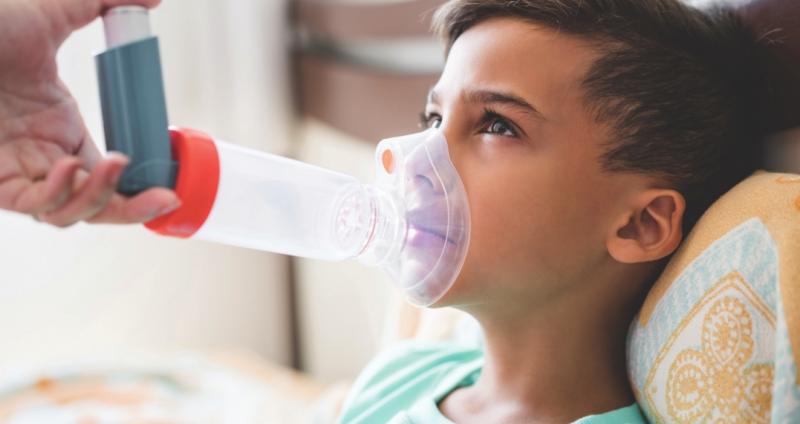
can be given as a mist through a machine called a nebulizer or via an
inhaler. The inhaler should always be used along with a chamber known as
a spacer device to avoid the medication getting deposited into the
mouth and throat. In infants and small children, the spacer is used with
a facemask, and in older children, it is used with a mouthpiece. Proper
technique of using the inhaler is essential to ensure adequate delivery
of the medication to the lungs. A detailed demonstration of this is
usually done in the asthma care center.
Triggers:
Finding
and avoiding asthma triggers are another essential aspect of care.
Common triggers include viral respiratory infections, cold weather,
dust, smoke exposure, mold or pollen. Many children with asthma and
allergies may have exacerbations during pollen season, so parents are
advised to be careful and be prepared about this. Secondhand tobacco
smoke exposure is one of the common asthma triggers in children, and
even the smell of tobacco from a person’s clothes can elicit symptoms,
so parents are strongly advised to avoid any kind of smoke exposure to
their child.
Co-morbidities:
There
are certain conditions seen in association with asthma. Finding and
addressing these are very important for achieving adequate asthma
control. These conditions include allergies, eczema, chronic rhinitis
and sinusitis, acid reflux, obesity or sleep apnea. Sleep apnea usually
presents with snoring, observed pauses in breathing, and episodes of
choking or gasping for air.
After
assessing and addressing all of these, a detailed asthma management
plan is formulated which will be discussed with the child and the
family. The asthma action plan will then be handed over, and the child
will be followed up with frequently until adequate asthma control is
obtained. Medications will be adjusted up or down according to symptoms
and lung function testing when available. Strict adherence to the
medication regimen as prescribed is crucial as missing several doses of
controller medication may lead to asthma exacerbation.
The
Pediatric Pulmonology Asthma Center at the Ochsner LSU Health
Shreveport Academic Medical Center has a dedicated team to take care of
infants and children with asthma. Our goal is to help children achieve
adequate asthma control, prevent exacerbations and educate families
about all aspects of asthma care. We are equipped to perform lung
function testing in children (age 5 and older based on the child’s
cooperation), provide comprehensive asthma education, and teach
techniques of inhalation devices.
Sasikumar
Kilaikode, MD, is chief of the Division of Pediatric Pulmonology and an
assistant professor of pediatrics at LSU Health Shreveport. He is also
the associate director of the Pediatric Cystic Fibrosis Center. He is
certified by the American Board of Pediatrics in general pediatrics and
pediatric pulmonology and is certified in neonatal resuscitation and
advanced pediatric life support. For more information, please call
318-675-6094.


