[INSIGHT]
...on the upcoming city council races
Most of the hot-stove political conversations this year have been, to date, focused on this year’s mayor’s race. Not to be lost in the glare of the top elected spotlights are the seven council races that will also be on the November ballot.
There will be at least three new faces on the council once the dust clears from the primary and runoff elections. Jeff Everson (District B), Oliver Jenkins (District C) and Michael Corbin (District D) have “termed out.” They have served two consecutive four-year terms and cannot seek re-election this year.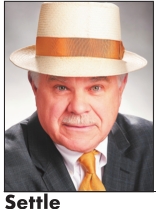
Willie Bradford (District A), James Flurry (District E), Stephanie Lynch (District F) and Jerry Bowman (District G) are expected to run again. Lynch wore a “Re-Elect Stephanie Lynch City Council District F” T-shirt to a January council work session. Flurry had a re-election fund-raiser on March 6.
Voter
demographics are always important, and especially this year when one or
two districts could be “the swing district.” This reference is to
“swinging” the council from a white to a black majority. District A is a
solid black district, with 81
percent
of the voters African-American, 15 percent white and 4 percent others.
By party, 69 percent of the voters are Democrats, 10 percent are
Republicans, and 21 percent are other party. Bradford upset the
incumbent Rose McCulloch when he ran in 2013.
District
B is the likely district to elect its first African-American council
representative. Voter registration as of March 1 of this year reflected
57 percent registered black voters, 38 percent white voters and 5
percent others. The party breakdown is 55 percent Democrat, 28 percent
others, and 17 percent Republican.
Everson
defeated black candidates in both his elections in the runoffs.
District C is the largest white voter district. Voters are 79 percent
white, 16 percent black and 5 percent others. By party, the registration
is 43 percent Republican, 30 percent Democrat and 27 percent others.
Jenkins ran unopposed for re-election in 2013.
District
D has the largest number of registered voters with 4,000 more voters
than the next two largest districts (G and E). Voter composition is 73
percent white, 21 percent black and 6 percent others. By party the
voters are 48 percent Republican, 30 percent Democrats and 22 percent
other party.
District
E could also be a swing district. The incumbent Flurry is a white
Republican. The ratio of voters by race is 51 percent white, 45 percent
black and 4 percent others. Party-wise, 51 percent of voters are
Democrats, 45 percent are others, and 4 percent are Republicans.
Flurry
swamped an African-American candidate in his 2013 runoff victory.
District F has the largest black concentration of voters of the seven
districts. Voters are 90 percent black, 7 percent are white, and 3
percent are others. By party, 72 percent are Democrats, 24 percent are
others, and 4 percent are Republicans. This election could be a rematch
of the Lynch-James Green 2013 battle.
District
G voters are 78 percent black, 18 percent white and 4 percent others.
By party, 69 percent are Democrats, 11 percent are Republicans, and 20
percent are other party. Bowman was a surprising primary victory over
several opponents in 2013.
Not
to be confused with the raw registration voter numbers are the numbers
of “active voters.” In many districts, voters on the rolls have either
moved out of the district and not reregistered or have become virtually
nonexistent at the polls.
Those
seeking office have many filters to utilize in deciding which voters
should be actively pursued and what method of communication is the best
in today’s world of social media.
John
E. Settle Jr. has been a resident of Shreveport since January 1977. His
articles appear regularly in local publications. He can be reached at
742-5513 or e-mail to: [email protected].


