Governor, Legislature reach budget deal
It was an exercise in good government – the way government is supposed to work. I’m talking about the recently concluded special session of the Legislature, called to plug a $304 million hole in the current fiscal year’s budget. It took all of the 10 days to piece the deal together, and it was finished with just hours to spare. It wasn’t all milk and honey. There were disagreements between the governor’s office and the House of Representatives, in particular, but in the end, compromise was reached, and a deal was struck that left most satisfied.
Democratic Gov. John Bel Edwards and the Republican-majority Legislature worked hard to hammer out a plan with compromise being the key on both sides. The governor praised the passage of the compromise bill that makes strategic spending cuts and adjustments to eliminate the $304 million budget shortfall.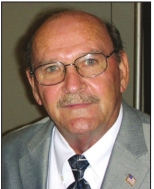
The agreement spares critical programs, such as higher education, K-12 education, public safety and law enforcement from deep, unnecessary mid-year cuts and minimizes cuts to the state hospitals. The final agreement represents a compromise between Gov. Edwards’ initial proposal and legislation passed by the House of Representatives.
In the governor’s original plan, it called for tapping the state’s Rainy Day fund for $119 million. But House Republicans balked at that idea. After much give and take, and after learning how devastating cuts would be without using Rainy Day funds, a figure of $99 million was decided upon. It turned out to be the magic number, the governor and Senate agreed, and House Republicans reluctantly approved of that amount in the final bill. But not before they got something in return.
House Speaker Taylor Barras, R-New Iberia, required the Senate to pass his bill that will unlock some dedicated funds to allow more budget flexibility in the future. It would consist of implementing a three percent acrossthe-board spending cut to numerous funds starting July 1. Senate President John Alario, R-Westwego, was not keen on the measure, but supported it in the spirit of compromise.
Rep. Lance Harris, R-Alexandria, said it was something that should have been done last year, but hopefully sets things up for later this year. But Senate Finance Chairman Eric LaFleur, D-Ville Platte, said he wasn’t sure it would be possible for the Edwards Administration to make those kinds of across-the-board cuts. It’s an issue that will definitely take center stage in the regular session of the Legislation, which begins on April 10.
“This final plan is a responsible, bipartisan solution that makes the spending cuts and budget adjustments we need, while still preserving critical programs the people of Louisiana rely upon. I appreciate the hard work of many of the members of the Legislature who were willing to work together to solve this problem,” Gov. Edwards said.
Among the cuts include spending reductions for statefunded hospitals that treat poor and uninsured people, as well as rural hospitals. Cuts were made to the Department of Education, State Police and local offices that offer mental health and addiction treatment. The Department of Corrections, which oversees prisons, was not touched, as Gov. Edwards had proposed. Higher education and the popular TOPS scholarship program will not suffer any cuts.
A side battle took place between the governor and the House over proposed cuts to the budget of Attorney General Jeff Landry. It turned into a fight since Landry has made noise about running against Edwards in 2019, though no official declaration has been made. Edwards’ proposed a $4 million cut to the attorney general’s budget, but it was compromised at $2 million, which Landry was willing to take.
Despite the fact that Gov. Edwards and the House were able to reach agreement in this special session, they will likely butt heads when the regular session rolls around. Those budget negotiations will be much more difficult as they attempt to change tax law and cut spending, all the while bucking powerful special interests groups. But the governor remains optimistic, especially after being able to reach an agreement in the special session. One thing everyone can agree upon is that Louisiana’s highest-in-the-country sales tax must be reduced, but how to accomplish that is the big problem.
“We have more hard work ahead of us in April when we begin the process of structurally reforming our budget and tax system to reduce the frequency of mid-year deficits. That is going to take the input of every member of the Legislature, as well as the public. If we are successful, we will put Louisiana on a path to long-term prosperity that eliminates the frequency of mid-year budget cuts that limit our ability to provide critical services to our people,” Edwards said.
All in all, it was a productive special session. “You know you are at a good place when not everyone is totally happy,” Edwards said in his news conference after the session. “Obviously, I feel very good about where we wound up,” he added.
Lou Gehrig Burnett, an award-winning journalist, has been involved with politics for 44 years and was a congressional aide in Washington, D.C., for 27 years. He also served as executive assistant to former Shreveport Mayor “Bo” Williams. Burnett is the publisher of the weekly “FaxNet Update” and can be reached at 861-0552 or [email protected].


