
Many people struggle with this dangerous addiction
 There is the Susan G. Komen Race for the Cure for breast cancer, the American Diabetes Association’s Step Out, Walk to Stop Diabetes, the Healthy Heart Run Walk, an ALS Recovery Fund 10K Run & 5K, the Jingle Bell Run/Walk for Arthritis, and on and on. These are all wonderful events for important causes, but where is the fundraiser for people suffering from drug and alcohol addiction?
My point is that people struggling with drugs and alcohol are stigmatized. But they are people, too – deserving of love just like anyone else.
You may say, “They chose to use that drug.” Maybe. But many times life circumstances lead them to try the drug in the first place. They may have started using drugs to take away something unpleasant, to cope with sadness or depression, to deal with stress or anxiety, and for many post-traumatic stress disorder.
Does this make them “bad” people?
Should we shun them just because they made that wrong choice?
No!
We all enjoy things that make us feel good. And many people start using
drugs in their teens, when their brains and a real understanding of the
consequences of their choices have not fully developed.
Let’s
consider other life choices. What about the person with lung cancer? Do
we arrest him or her because she made the bad choice to smoke
cigarettes? Or do we try and find a cure for lung cancer?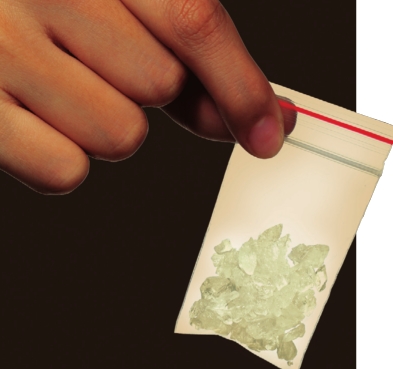
Heart
disease can also be caused by bad choices such as an unhealthy diet,
lack of exercise, being overweight and smoking. Do we arrest someone
with heart disease because they made the choice of an unhealthy diet and
did not exercise enough? No, we try and find a cure for heart disease.
Should
people with Type 2 diabetes be placed into prison for eating candy?
Should people with hypertension be put into prison for eating fried
foods? In my opinion, the focus and priority investment should be on
prevention and treatment, not incarceration.
Law
enforcement reporting and local treatment information indicate that
meth trafficking and abuse continue to increase throughout the United
States. Localized public health officials indicate that meth use is
increasing. Ask any meth user and they will tell you that meth is
everywhere. Most of us don’t think of meth users as soccer moms, doctors
– people from every socioeconomic class. But they are.
Most
meth users don’t have rotten teeth or scars all over their faces. They
look just like the girl next door – a mother, a sister, a daughter, the
woman working at the store.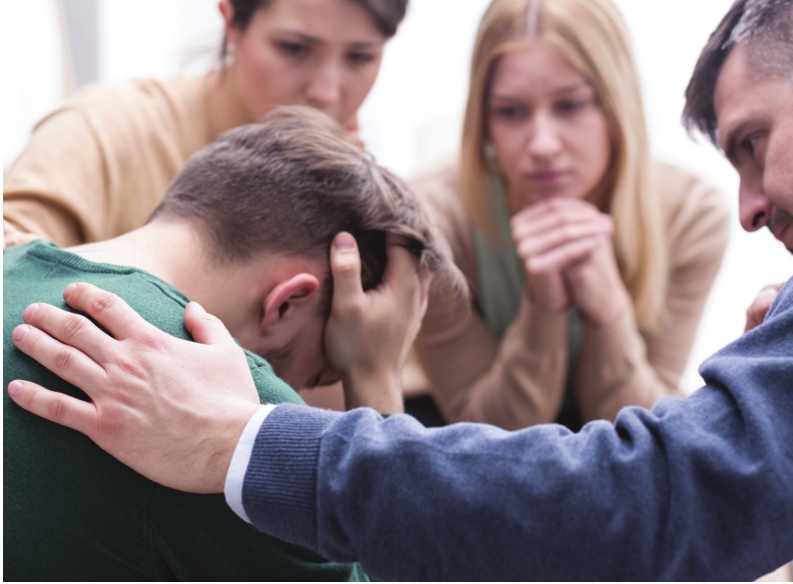
There
are many types of treatment programs – medically facilitated (like the
medicines-based pharmacotherapy that I have been developing for almost
30 years), psychotherapy, 12-step programs, faith-based programs, or a
combination of these that do help people get sober, with varying degrees
of success.
The
challenge after treatment for an addict – whether for alcohol,
prescription drugs or cocaine – is how to restart life as a non-addict.
They cry out, “Where is the help to reimagine my life?” This is
something I discuss in my lectures to medical and graduate students. I
often call it the “Lindsay Lohan Effect” – not to pick on her, but
because many people are familiar with her trips in and out of rehab.
While
in treatment, it is relatively easy for her to stay sober. But when she
gets out, that is when her problems start. The same thing also happens
to many people who successfully complete treatment; they cannot deal
with life on the outside, so they relapse to doing what they know how to do – and they start using again.
Lindsay
Lohan has wealth and people to support her when she gets out of
treatment and she has still had her problems with sobriety.
Unfortunately, most people have nowhere to go following treatment and no
one to turn to, resulting in the inability to secure a job or acquire
the necessary social skills to function effectively in society. So the
question becomes, how do we strengthen the “after rehab” aspect of
addiction rehabilitation?
There
must be some way to help them stay clean and become productive members
of society. Getting clean is hard work. Staying clean is harder work.
They want to do it, but often can’t.
Let’s
all become part of a grassroots effort, with our community coming
together, providing money, facilities and people’s time, effort, and, of
course, love. It is time to quit pretending that there is not a huge
drug problem in our country – even in our own backyards! It is time to
stop turning a blind eye to the problem. It is time to stop thinking
that the government is going to fix this. It is time to do something,
time for us to do something – NOW!
Nicholas
Goeders PhD, chairman, Pharmacology, Toxicology & Neuroscience at
LSU Health Shreveport. Dr. Goeders has devoted more than 30 years in
studying the cause and treatment of addictive disorders and is one of
the founders of Embera NeuroTherapeutics, which is developing the first
medication that treats addiction by moderating activity in the stress
response system.


