Uncertainty lies ahead in 2017
Happy New Year! As we embark on 2017, there are many uncertainties facing our national, state and local governments. And most of them revolve around money and the policies that go along with it.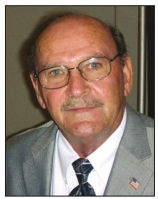
Let’s start at the top. On Friday, Jan. 20, 2017, the country will inaugurate the 45th president of the United States – Donald J. Trump. That’s where the uncertainties begin. What kind of president will he be? Already, most of his campaign promises and slogans have gone by the wayside.
He promised to “drain the swamp” and took Hillary Clinton to task for her connections to Wall Street. So, what has he done? He has filled his cabinet with billionaires with ties to Wall Street and lobbyists and has chosen advisors, who do not need Senate confirmation, which are scary at best. Case in point: Lt. Gen. Michael T. Flynn as his National Security Advisor and Alabama U. S. Sen. Jeff Sessions, who was once turned down for a federal judgeship in 1986 because of his racial views, as Attorney General.
Trump was also critical of Clinton for what he called her “pay for play,” referring to the fact that world leaders who contributed to the Clinton Foundation got access to her as Secretary of State. So, what’s the first thing the Trump family does? Well, daughter Ivanka was selling herself for $1,000 to have a cup of coffee with her. And sons Donald Jr. and Eric were selling a hunting trip with them and access to President Trump for a $1 million donation to Opening Day, a hastily formed charity in Texas.
Then there are Trump’s business conflicts all over the globe. How that will be worked out remains to be seen, but government watchers are casting a careful eye at how it will be handled by the new president. Still, the country is very divided. Fifty percent, in a recent survey, are optimistic about a Trump presidency while 50 percent are not so enthusiastic. The situation will likely get much worse as every move Trump makes will be under a microscope by the news media and his detractors.
Being president-elect and actually president of the United States are entirely two different things. So most people are willing to wait and see how Trump conducts himself once he is in the Oval Office. Hopefully, once he is there, he will stop those dreaded tweets in response to every criticism made against him.
At the state level, Democratic Gov. John
Bel Edwards begins his second year in office, facing a budget shortfall
of between $300 million and $600 million. That means more cuts are on
the way. And that hole still exists, even though the Legislature passed
$300 million in new taxes and other revenue-generating bills in sessions
last year. The governor will be proposing mid-year cuts to higher
education, hospitals and services for the disabled. There isn’t enough
money to prevent those types of reductions. The state’s “rainy day,”
which is supposed to cover unexpected financial shortfalls, will likely
be tapped. It’s all because state taxes are not bringing in nearly as
much money as previously projected.
He
still has to battle a Republican Legislature, which is determined to
undermine his policies at every turn. And he is still fighting for
federal help for the recent historic floods which hit the state. A
particular thorn is his side is Attorney General Jeff Landry, who is
making no bones about running for governor in three years. Recently,
Landry took the governor to court and won concerning an executive order
banning LGBT discrimination in state contracts. Edwards has vowed to
appeal the decision. It’s an ongoing feud between the governor and the
attorney general which will probably get worse as time moves on.
And
finally, the City of Shreveport faced a budget shortfall as well
because of declining tax revenues. The city’s projected revenues were
down by nine percent, losing $2.5 million in sales tax revenues. So,
there were cuts, but not severe. Mayor Ollie Tyler said she streamlined
the budget, making $4.2 million in cuts and bringing in $15.4 million in
grants. A $12 garbage fee, proposed by the mayor and which would have
brought in $9 million annually, was deleted from the budget by the city
council.
The
budget sits at $200 million, which is $16 million less than the 2016
budget. Council Chairman Willie Bradford blames the budget shortfall on
low sales tax revenue, but said the council had planned for the lower
revenue amount in 2017. He also said he is hoping for an economic boost
to put the city in a better financial position in the year ahead. While
there were no significant cuts in the budget process, the mayor and the
council agreed to periodic feedback on where budget cuts could be made
next year.
One
of the budget amendments, proposed by District E Councilman James
Flurry, aimed to cut the budget of the Metropolitan Planning Commission
by 35 percent or $576,000 of 2017 appropriations. After a vote of
approval, there were re-votes on the measure, which eventually failed on
a 4-3 vote.
Lou
Gehrig Burnett, an award-winning journalist, has been involved with
politics for 44 years and was a congressional aide in Washington, D.C.,
for 27 years. He also served as executive assistant to former Shreveport
Mayor “Bo” Williams. Burnett is the publisher of the weekly “FaxNet
Update” and can be reached at 861-0552 or [email protected].


