
in this luxurious Spring Lake master bathroom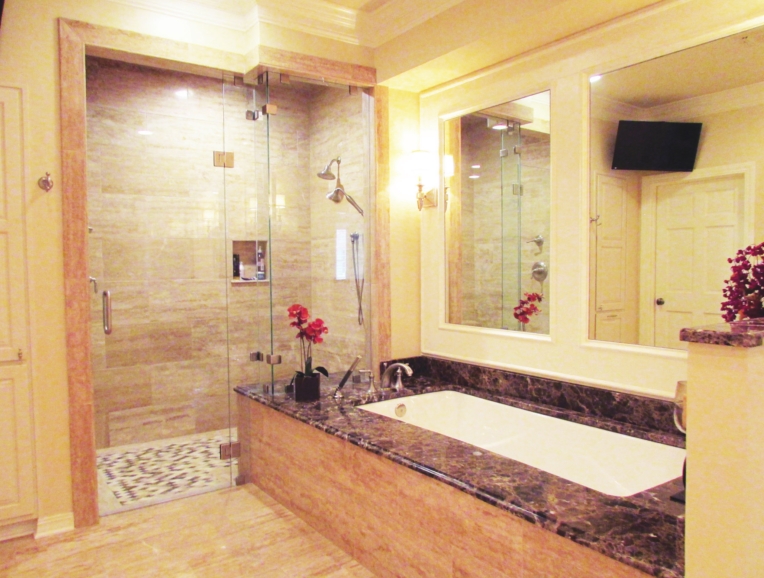
The existing master bath in this Spring Lake home was too small for the homeowners. Their goals included a larger, barrier-free shower, a private water closet and a larger bathtub. They wanted to increase the vanity storage, create a seated make-up area and have two walkin closets that would hold more of their things. To meet these needs, we bumped the master bedroom out into the back yard and reworked the existing space, which allowed us to enlarge the master bathroom.
We also removed a wall that separated the existing toilet, shower and tub from the vanity areas. Large travertine tile was used on the floor to make the space feel more open. Emperador dark marble was used on the countertops, tub deck and as accent mosaic tiles in the shower area. Inset cabinet doors and mirrors at the custom vanities and above the tub gave the space a “hotel” feel.
A safer bathroom can save you a trip to the emergency room. Whether you’re getting older and are hoping to age in place, are a host to your elderly parents, have small children at home, or just want to be more careful with yourself and your family, make a safer bathroom a priority.
These changes will create a safer bathroom for family members of all ages – and start to prepare your home for your golden years, when safety becomes an even bigger concern: 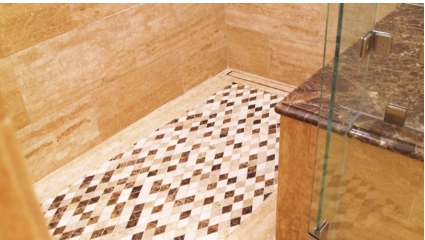
1. Slip-proof. The CDC estimates that slips and falls injure more than 8.5 million Americans a year. The solution is simple: Install a slip-resistant floor by laying rubber-backed rugs near the tub, toilet and sink, but area rugs can be a tripping hazard themselves if your toe gets caught in the wrong place.
Instead, look for tile with lots of texture and a matte finish. Stay away from shiny or polished floors, which can be slippery even when they’re not wet.
Inside this shower, we installed a mosaic floor made from smaller tiles so the surface never feels slick.
2. Shatter-proof. One of the surest ways to cover a bathroom
floor with water and create a slip hazard is to rely on a shower curtain
to keep the water inside the shower stall or bathtub.
Replace
the curtain with a shatterproof, tempered glass or acrylic door or
enclosure, which will do a better job of preventing water from leaking
onto the floor. A see-through model will show off your shower walls,
which you can line with textured tile to complement the slipresistant
shower floor.
3.
Fall-proof. Say “grab bars” to most homeowners and they’ll respond, “I
don’t want my bathroom to look like it belongs in a nursing home.” The
truth is that grab bars have become so common in private homes that the
stereotype is on its way out. Plus, manufacturers are designing grab
bars in all kinds of colors and finishes to match your bathroom faucets,
tile and the color of your toilet, sink and tub.
4.
Glare-proof. A big trend in bathroom and kitchen decor is white – any
shade. Yet white isn’t an especially safe choice for a bathroom,
especially if you choose stark white, shiny surfaces in the bathroom. It
can become glaring – literally – and temporarily blind someone. All of
that white also can make it difficult to see wet spots on the floor.
Break
up the sea of white with some color. Gray is another popular color
among decorators this year, so incorporate light gray walls,
white-and-gray marbled countertops and veined
floors, gray grout in between textured tiles, or a colored tile border
mid-wall. Other options to soften the glare: frosted tiles, off-whites
like cream and bisque, and slatted or raised cabinet panels.
The
vanity corner of this bathroom remodel is the lightest part of the
room, yet the warm tone of the cabinetry paint allows lines to be broken
up, preventing glare-out. The detail of the arched panels and recessed
lights also provides relief from monotony.
5. Shock-proof. A space heater in the bathroom is in invitation to injury.
Like
a hair dryer, razor or any electric appliance, a space heater that
comes into contact with water can shock or even electrocute someone who
gets too close. And because water so often splashes onto a bathroom
floor, the two are bound to meet.
If
your bathroom isn’t warm enough, consider installing under-the-floor
radiant heating, which will warm the tiles you stand on without exposing
any electrical parts to water.
– Jeb Breithaupt


