Keynote speaker Matthew Sandusky recounts his experiences with sexual abuse
The Gingerbread House Partners in Prevention Luncheon will be held at 12:00 noon, Oct. 5 at Sam’s Town Hotel & Casino, featuring keynote speaker Matthew Sandusky, son of former Penn State football coach and convicted serial child molester Jerry Sandusky.
The primary goal of the Partners in Prevention Luncheon is to raise awareness and funds in Shreveport-Bossier City for the services offered by the Gingerbread House for child victims of abuse.
Because of the multidisciplinary team approach utilized at the Gingerbread House, the likelihood of successful prosecution of offenders has increased dramatically in the community.
Jessica Miller is executive director of Gingerbread House and Bossier/Caddo Children’s Advocacy Center. “One in 10 children will be sexually abused before their 18th birthday,” she said. “It crosses all socio-economic boundaries and all cultures, races, religions or gender. It can happen to anyone, even a child you know and love, even your own child.”
“In 2015, Gingerbread House assisted 747 children who received forensic interviews, multidisciplinary investigations and family advocacy services, averaging 65 forensic interviews per month,” Miller said. “The Gingerbread House handles the heaviest forensic interview case load out of all 16 child advocacy centers in Louisiana.”
For victims of child sexual abuse, going public about abuse is difficult, such was the case for Matthew, adopted son of Jerry, who was convicted on multiple counts in one of the most highly publicized sex abuse cases in history. It was during that trial that Matthew disclosed that his father, Jerry, had begun sexually abusing him when he was only 10. Matthew endured that abuse silently until he attempted suicide when he was 16. The sexual abuse stopped after his suicide attempt, but Jerry still controlled Matthew to keep him silent. It wasn’t until other accusers had come forward that Matthew followed, and his disclosure interview to the police was leaked to the media. His adopted family denies the abuse occurred to this very day.
Matthew has also written a book, “Undaunted: Breaking My Silence to Overcome the Trauma of Child Sexual Abuse,” that is available at Amazon.com.
“You have to understand how perpetrators operate,” Matthew said, “how they groom a child for sexual abuse. In my case, he started out with his hand on my leg. It felt awkward. But I thought maybe that was how real families act.”
Child grooming is befriending and establishing an emotional connection with a child and sometimes the child’s family to lower the child's inhibitions for sexual abuse. Because of Jerry’s careful grooming and attention, Matthew experienced conflicting feelings while living in the Sandusky home, which added to the misplaced guilt he felt. “I loved being in the family. I had never had that before, where the family sat down and ate meals together. But then every night near bedtime ...”
Matthew said Jerry loved to wrestle and that much of the abuse took place in the shower. “Sometimes he would just lie on top of me, and he’d be aroused,” he said. “I just wanted it to stop.”
Matthew said it was harder for him because he was sexually abused by a family member. “It throws another dynamic into it,” he said. “There were six of us, five boys and one girl, all adopted. When I came forward, they all turned on me, including my mother. They said things like, ‘You were a bad kid, and we took you in and believed in you. We were there for you.’ They thought it was my turn to be there and stand up for the family that had helped me for so long. From the moment that I disclosed, the Sanduskys cut me off.”
The best way to prevent child sexual abuse is to create a dialogue about it both at home and in
the community. “Doing this work, I know the numbers,” Matthew said.
“Having traveled and speaking, I see it. I just did an event last week
in Oklahoma where 25 people, each with a story, came up to me during a
book signing. So it’s not the numbers that surprise me but rather that
society doesn’t recognize it. As a people worldwide, we are too afraid
to speak the words ‘child sexual abuse,’ because the ugliest, dirtiest
nastiest thing is an adult raping a child.”
“We
have to create a culture within our community where we educate children
and empower them to use their voices,” Matthew said. “We knew what was
happening to us was wrong. In my case, we had a man who spent 85 percent
of his time with children. They don’t only groom the child, they groom
the family and the community. This person literally fooled the world. We
let him do whatever he wanted, including taking children off by
themselves.”
“If
you find someone asking to take your children places, offering to pick
up your children for you all the time, don’t let them do it,” Matthew
said. “There should never be an adult having private interactions with a
child. A coach should never be driving a child home. Not even a pastor
should be providing one-onone counseling. Anything can be used by a
perpetrator. They use tactics to gain control, access and manipulate a
child and keep them silent. When we really truly understand, we can then
put the two, together.”
“You
really have to start young,” Matthew said. “We have heard so much about
the bikini area and how children should tell when someone touches them
there. But if you only teach them that, you’ve missed the mark. By the
time a perpetrator touches them in the bikini area, they are already
well-controlled, and it’s unlikely they’ll report it right away. When
they are sexually abused, they feel trapped. They feel complicit. They
feel like they deserved it. How we avoid it is to empower them to use
their voices.”
Matthew said disclosure, even after years have gone by, is important. “If you truly
want to ever take giant steps forward from where you are now, I really
believe it’s important to tell someone. I kept my secret buried for many
years. Now, I don’t have to carry the shame, the anger, the self-hate.”
Matthew
created a foundation called Peaceful Hearts (www.
peacefulheartsfoundation.org) to provide a place for victims of sexual
abuse to come and share their stories and try to heal. “Really, we
started it because we were looking for a community out there when we
felt the world was turning against us and we couldn’t find resources.
What we created was a community of survivorship every day. I still have
horrible days. Even now, after four years of my healing process, I still
go to therapy every week now and probably will every week of my life.”
Sgt.
Paula V. Farquhar, supervisor of the Shreveport Police Department Sex
Crimes Unit, said her department works closely with Gingerbread House
almost every day.
“I
have spent 13 of my 23 years as a police officer in the Sex Crimes
Unit,” she said. “I’d say we average about 100 cases per year per
detective, with five detectives, so 500 or 550 cases per year.”
“We
tell adults every case for us is not just about that one child,”
Farquhar said. “It’s about every one before and every one after. Because
it’s going to be a very rare occasion – if we’ve ever done it – to
catch someone on his first time. Statistics indicate they might do it 50
or 100 times before you ever know. They get better each time at
choosing the right child. By the time we get them, they’re pretty good
at it.”
The
Sex Crimes Unit works closely with the staff at Gingerbread House to
provide a safe place for children who have been sexually abused.
“Gingerbread House totally rocks!” exclaimed Farquhar. “Parents are
often afraid when their children go there, but it is a safe haven
for these children. They are no cops, no doctors, no lawyers. … It’s
just them and their interviewer, just talking in a non-confrontational
way about their lives. And then they are given the time that they need
and the way that they need to get through it.”
Farquhar
said it has been her experience that sexual abuse all comes down to
choice. “Just like a burglar hits that particular house or a robber hits
that bank,” she said. “That one man decides to put his hands where they
don’t belong on that child. When I really got to see that, is when I
worked the Internet task force for a short while, and we were the
‘victims’ in chat rooms. It was a total eye-opener. I was so resistant. I
sat there typing thinking, ‘I’m going to talk about video games and
homework, and I’m not going to let them in.' And you would see some of
them say, ‘You’re too young to be in here’ or ‘I’m going to report you
to Yahoo’ or whatever. And you would see that over and over again, until
that one. And it would start with, ‘What are your favorite classes?’
just like you would try to get to know a new friend. ‘What do you like
about school? Tell me about your home life. Do you have any pets?’ It
would go on like that, and the next thing you’d know, he’d want to know
what color underwear you were wearing.”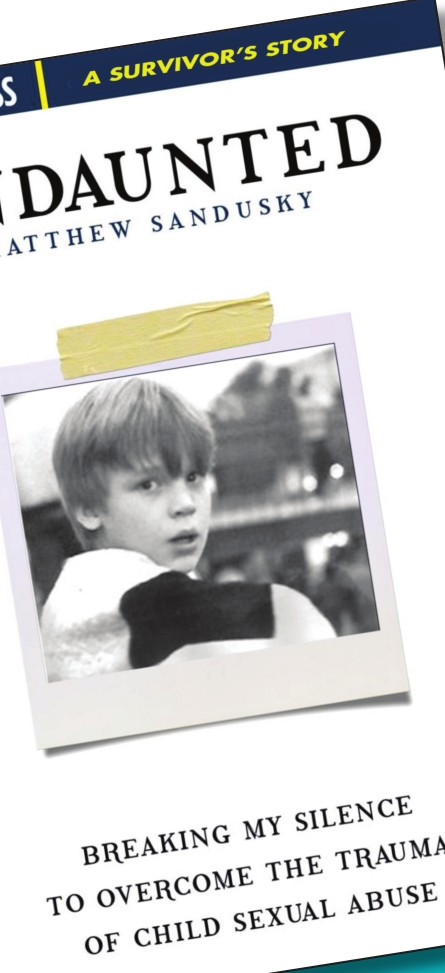
“Technology
absolutely makes it easier for perpetrators to victimize our children,”
Farquhar said. “I have teenagers, too. You can see the struggle on
Facebook between two sets of juveniles, two different kinds. Predators
look for that low self-esteem.”
“It’s
simpler for every parent, grandparent, aunt and uncle to teach our
children how not to be a victim than it is to police every bad guy out
there that has not identified themselves
yet,” Farquhar
said. “They don’t make it easy. They’re very good at what they do! They
study their prey, they take their time, they don’t go too quickly. If a
child raises their hand in protest, they back off and say, ‘Oh, you
misunderstood!’ When a teacher or coach crosses over from that formal
relationship into more of a friendship like allowing a child to call
them by their first name, they’ve crossed a boundary. Invitations to
their home separate from the other kids or allowing them to do things
that they wouldn’t normally be able to do, like drink and smoke and stay
up too late, watching dirty movies, things like that, are not the
normal behavior we expect from the adults in our children’s lives.”
Farquhar’s
best advice is what she tells her own children, who range in age from
16 to 23. “I tell them to trust their gut about everything. ‘If someone
puts their hand on your hand, and you didn’t invite them to do it, it’s a
boundary that you didn’t let down and didn’t allow. If it makes you
feel strange, then you need to put that wall back up and get your
boundaries back.’” “I worked a case with an offender named Jonathan
Dagenhart who, just like Jerry Sandusky, worked with children,” Farquhar
said. “In 2004, he pled guilty to four counts of molestation of a
juvenile. The youngest child was 2-½. He was a teacher at Hamilton
Terrace, and he was in the process of getting approved to be a foster
parent, although he hadn’t received a child yet. He would seek out these
families of six or seven kids and bring them to his home. He would take
them to movies, and he would give them opportunities that they normally
wouldn’t have. He would take them to his home and sedate them. There
were times when there were 17- and 18-year-olds there to look after the
little children, and it would still happen while everybody was asleep.
The touching happened, and they kept these secrets.”
“Children have told me they don’t disclose because it will upset the family,” Farquhar said.
"They recant for the same reason because the family gets all upset. It’s a shame that they feel that weight on their shoulders.
They feel responsible for someone else’s happiness after having been raped.”
“It’s
a very big decision for a victim to include us in their lives,”
Farquhar said. “But the only way we’re ever going to try to help them
get resolution is for them to do that. Child protection and Gingerbread
House are partners with us. We all work together to make sure they get
counseling.
We are victim-centered.
It is all about them.”
– Susan Reeks


