
Slow Food North brings diversity, inspiration to the table
Slow Food North Louisiana and members of the community will play host to the first Shreveport Reconciliation Dinner, Aug. 27 at the Shreveport Petroleum Club.
The dinner is based on a famous historical event that happened in Charleston, S.C., at the end of the Civil War, hosted by a freed slave and Charleston chef, Nat Fuller.
The Shreveport Reconciliation Dinner is an invitation-only gathering of residents who were chosen based on their spirit of reconciliation and their lives being interwoven into the cultural and racial fabric of the city’s growth and history. Each invitee was encouraged to bring one special person in their lives to share the experience.
Although Slow Food North Louisiana is hosting the event, the idea actually came to light because of the friendship between two local women, Judy Williams and Roxann Johnson.
“It was interesting because it was Judy’s idea,” Johnson said. “She was asking me for input, and
she just happens to be my best friend, so I’d say, ‘Excuse me, but it’s
your ball game.’ She said, ‘No, let’s get everyone’s input.’” Johnson
said the selection committee wanted to stay true to the spirit of the
actual dinner over 150 years ago. “There were 80 individuals that were
invited, just as many of color as not,” Johnson said. “Nat Fuller had a
clear vision of what the community meant to him. He was a freed slave,
but he recognized there were whites that had helped make it happen and
that he would not have been where he was without them.”
Fuller
had invited Charleston’s elite, both white and black, to his
Reconciliation Dinner, which was hosted at his restaurant in 1865.
Williams said it was a story she read over a year ago in Slow Food Magazine about the Charleston dinner that made her think about doing something similar in Shreveport.
“I was fascinated because it just seemed to me like the time was right to do something like that in Shreveport, something that
would serve to recognize people in our community who have already worked
together throughout their careers and to inspire new conversation over a
meal together. This is an opportunity to get a very diverse group of
people together who have a track record to affect reconciliation,”
Williams said.
“We
wanted to take it a little further,” Williams added, “and suggest each
participant to take it back to their own organization. We also gathered
together ideas of how you can take this idea forward in your own life.”
Williams
will be running around working at the event, not sitting at the table.
When asked what she’s looking forward to most, she replied, “To see
people sitting down in that atmosphere. I’m hoping to see what always
happens when we open our minds and open our hearts: that things will
unfold that we aren’t even anticipating.”
Slow
Food North was identified early on because it seemed to be a good
nonprofit match for the goal of the dinner. Angie White, chairwoman of
Slow Food North Louisiana said, “The original historical dinner was to
reconcile the leadership, old and new, in Charleston so they could move
forward after the Civil War. Their intention was really to celebrate the
great works of the original chef. We’ve known for a long time that food
brings people together and causes them to lower their barriers, in the
context of pleasure. It allows tensions to lessen. It creates
opportunities for people to talk together.”
Slow Food North has encouraged its members to host dinner parties with people
from different cultures and outside their normal circles to share ideas
and messages. “When you’re sharing your culture with food, there is
pride,” White said. “It’s a very personal thing. You’re sharing a gift
with them.”
“We
will also be celebrating the official north Louisiana meal adopted by
our state legislature and created by Chef Hardette Harris,” White said.
“This is critically important. It supports our farmers, many of which
are donating food. We are here to celebrate our farmers and artisans and
chefs who care about local farms. For me, Hardette was the perfect
person to do this because she cares very much about our local food. We
have our own food traditions.”
Harris
was quick to point out, “I’m the lead chef, but it’s Chef Eddie’s
(Mars) kitchen at the Petroleum Club. He’s going to be working on this
with me.”
“Over
the years, visiting home and during the holidays, I noticed that our
food seemed to be based on South Louisiana traditions. We celebrated
someone else’s food. We can do those other foods well, but we have foods
that are indigenous of this area. I wanted to have dinners that
celebrated this food.”
Harris’
Official State Meal of Louisiana is enormous. “The meal consists of
things we grow here naturally and pull out of our fresh water,” Harris
said. “We already an official meat pie, the Natchitoches Meat Pie, so we
included a mini-Natchitoches meat pie, then catfish, fried chicken,
barbecue ribs and sausage. The side dishes are greens, purple hull peas,
black-eyed peas, sweet potatoes, rice and gravy, and potato salad.
Condiments are hot sauce and mayhaw jelly. Peach cobbler and pecan pie
round it out.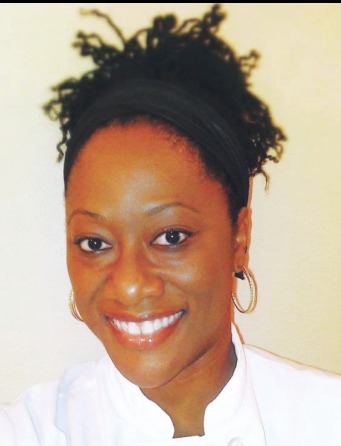
Harris
has encouraged people to simply trust the Reconciliation Dinner. “Just
support us in the background,” she said. “I know it’s not open to the
public, and there are no tickets to sell. This is a start. That’s why we
nominated people with this criteria. Yes, it’s timely, but I think we
would approach it the same way if it wasn’t happening at this time. Just
think of Nat Fuller and his attempt to bring the two sides together.
They had just came out of slavery, and for him to have the heart to
think that it would work, then surely we can.”
A
key component of the Reconciliation Dinner will be the Sawa Bona
moment. “Sawa Bona is a South African greeting,” Johnson said. “It
translates to ‘I see you.’ The respondent says, ‘I am here,’ meaning
‘until you acknowledge my humanity I do not exist.’ It stresses the
interdependence of human beings, but there is so much more to it. It is
like a short presentation that will give the individuals in the room and
those honored the opportunity to develop trust, dignity and respect
within their space at that dinner. They will start looking at people and
saying, ‘I really do see you.’”
The
search committee was very carefully chosen in order to be inclusive and
to identify the people who had made an impact and could carry it
forward. It was extremely important to those involved that they get that
right.
“Angie
and Roxanne were two on the steering committee,” Williams said. “We
deliberately asked people not associated with the event to serve on the
selection committee with no bias or preconceived notions.
 Everyone
involved wants to make sure the selection process is transparent and
that it was conducted as fairly as they could make it. “We opened up
this selection process and asked people to nominate those who had made
efforts towards reconciling,” she said. The nominees included rising
voices, people who may be younger and haven’t built up a body of work.
They wrote essays that they submitted online. We wanted people who still
have bandwidth to carry the conversation forward. We are counting on
individuals to have some way to have a natural platform, like someone
who maybe is a head of a church or organization that could take this
message back to people to continue the conversation. This dinner is
unique in that it is not an end point; it is a starting point.”
Everyone
involved wants to make sure the selection process is transparent and
that it was conducted as fairly as they could make it. “We opened up
this selection process and asked people to nominate those who had made
efforts towards reconciling,” she said. The nominees included rising
voices, people who may be younger and haven’t built up a body of work.
They wrote essays that they submitted online. We wanted people who still
have bandwidth to carry the conversation forward. We are counting on
individuals to have some way to have a natural platform, like someone
who maybe is a head of a church or organization that could take this
message back to people to continue the conversation. This dinner is
unique in that it is not an end point; it is a starting point.”
“There
will be young, old, black, white,” Johnson said. “The process is
beautiful because it was anonymous. We went online and looked at all the
names and nominations in front of us before we met. Then we selected on
our own. We met for four hours. There was a judge, a high-ranking
official from the mayor’s office, a doctor, a young entrepreneur, me
(I’m in culture sensitivity), a union worker, a young photographer, a
leader of a foundation. … It could not have been more beautiful to sit
at this table. It was a raw, beautiful process.”
“I
am forever changed,” Johnson said of the process and of her friendship
with Williams. “She never stops thinking about ‘What else can I do?’ She
is my best friend. If you knew the heart and the spirit of the person
that brought this event to the table, you would never doubt it.”
–Susan Reeks
FOR MORE INFORMATION:
Find out more regarding the Reconciliation Dinner at www.reconciliationshreveport.com.


