Costs covered for medication aids for most
Willis-Knighton announced they have completed a partnership with the Smoking Cessation Trust, establishing a program to aid Louisiana smokers in their journey to cessation.
The partnership comes from the Trust, which was created in 2012 after a court ruling that ordered tobacco companies to fund a statewide, 10-year smoking cessation program. The WK Tobacco Treatment Clinic will serve those in need with tobacco treatment services at no cost, and among the services will include medications, nicotine replacement therapy, individual and group counseling,and telephone support. The clinic will provide these services on all four of the Willis- Knighton hospital campuses.
As part of their program, Willis-Knighton sent one of their staffers to become a certified tobacco treatment specialist to best serve their patients. Additionally, the hospital anticipates sending more staff to receive certification and continue growing the network of support.
“Our program includes support and guidance in helping one stop tobacco use,” said Jarrod Mitchell, WK Tobacco Treatment Clinic coordinator. “Almost everyone qualifies for the Smoking
Cessation Trust,
which will cover their medication aids, including over-the-counter
nicotine replacement aids. We advise them on the best approach in
medications, set them up with those medications, and meet with them at
least once a week to implement techniques and support to help them on
their path of stopping tobacco use. We are also available by phone
support to assist at times when needed.”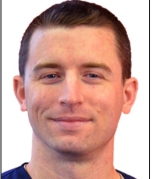
The
comprehensive care and support provided by the program is the
foundation in which it supports the clients served. The need for this
type of program seems obvious, as the harm and dangers related to
smoking have been made public knowledge, yet the importance proves
crucial for the state of Louisiana as its population is significantly
affected.
“Louisiana
consistently ranks in the top five states in regard to smoking rates,”
Mitchell said. “According to the a Robert Woods Foundation Health
Ratings study in 2015, 22 percent of Louisiana residents smoke, that is
nearly one in four of every Louisiana resident. According to the United
Health Foundation, Louisiana now ranks last in overall health.
“Decreasing smoking rates, I believe, would make a profound impact on the health of the people in our state and
our state
rankings. I am very proud of Louisiana, but not proud at all of these
statistics. It is time for statistics like these to be greatly changed.”
Those
numbers reflect a significant percent of the population and drive the
need for a cessation program. The WK Tobacco Treatment Clinic wants to
accommodate any and all participants who may be interested and even
those who are on the fence. The support for smokers is available and
aims to meet them where they are in their journey to quit.
“Anyone
that smokes or uses tobacco and wants to stop can join,” Mitchell said.
“Or if they are just considering and not sure if they want to stop,
they can still come and enroll. The Smoking Cessation Trust covers costs
of this program. To be eligible for the Trust, you must be a Louisiana
resident and started smoking before Sept. 1, 1988. If you are not
eligible for the Trust, more insurances are covering counseling and
medication services. We want to make sure this program is either free or
minimal cost to enrollees.”
Mitchell
said his training to become a certified tobacco treatment specialist
has enhanced the quality of care he is able to provide, but that it’s
the passion of helping those quit which truly drives his efforts.
“I
am a certified Tobacco Treatment Specialist from the Mayo Clinic,” he
said. “I visited the Mayo in Rochester, Minn., and did a weeklong
training at their center. I learned all I could from them at their
program and passed their certification exam. People from around the
world come for tobacco treatment to them. I learned from the best. My
training also comes from my experience of helping people stop tobacco
use. It is a great joy to be a part of the process to see someone
accomplish their dreams of stopping smoking.”
While
the specialized training and certifications help to provide the tools
and education that are offered, Mitchell stated the program looks beyond
just the smoking habit and truly focuses on the person. They intend to
help each person from start to finish, lending support and encouragement
at every phase.
“Most
importantly, I want them to know we care,” he said. “We know it is not
an easy thing to go through the process of stopping smoking. Many people
started smoking early in life and had no idea of the dangers or that it
would become so addictive and hard to put down. We are very accepting
of all patients that smoke or use tobacco. Tom Gauvin at the Mayo Clinic
put it best [when he said], ‘Smokers are not bad people with a bad
habit but are good people with a difficult disease.’ The sooner we start
looking at this as a disease, instead of a little, old bad habit, I
think the sooner more people will seek help. We are ready to be that
support that walks alongside people to help them through this addictive
disease.”
“The
hardest part of quitting is going through it alone,” Mitchell said.
“With our program, you have specialists you can rely on and also fellow
participants that are going through the same thing one that is quitting
is going through. I believe that support is vital in stopping tobacco
use.”
– Katie Ho


