Recognizing healthcare concerns as we mature can be an eye-opening experience, but we do need to realize our bodies are constantly changing, and it is important to be aware of these changes. With so many possibilities for learning and research available to us today, we should have no excuses for not staying current with our health-care concerns.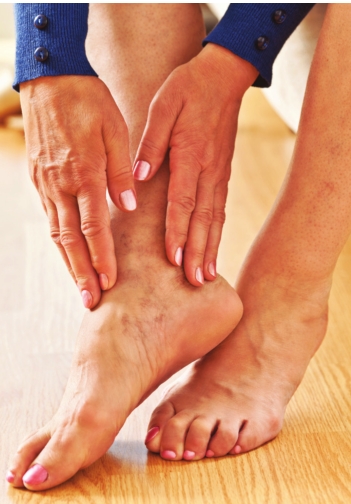
As
a vascular surgeon with a practice devoted to venous disease, I see
patients in my office with leg vein issues, many of whom have noted
changes but have procrastinated regarding seeking help.
For
those patients who have varicosities – those blue, bulging veins, which
are often painful and can cause legs to itch, feel heavy, tired and
ache – there are various treatment methods.
Venous
disease is managed, never cured. There are myriad causes, with genetics
being the chief cause. If a parent or grandparent produced
varicosities, the chances are good that their offspring will also see
varicosities appear. Pregnancy, especially multiple pregnancies, is also
another major contributor to producing varicosities. The hormonal
changes that occur during pregnancy and the heavy
uterus compressing the pelvic veins can weaken the valves. Also, many
women begin to notice venous changes when entering peri-menopause or
menopause, due to the hormonal changes taking place in their bodies.
Treatments
may be as simple as wearing compression stockings, and there are many
types now that can actually enhance your appearance while making your
legs feel great! Also, there are venous exercises that will aid in
increasing blood flow from the lower extremities.
If
surgical intervention is required for varicose veins, an outpatient
procedure is often advised using a laser. Endovenous Laser Treatment has
become one of the primary modalities for treating varicosities. This
procedure is performed with the use of a local anesthetic, using a laser
fiber to heat the interior of the vein, causing it to shrink. Incisions
of 1-2 millimeters may be made to remove the varicosities. These
incisions do not require stitches.
There are stages that are used as markers for the severity of the disease:
C-1 Spider Veins
C-2 Varicose Veins
C-3 Edema, Ankle Swelling
C-4 Discoloration and leather-like skin
C-5 Healed Ulcer
C-6 Active Ulcer
To prevent this process from occurring, of course, it is always
advisable to have a good genetic history. However, the following notes
will also help in reducing the chances of having varicosities:
•
Regular exercise, • High-fiber diet, • Frequent periods of moving
during the day, and • Checking feet and ankles are free of infection and
swelling.
Aesthetic help As
we realize that we are far from being considered a “millennial,” we
often begin to focus on what aesthetic help we can receive.
Spider
veins, for women and men, are often seen as a primary concern with many
patients. These can be treated with lasers as well and in some cases,
sclerotherapy, which is by injection. My preference is with the use of a
laser. The treatments are short and effective with no downtime for the
patient, and no use of compression stockings is needed. In my practice,
before and after photos are taken so the patient can track their
progress. It is such a pleasure to see patients who are thrilled to once
again be able to wear shorts or summer dresses again … or as one
patient stated, “Now my grandchildren will stop referring to my legs as a
road map.”
Men and
women who have facial spider veins on their cheeks and around the nose
area now can have those removed and find they feel much better about
their appearance after having the spider veins lasered.
The
number of treatments needed varies with the patient and the
concentration of spider veins. In my practice, after the initial
treatments and the patient is pleased with the result, I recommend
re-treatment once or twice a year to combat any new veins.
New therapies At
this point, laser ablation, or the Oesch procedure, is the standard of
care. There are new treatments that are evolving for treatment of
varicose veins, including foam sclerotherapy and the use of a “glue’’ to
seal the varicosities. Unfortunately, the newer delivery systems may
have increased costs to the patient as insurance carriers have yet to
approve them.
As with
any new endeavor, the patient should seek the most qualified personnel
to administer treatments. Training and experience should be foremost in
choosing the right physician for your care.
Robert L. Barrett is a vascular surgeon and phlebologist practicing at WK Pierremont. His practice is limited to venous issues.


