Communication key to treatment
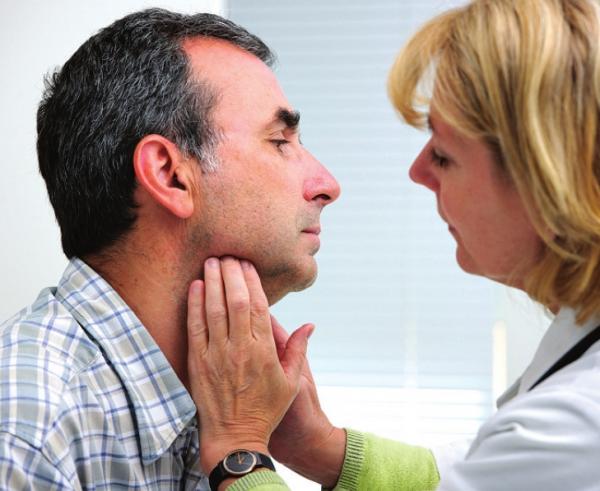
Swollen lymph nodes are a common symptom of a cold or sore throat. But, what if this swelling doesn’t go away? A patient could have a form of lymphoma, uncontrolled growth of the lymph nodes.
CHRISTUS Cancer Treatment Center’s Dr. Christopher Snead said the lymphatic system is a key piece to the immune system, filtering blood and lymph, which is essentially blood without red blood cells, to clean out impurities such as bacteria and viruses.
Lymphoma is a form of cancer that causes the lymph nodes, normally the size of a kidney bean, to grow. Enlarged lymph nodes are not limited to the neck, but can also be felt in the arm and groin.
“It is important to determine whether the growth of a lymph node is reactive [from an infection] or malignant [usually lymphoma],” Snead said. Snead specializes in hematology and oncology.
Many different types of lymphoma exist, but they are usually grouped into two subsets: Hodgkin’s lymphoma (Hodgkin’s disease) and non-Hodgkin’s lymphoma.
“The majority of the lymphomas diagnosed in adults are non-Hodgkin’s lymphomas,” he said. Lymphomas vary in severity, as some act in a non-aggressive way, progressing slowly. Snead said an example of this type of lymphoma is follicular lymphoma, which can be monitored for years before requiring treatment. Other lymphomas are more aggressive, such as diffuse large B-cell lymphoma.
“These typically need to be treated sooner rather than later, and watchful waiting is rarely an option,” he said. The only way to determine the type of lymphoma is to remove all or part of a lymph node for examination.
Depending on the type of lymphoma, treatment can include chemotherapy, immunotherapy, radiation, radioimmunotherapy, or a combination or these treatments. Snead said stem cell transplants may be useful following an aggressive lymphoma relapse. In rare cases, bone marrow transplants can be helpful.
Both men and women are at risk for developing lymphoma, but some lymphomas are more common in men. Age is a risk factor in developing lymphoma. Snead explained some infections such as Epstein barr virus, the virus causing mononucleosis, and HIV increase the chances of patient developing lymphoma.
Snead said patients should notify their doctor of elarged lymph nodes that do not get better on their own. Enlarged lymph nodes can be both tender or firm to the touch. He said any firm lymph node larger than a pea that does not resolve should be investigated.
“Some lymph nodes cannot be felt, even by your doctor,” he said.
Patients should also take notice of unintentional weight loss, abdominal fullness, unexplained pain and recurring night sweats, as these can be symptoms of lymphoma. Snead said an unintentional weight loss of more than 10 percent of a patient’s body weight should be examined with lab work and, potentially, X-rays. Some lymphomas can cause swelling of the spleen, causing it to grow as large as a soccer ball. The spleen should normally be the size of your fist.
“The best advice I can give is to make sure your doctor communicates well with you and answers questions in a way you can understand,” Snead said.


