MRI Machine
Q. How does an MRI work? 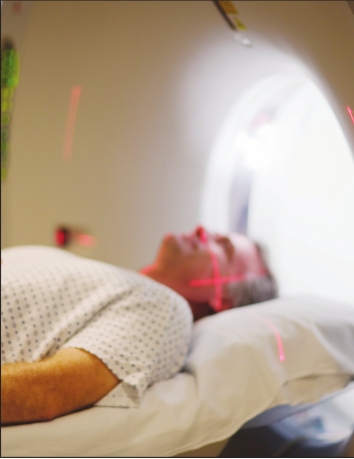
A. Magnetic resonance imaging uses a magnetic field and radio waves to create pictures of cross-sections. In many cases, MRI gives more information than other types of diagnostic imaging. Sometimes contrast agents are used to enhance the images.
Most MRI machines are large cylinders.
Inside the machine, the human body produces very faint signals in response to radio waves. These signals are detected by the MRI machine. A computer then interprets the signals and produces a threedimensional representation of your body.
Any cross-section can be extracted from this representation.
There are MRI machines that are open on all sides. These newer open MRI scanning systems are useful for the claustrophobic, obese or anyone who feels uncomfortable about lying inside a cylinder.The MRI often helps with the diagnosis of central nervous system disorders such as multiple sclerosis because it produces such high-resolution images of the brain and spinal cord.
Antibiotic Prescription
Q. Why is it so important to complete an antibiotic prescription and not stop taking the medicine when you feel better?
A. Taking antibiotics unnecessarily and not completing your prescription are the leading causes of “superbugs,” bacteria that are resistant to antibiotics. These superbugs are one of the most serious threats to global public health.
The first thing you should know is that antibiotics are used to combat bacteria, not viruses. So, these potent drugs should be used for infections of the ear, sinuses, urinary tract and skin. They’re also used to treat strep throat. They should not be used for viruses that cause most sore throats, coughs, colds and flu.
However, doctors in the United States write about 50 million antibiotic prescriptions for viral illnesses anyway. Patient pressure is a major cause for these prescriptions.
When you don’t finish your prescription, your antibiotic doesn’t kill all the targeted bacteria. The germs that survive build up resistance to the drug you’re taking. Doctors are then forced to prescribe a stronger antibiotic. The bacteria learn to fight the stronger medication. Superbugs are smart, too; they can share information with other bacteria.
More than 70 percent of the bacteria that cause hospital-acquired infections are resistant to at least one of the antibiotics most commonly used to treat them. About 100,000 people die each year from infections they contract in the hospital, often because the bacteria that cause hospital-acquired infections are resistant to antibiotics.
Muscle Cramps
Q. What causes muscle cramps?
A. A cramp is an involuntarily contracted muscle that does not relax. The common locations for muscle cramps are the calves, thighs, feet, hands, arms and the rib cage. Cramps can be very painful. Muscles can cramp for just seconds, but they can continue for many minutes.
Almost all of us have had muscle cramps, but no one knows for sure why they happen. However, many healthcare professionals attribute cramping to tired muscles and poor stretching. Other suspected causes are dehydration, exerting yourself when it’s hot, flat feet, standing on concrete, prolonged sitting, some leg positions while sedentary.
Muscle cramps are usually harmless. However, they can also be symptoms of problems with circulation, nerves, metabolism, hormones. Less common causes of muscle cramps include diabetes, Parkinson’s disease, hypoglycemia, anemia, thyroid and endocrine disorders.
Geezers are more likely to get cramps because of muscle loss that starts in our 40s. And your remaining muscles don’t work as efficiently as they used to. Studies show that about 70 percent of adults older than 50 experience nocturnal leg cramps.
Fred Cicetti is a freelance writer who specializes in health. He has been writing professionally since 1963. Before he began freelancing, he was a reporter and columnist for three daily newspapers in New Jersey. Email questions to [email protected].