Since the One Big Beautiful Bill Act went into effect July 2025, more than 5 million people have lost federal food assistance benefits, according to the Center on Budget and Policy Priorities. Economists’ predictions were that the major cuts, along with new work requirements, would affect most of the roughly 42 million people who use the benefits to keep food on the table each month. But the numbers show that the effects of the Trump administration’s cuts are happening even faster than estimated. More people have lost benefits more quickly than even the Congressional Budget Office predicted they would, CBPP notes. “The last time there was such a steep decrease in participation (other than temporary spikes following natural disasters) was nearly three decades ago, after Congress enacted deep cuts to SNAP (then the Food Stamp Program) in 1996,” the organization notes.
“It felt like a crisis a year ago when it paused, and it was,” said Dustin Palmer, executive director of U.S. programs for the global nonprofit GiveDirectly. Now, he says, the policy changes are causing a slow decline and the bigger problem for participants is having to meet work requirements and other jump over reapplication hurdles to stay enrolled.
“Often
people don’t know they’re going to lose the benefit in advance,” Palmer
says. “[They’ve] missed a letter that went to [an address] from three
mailing addresses ago.” Something as simple as missing a phone call from
a blocked number can cause havoc. “The way you find out is when you go
to swipe your card and there’s no money on it, and that is so
destabilizing,” he says.
With
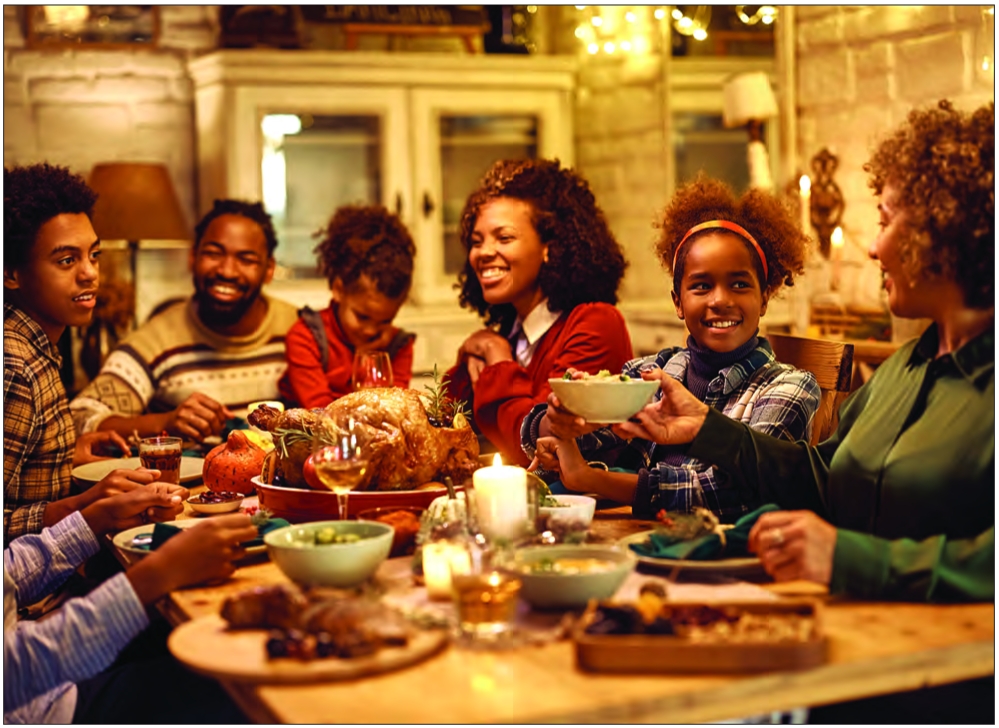
Thanksgiving approaching, the lean times become more pronounced.
Grocery prices are still rising and households have to decide how to
navigate the crisis..
In an effort to shore up families, the global
nonprofit GiveDirectly is launching a Thanksgiving SNAP Bridge Fund,
with direct, one-time cash payments to families with no strings
attached.
GiveDirectly is a nonprofit that lets donors send money directly to struggling families in the United States and worldwide.
Founded
by economists, GiveDirectly primarily helped families and individuals
internationally since 2009. That changed in 2017, with the addition of
unconditional cash aid to low-income Americans.
“Our mission is to accelerate the end of extreme poverty,” said Palmer. The goal was to provide support without stigma.
“We
asked, ‘What if you just gave money to people directly and tried to cut
out as much of the middleman and the judgment and the paternalism as
you could, and trust people with cash?’ ” he said.
In
more than 30 randomized controlled studies largely of their global
programs, the findings have been positive, with direct cash
significantly improving the monetary and physical health of families and
local communities.
Results
are more anecdotal for the U.S. work, which grew out of disaster
response, expanded during the pandemic and has delivered more than $400
million to low-income families.
With
he Thanksgiving SNAP Bridge Fund, the organization’s GiveCard will
deliver one-time $100 payments directly to families who have lost SNAP
benefits. The cash comes with no strings attached, so families can spend
the money on food, gasoline, travel expenses, or whatever they need
most.
Enrollment opens
Nov. 4 through Propel, a free app that Palmer says roughly one in four
SNAP households use to manage their EBT balances.
“We
know this $100 will not replace SNAP for a family,” Palmer said. “It’s
temporary. It’s a one-time [thing],” Palmer said. “It’s just an
opportunity for folks who want to support neighbors and families who are
going to wake up one day and not have” food stamps available.
“We’re
just hoping to open up an avenue in this moment that gives people an
opportunity to give and to receive a little bit of support when it’s
hard out there.”
The timing is deliberate.
“Inflation
keeps grinding on,” he continued. “Prices are higher during the
holidays. Heating bills, all sorts of [costs] like that,” Palmer says.
Providing cash “lets [recipients] buy diet-appropriate or hot foods if
they’re in a food desert. The campaign is privately funded, and Palmer
hopes the public will give. The organization accepts donations
year-round through its website, givedirectly.org/ united-states.
This story first appeared in Word in Black.