Coalitions
of residents, advocates and lawmakers believe Flock cameras designed as
crime-fighting tools create a backdoor for federal overreach,
especially for marginalized groups. Local municipalities cancel contracts with ALPR vendor
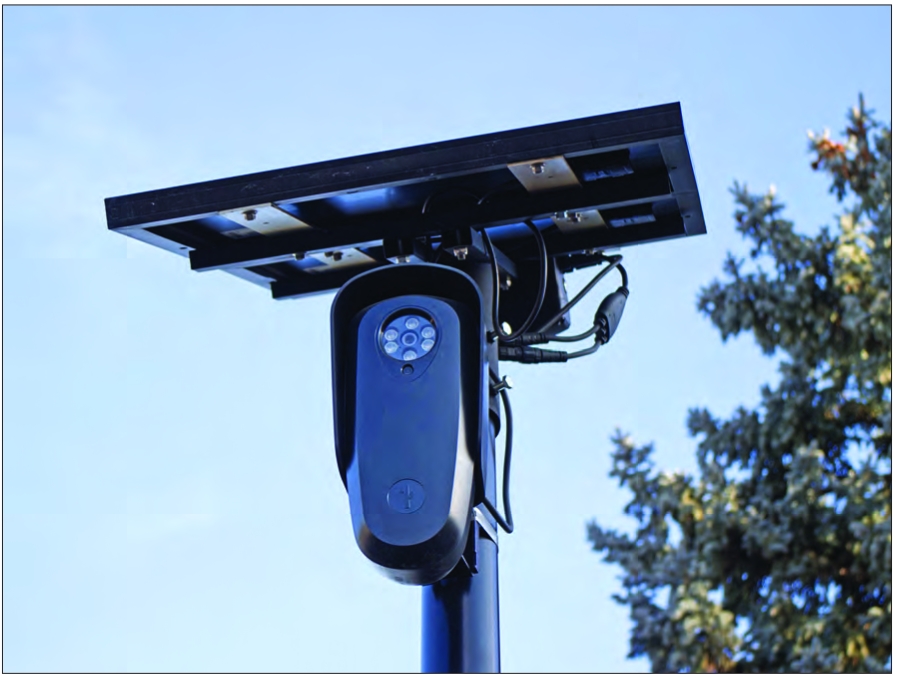
On July 23 Salem became the latest Massachusetts city to terminate a contract with Flock Safety, the company behind the rollout of automated license plate readers (ALPRs) across America.
Though over 80 police departments across the state have adopted this surveillance system, a wave of resistance is growing in New England.
Municipalities such as Cambridge, Watertown and Framingham have canceled, allowed expiration or terminated contracts over privacy and federal data-sharing concerns. Coalitions of residents, advocates and lawmakers believe the cameras designed as crime-fighting tools create a backdoor for federal overreach, especially for marginalized groups.
Though the company has no public contract with federal immigration authorities, opponents are concerned the data are being used to aid deportation endeavors and build cases against people seeking abortions or gender-affirming medical care. A bill is now making its way through the Massachussetts Legislature to try to curb the data’s reach.
In partnership with the ACLU of Massachusetts, a group of grassroots organizations analyzed Flock audits to find that law enforcement searched Salem’s data for reasons listed as “immigration” or “ICE” at least 230 times within two months in 2025. On the “Have I Been Flocked” online database, which compiles public data audits, municipalities including Milford, Canton and New Bedford show at least 100 searches for the term ERO (Enforcement and Removal Operations).
Kate Merrit-O’Toole, head of Framingham Fights Back, says Flock cameras have “made mass surveillance capabilities mushroom beyond your wildest and craziest dreams.” She explained that Flock’s ALPRs can use artificial intelligence to catalog a car’s make, model, color and distinguishing features like roof racks, bumper stickers and scratches.
Beyond vehicles, police can conduct “Native Language” searches, like “man in a green shirt with a red hat” to return every instance of a person matching that description.
Continuous monitoring lets the government identify, for instance, which doctors a person visits, political protests they join and religious institutions they attend.
Because data are retained for 30 days by default, police can develop a calendar view of a person’s movements.
Flock’s interface also allows agencies to subscribe to FBI hotlists, and police can receive real-time alerts for vehicles ICE is searching for.
Massachusetts lawmakers have agreed to a 287(g) contract: a formal agreement between ICE and state law enforcement that deputizes local officers to enforce federal immigration laws.
Several sanctuary municipalities including Boston have adopted policies limiting cooperation with federal immigration authorities. The ACLU of Massachusetts says the Flock model, however, undermines these safe municipal ordinances by automatically sharing data across agencies in the network.
Officers running a Flock search can download data onto an independent spreadsheet, Merrit-O’Toole explained.
“Once that data is out of the barn, so to speak, you have no control over it,” she said.
In the ACLU and grassroots coalition audit of Salem,
about 95% of searches of the city’s Flock data came from external
agencies, meaning that police in other states can track Massachusetts
drivers in real time without a warrant, probable cause or reasonable
suspicion. Reviewing audit logs from “Have I Been Flocked,” the Banner
found that out-of-state agencies with 287(g) ICE agreements ran at least
10,939 searches in the commonwealth.
The
ACLU has flagged that Flock also allows out-of-state actors to track
people seeking gender-affirming or reproductive health care. In theory,
the Massachusetts Shield Law prohibits Massachusetts law enforcement
from aiding agencies in states that criminalize abortion and prohibit
gender-affirming care. However, Flock’s nationwide sharing model
bypasses this law, putting individuals at risk of retribution and
prosecution from external agencies.
This
past month, the ACLU of Massachusetts released the Surveillance
Discovery Project, a toolkit to help defendants and lawyers determine
when digital surveillance technologies were used in their cases. The
project was developed with the help of Gideon Epstein, policy counsel
with the civil rights group.
Epstein
said that if police concentrate the deployment of these cameras toward
Black and brown neighborhoods, “there is a strong likelihood that this
will reinforce existing patterns of over-policing.”
Audit
logs reveal that municipalities such as Braintree, Lowell and Billerica
have many mentions of “Gypsy thefts,” Romanian or Irish travelers, and
“Palestinian” activity, indicating that police are already using the
technology to monitor specific ethnic groups.
In
at least 28 cases outside of Massachusetts, officers used Flock to
stalk former romantic partners and estranged spouses, according to the
Institute for Justice. The organization says officers must provide a
reason for their searches, yet audits reveal that cops utilize vague
language such as “investigation” or “info.”
According
to ACLU counsel Epstein, this makes it almost impossible to detect
whether officers are tracking residents for activities that are legal in
Massachusetts, or for personal misuse.
The
cameras themselves do not necessarily translate to safer streets. In
cities like San Marino, California, residential burglaries rose 5%
between 2020 and 2023, after Flock cameras were deployed.
North
Shore Progressives founder Isa Leshko argues that ALPR technology
creates a climate of fear on the premise that “all of us are potential
suspects.” That sort of “keep tabs on everyone” ethos and technology
makes it “easy for an authoritarian government” to track citizens during
periods of political instability, she said.
Shortly
after the Cambridge City Council ordered ALPRs to be deactivated in
October 2025, Flock technicians installed two new cameras without city
authorization. In response to this “material breach of trust,” Cambridge
terminated its Flock contract. In response to the concerns raised by
this incident, State Rep. Steven Owens introduced Bill H.3755 to
establish what he calls “guardrails” for driver privacy.
The
Boston Police Department began its trial of about 45 cameras in April
2025 but has already developed a unique contract with the company
mandating data are erased after 30 days and prohibiting Flock from
sharing agency data to third parties.
“Flock is unpopular with citizens, but popular with law enforcement,” said Owens, who represents Watertown and Cambridge.
His
proposed legislation would mandate that statewide ALPR data be deleted
within 14 days and require a judge-issued search warrant for law
enforcement to access data from other agencies.
The
bill also includes a provision for private right of action, letting
individuals sue for privacy violation, rather than relying purely on
administrative oversight.
“Sunshine
is the deterrent,” Owens said, arguing that greater transparency will
discourage departments from using the technology for non-criminal
purposes.