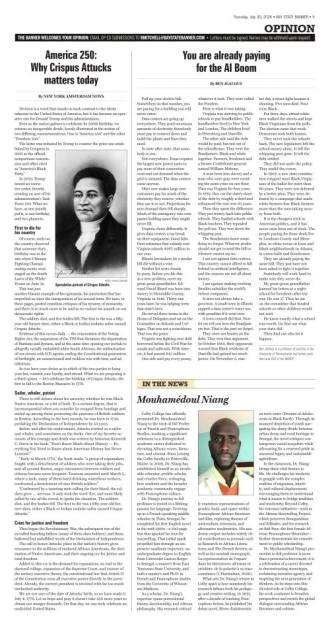
Mouhamédoul Niang
Colby College has officially promoted Dr. Mouhamédoul Niang to the rank of full Professor of French and Francophone Studies, marking a significant milestone in a distinguished academic career dedicated to elevating African voices, literature, and cinema. Since joining the Colby faculty in Waterville, Maine, in 2009, Dr. Niang has established himself as an invaluable educator, prolific scholar, and creative force, reshaping how students and the broader academic community engage with Francophone culture.
Dr. Niang’s journey to full professor is rooted in a lifelong passion for language. Growing up as a French-speaking middle schooler in Thiès, Senegal, he completed his first English novel in the mid-1980s—a 500-page feat that sparked his love for storytelling. That initial spark propelled him through an impressive academic trajectory: an undergraduate degree in English from Université Gaston Berger in Senegal, a master’s from East Tennessee State University, and both a master’s and Ph.D. in French and Francophone studies from the University of Wisconsin-Madison.
As a scholar, Dr. Niang’s expertise spans postcolonial theory, decoloniality, and African philosophy. His research critical ly examines representations of gender, body, and space within Francophone African literature and film, exploring themes of nationalism, totemism, and alternative modernities. His academic output includes widely cited contributions to journals such as Research in African Literatures and The French Review, as well as his seminal monograph, La représentation de l’espace dans les littératures africaine et créoliste: de la polarité à sa transcendance (L’Harmattan, 2020).
What sets Dr. Niang’s tenure at Colby apart is how seamlessly his research infuses both his pedagogy and creative writing. In 2021, after a decade of teaching Francophone fiction, he published his debut novel, Rêves d’adolescents en terre noire (Dreams of Adolescents in Black Earth). Through its nuanced depiction of youth navigating the sharp divide between urban decay and rural heritage in Senegal, the novel critiques contemporary social inequities while advocating for a renewed pride in ancestral legacy and sustainable agriculture.
In the classroom, Dr. Niang brings these vital themes to life. He challenges his students to grapple with the complex realities of migration, identity, and cultural displacement, encouraging them to understand what it means to bridge tradition and modernity. Beyond Colby, his visionary initiatives—such as the African Storytelling Project, which preserves Senegambian oral folktales, and his research on Safi Faye, the first female African-Francophone filmmaker— further demonstrate his commitment to public scholarship.
Dr. Mouhamédoul Niang’s promotion to full professor is more than a personal achievement; it is a celebration of a career devoted to deconstructing stereotypes, reclaiming narrative agency, and inspiring the next generation of thinkers. As he steps into this elevated role at Colby College, his work continues to broaden perspectives and enrich the global dialogue surrounding African literature and culture.