A
report from the Greater Boston Food Bank and Mass General Brigham found
that 56% of households experiencing food insecurity rely on community
food programs, including food pantries, mobile markets or community
meals.
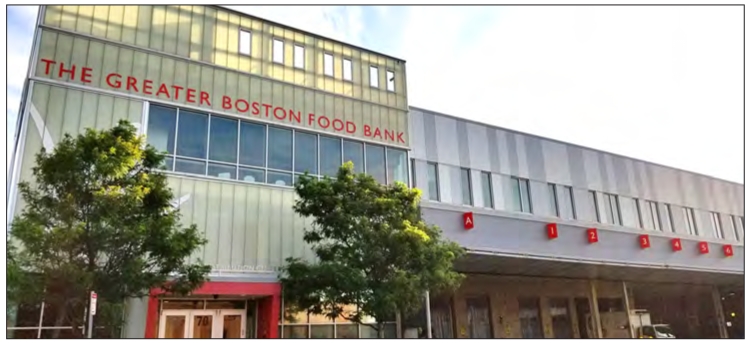
Food insecurity is on the rise in Massachusetts, according to a new report from the Greater Boston Food Bank (GBFB) and Mass General Brigham.
Researchers from the organizations found that 40% of the more than 3,000 households surveyed reported some level of food insecurity — meaning they didn’t know where their next meal was coming from or had to skip meals because they couldn’t get them at some point during the year. That rate was the highest since the GBFB started tracking it six years ago.
“That’s a shift when we think about what Massachusetts is and the [food assistance] resources it has,” said Catherine D’Amato, president and CEO of the Greater Boston Food Bank. “It just really speaks to what a difficult year it was for people across the commonwealth.”
This sixth edition of the organization’s annual statewide food access study comes as state officials and food access advocates try to decrease existing gaps in food access and prepare for increased challenges amid shifts in federal policy that have raised prices and narrowed access to federal food assistance programs.
The findings of the report also underscore the shift away from increased funding for food assistance and other resources during the COVID-19 pandemic. The percentage of food-insecure households rose sharply in 2020, but plateaued in the years following, said Dr. Lauren Fiechtner, a pediatrician at MassGeneral Hospital for Children and an author of the report.
But with many of those safety nets expiring and the general cost of living rising, “We’re seeing food insecurity go up,” said Fiechtner, who is GBFB’s senior health and research advisor. “While we have incredible support and a great network throughout the state … it’s just not enough money to outpace the cost of living in Massachusetts.”
According
to data from the U.S. Bureau of Labor Statistics, households in the
Boston Metro area spent an average of $105,320 annually in 2023 and
2024, the most recent data available. According to a February estimate
of living wage, a family of four in Massachusetts could be expected to
spend nearly $14,500 on food annually.
The
report found that Hispanic and Black households across the state were
hit the hardest. Among Hispanic households surveyed, 63% reported
experiencing food insecurity in 2025.
That figure was 51% for Black households.
While
40% reported some level of food insecurity, the threat wasn’t far for
an additional 12% who said that they may have needed support to
adequately feed themselves, making for a total 52% of households in
Massachusetts reporting some level of food insecurity or reliance on
food and nutrition assistance programs.
Even
so, 30% of households said they didn’t have enough food despite some
help — a sign that there isn’t enough money to support the support
organizations, according to Fiechtner.
An
additional 12% of households received enough food assistance that they
had no concerns about finding their next meal, while 10% of households
surveyed reported not having enough food and not receiving any help.
Still,
those figures being among the minority suggest that “there is hope that
if we give enough support, we can tip people into food security,”
Fiechtner said.
Whatever support is available in the state is being well used by households reporting food insecurity, the report suggests.
The
number of households using food and nutrition assistance was at a
six-year high, with 74% of households using at least one assistance
program. But more support is still needed: 75% of households receiving
benefits through the federal Supplemental Nutrition Assistance Program
(SNAP) said they still needed additional support.
The
report also found that 56% of households experiencing food insecurity
rely on community food programs, including food pantries, mobile markets
or community meals — a statistic that D’Amato said represents a
“normalization” of people being food insecure.
She
said that marks a shift away from the kind of flashing emergency that
immediately garners support and instead means that groups like the GBFB
must pursue ongoing conversations with donors plus advocacy for
increased funding at the state level to keep support flowing.
It’s
something the outfit is already doing and something that the report
also recommends. Specifically, the report suggests increasing the
investment into the Massachusetts Emergency
Food Assistance Program, a state-level program that helps the state’s
four regional food banks access more nutritious food through local
farmers and brokers. In the budget for fiscal year 2026, the state
provided $50 million in annual funding to the program.
Already,
Gov. Maura Healey proposed increasing that line item up to $55 million
for next year. The report calls for increasing it even more, to $58
million. D’Amato said that through that program, on average, every
dollar allows food banks to buy another pound of food.
This
is the kind of effect the data from the report can have, which is to
help determine where resources go and what kind of supports communities
receive, Fiechtner said.
It
also can help show what’s working and what isn’t as the state explores
new policy solutions for addressing food insecurity. For example,
Fiechtner pointed to universal free school meals — a policy signed into
law in the fiscal year 2024 budget — as an important factor that helped
keep statistics like the rate of extreme childhood food insecurity from
increasing from 2024 to 2025.
Fiechtner
also pointed to the report’s recommendations around supporting “food is
medicine” and “food is health” programs that use health care providers
as an avenue to connect patients to adequate, nutritious food in
recognition of the way food access shapes health outcomes.
However,
as organizations like the GBFB push to reduce hunger in the state,
they’re contending with strong headwinds from a federal government that
pushed to cut access to some safety net programs, including SNAP.
Legislation signed into law last year has narrowed who can access SNAP
and has imposed new work requirements for eligibility. Those changes, a
September 2025 report found, could mean at least 40,000 Greater Boston
residents and nearly 10,000 residents statewide stand to lose access to
SNAP.
That loss of
federal support is also coupled with an increase in food prices — 3.1%
higher in February than the year before, according to the U.S. Bureau of
Labor Statistic’s Consumer Price Index.
Even
before these recent changes, several groups were invested in providing
support for those in need. In early 2024, for instance, a group of 25
organizations and individuals launched the Make Hunger History
Coalition, a statewide effort to eliminate food insecurity in
Massachusetts. The coalition now includes nearly 150 organizations.
While
that broad goal continues to be the objective, D’Amato said that in the
current political climate, it is also important to aim just to keep the
percentage of households that experience food insecurity from rising.
“I’m
hopeful that we are well positioned to hopefully hold this 40% and to
not have it get worse going forward, and to begin to see it move the
other way,” D’Amato said. “I don’t want us to be complacent in the
moment. We must remain hopeful. We must continue to fight. We must
continue to lead. Because it will change, and we must be ready for that
change.”