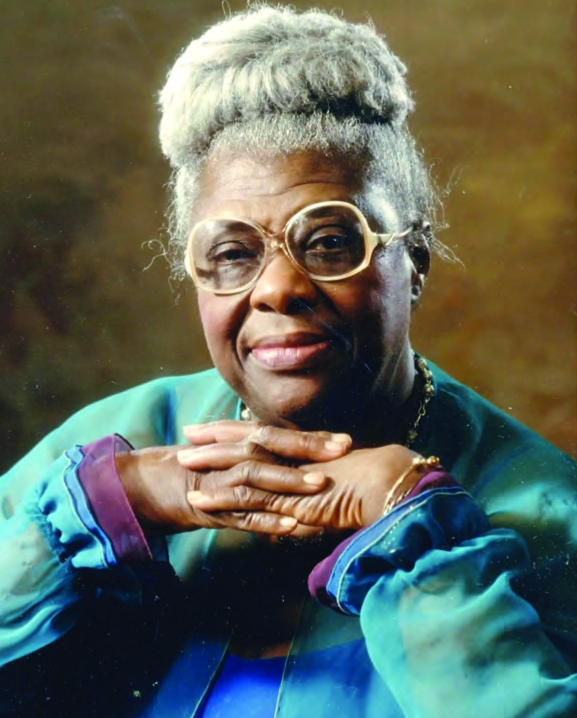
Boston icon Elma Lewis
After the Oscars on March 15, folks were buzzing about actors speaking out about activism or about Hollywood’s important societal role, and many see this work as the duty of art.
These discussions, political speeches and films connect deeply with our everyday struggles.
Movies tell stories, music lifts and soothes our souls; these two creative enterprises help define and cement contemporary cultural identity.
In this present cultural time period, when our commercial news media are messed up, driven mad and more money-driven, thank God for the “lift spirits parts of our creative industry” that recognize the importance of our human cultural experiences.
In a post-Oscar night review in USA Today, writers commented that our lives “are dominated by …narratives about human nature and our shared future.” Given all the noise, what truly makes us human?
Well, our humanity has its challenges and limitations. So, a little humor, a song for sanity and some prayers are needed. That’s what culture gives us, a balm in challenging times.
Writers note that the stories and songs we absorb help us “understand the world, ourselves and what the good life looks like.” This resonates now as industries persuade many toward a new age of convenience and AI-driven consumption.
As a Marvel fan, I appreciate how the stories script values, loyalty and integrity amid power, treachery, friendship and leadership. They last forever.
Reflecting on this, the intersection of heritage, music and messaging through the lens of commercial movies becomes even more significant in shaping our culture.
USA Today culture columnists Clay Routledge and Paul Anleitner write, “The most powerful films move us through the portrayal of moral beauty and human goodness. They showcase personal sacrifice and heroism that remind us of humanity’s capacity for courage. They depict triumph over adversity, demonstrating the power of persistence and resilience. They portray redemption that illuminates our ability to grow and change over the course of their character arcs. … Life’s meaning isn’t attached to individual achievement but to the shared flourishing of others. They display love, kindness, and deep connection that affirm our fundamental need for meaningful relationships… [as well] with entertainment that makes them feel touched, moved, or inspired, they are engaged in positive prosocial behavior.”
We have shared in these serious, values-based Bay State Banner pieces some strategic work that must be used to rebuild the bridges over this “current trouble in the waters.”
In my last piece on contemporary culture, with the Grammys, I shared here how American popular culture movements create an “American Theology of Culture” and that there is in our arts a “freedom all dance call” from the spirituals to rock and roll and rap, a “ testimony of tone” and a certain “intentional soul in the spin.”
*Bad Bunny’s Super Bowl 2026 dance and banner said it all:
“The only thing more powerful than hate is love.”
Social justice, economic empowerment
In the Banner last week, it was reported that Roxbury Community College (RCC) recently secured a $12 million investment to restore its center for economic and social justice, preparing students, particularly students of color, for careers in growing industries such as clean energy, energy efficiency, and green technology, small business development and entrepreneurship in Roxbury and surrounding communities.
As it was reported last week, “We are dealing with one of the greatest challenges of the present day, the workforce crisis, which prepares to support approximately 100 students each year with pathways to meaningful careers. …will also enable conversations about what justice can look like and how the college ca
Question for our communities. How does arts engagement meet meaning here in Boston?
Education and Arts
From Edmonia Lewis to Elma Lewis, and from the Haynes brothers to today’s many arts and culture organizations, Boston will continue to lead our country in modeling excellence that goes very deep.
The arts, in combination with education, play an important role in shaping societies, and this is the duty of art to lift the human spirit and “the shared flourishing of others.”
Where, then, are these places, and with whom are these talks and actions happening?
People are doing the hard work in Boston to mobilize and move our communities forward. Boston has the cultural legacy and the community-based infrastructure and leadership to commit to focusing on and working in these areas, as our creative community programs are deep and numerous.
Certainly, Boston After School and Beyond is very well known, its mission “to ensure that Boston youth have access to and acquire the skills and to navigate school, college, and caress life.’”
This past week, I called a number of local leaders in arts and education to discuss this work; they not only commented on their direct work but also referred to many other well-known Boston entities and their impact on our communities.
Boston University Professor of the Practice, Public Relations Kelley Chunn notes, “At a time when the world seems on fire, Boston’s community-based arts and culture ecosystem is meeting the moment.” Perhaps author Toni Morrison said it best: “This is precisely the time when artists go to work. There is no time for despair, no place for self-pity, no need for silence, no room for fear.”
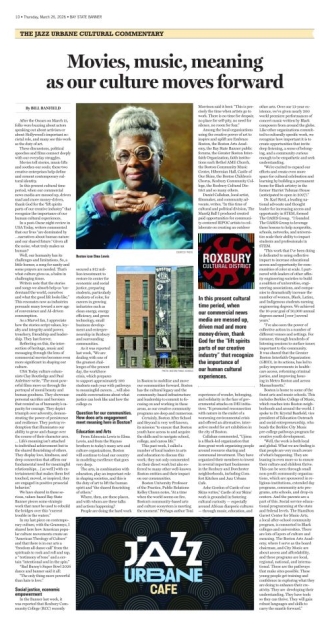
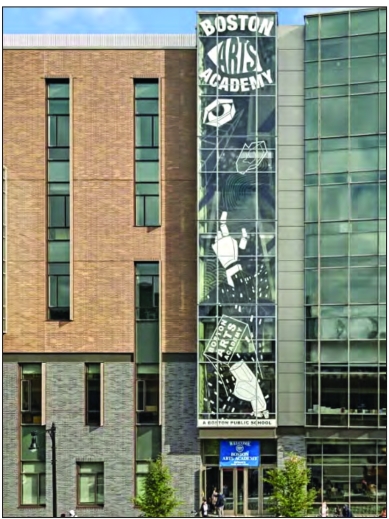
Among the local organizations using the creative power of art to inspire and uplift are Embrace Boston, the Boston Arts Academy, the Bay State Banner public forums, the Greater Boston Interfaith Organization, faith institutions such Bethel AME Church, the Boston Community Music Center, Hibernian Hall, Castle of Our Skins, the Boston Children’s Chorus, Roxbury Community College, the Roxbury Cultural District and so many others.
Daniel Callahan, local artist, filmmaker, and community advocate, writes, “In this time of cultural and political division, The MassQ Ball I produced created paid opportunities for community-centered BIPOC artists to collaborate on creating an outdoor experience of wonder, belonging, and solidarity in the face of governmental attacks on DEI initiatives. “It promoted reconnection with nature in the midst of a worsening environmental crisis and offered an alternative, interactive model for art exhibition in the city of Boston.
Callahan commented, “Ujima is a Black-led organization that does great work organizing people around resource sharing and communal investment. They have organized their members to invest in several important businesses in the Roxbury and Dorchester neighborhoods, including Comfort Kitchen and Jazz Urbane Cafe.
Ashe Gordon of Castle of our Skins writes,” Castle of our Skins’ work is grounded in fostering cultural curiosity — especially around African diasporic cultures — through music, education, and other arts. Over our 13-year existence, we’ve given nearly 200 world premiere performances of concert music written by Black composers from around the globe. Like other organizations committed to culturally specific work, we recognize how important it is to create opportunities that invite deep listening, a sense of belonging, and a community curious enough to be empathetic and seek understanding.
“We’re excited to expand our efforts and create even more space for cultural celebration and learning by building a permanent home for Black artistry in the former Harriet Tubman House (anticipated to open in 2027).”
Dr. Karl Reid, a leading national advocate and thought leader for increasing access and opportunity in STEM, formed The OASIS Group. “I founded The OASIS Group to leverage these lessons to help nonprofits, schools, networks, and universities scale their ability to impact students and professionals in STEM.
“This work that I’ve been doing is dedicated to using collective impact to increase educational access and opportunity for communities of color at scale. I partnered with leaders of other affinity engineering societies to build a coalition of universities, engineering associations, and companies to dramatically increase the number of women, Black, Latinx, and Indigenous students earning engineering degrees. We achieved the 10-year goal of 50,000 annual degrees earned [over] several years.”
“I’ve also seen the power of collective action in a number of different venues and settings. For instance, through hundreds of listening sessions to surface issues important to the community. It was shared that the Greater Boston Interfaith Organization (GBIO), in its actions, has led to policy improvements in healthcare access, reforming criminal justice, and improving housing in Metro Boston and across Massachusetts.”
Boston is home to some of the finest arts and music schools. This includes Berklee College of Music, which reaches into Boston neighborhoods and around the world. I spoke to Dr. Krystal Banfield, vice president of Education Outreach and social entrepreneurship, who heads the Berklee City Music pre-college pathways program for creative youth development.
“Well, the work is both local and global. What we are finding is that people are very much aware of what’s happening. They are leaning in even more so to ensure their culture and children thrive. This can be seen through small non-profit community organizations, which are sponsored in religious institutions, extended day programs, community arts programs, arts schools, and drop-in centers. And the parents are a part of this. Social service educational programming at the state and federal levels. The Hamilton Garret Center for Music Arts, a local after-school community program, is connected to Black colleges and universities. There are lots of layers of culture and meaning. The Boston Arts Academy, where I serve as the board chairman, and City Music are about access and affordability, and these programs are local, regional, national, and international. These are the pathways that make sites possible. These young people get training and confidence in exploring what they are doing to enhance their creativity. They are developing their understanding. They have tools so they can thrive. They will gain robust languages and skills to carry the mantle forward.”