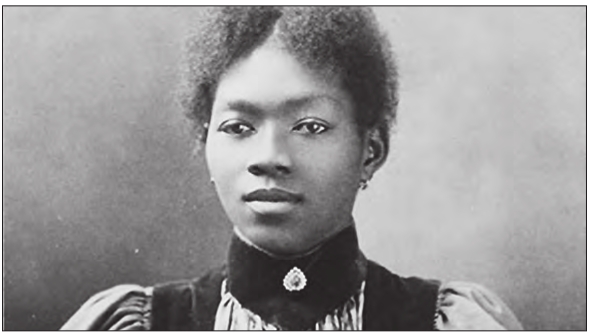
Harriet E. Wilson is recognized as the first African American woman to publish a novel in the United States. 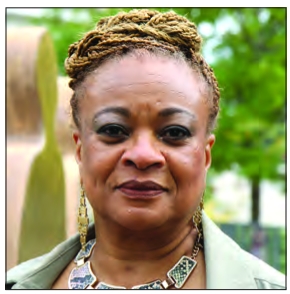
When many people think of New Hampshire, they picture rolling hills, white church steeples, colonial homes, and postcard-perfect town greens. They see pastoral beauty, early American charm, and a way of life that feels distant from the nation’s long struggle with race and inequality. For generations, we have been taught that New Hampshire is largely untouched by Black history. That narrative couldn’t be further from the truth.
Beneath the carefully preserved colonial façades lies a deeper story, one that mirrors the broader American experience. It includes the story of free people of color before enslavement. It includes the story of enslavement and it includes the story of people of African descent who lived, labored, resisted, and built community in a nation that has repeatedly fallen short of its promise of “liberty and justice for all.” The most oft-repeated narrative of New Hampshire is one devoid of color, devoid of diversity, and one in which Black history is often ignored, diminished, or deliberately erased.
Two powerful figures connected to this hidden history are Ona Marie Judge Staines and Harriet E. Wilson, two Black women whose courage, words, and choices continue to echo across centuries.
Ona Judge was born into slavery in 1773 at George Washington’s Mount Vernon. She became the body servant to Martha Washington, living in proximity to power and privilege while the law regarded her as property that could be used and abused, traded, and sold. When the Washingtons relocated to Philadelphia, they learned that Pennsylvania law allowed enslaved people to claim freedom after six months of residence in the commonwealth.
Rather than honor that law, the Washingtons deliberately rotated their servants back to Virginia to prevent them from exercising this right.
At just 22 years old, Ona made a life-altering decision. In 1796, when she learned she was to be given away as a wedding present, she decided to seek freedom. She escaped from the presidential household one afternoon during the rotation of servants and fled North with the help of Philadelphia’s Black community. She eventually settled in New Hampshire, where she lived the rest of her life.
George Washington, the most powerful man in the country, used federal agents, personal networks, and legal pressure in repeated attempts to reclaim her. He failed.
Ona was never caught. She chose herself. She chose freedom over fear.
Years later, when asked why she ran, she answered simply, “I am free now and choose to remain so.” Her words endure as one of the most powerful declarations of self-liberation in American history, spoken by a Black woman in a nation where her autonomy could be denied.
Decades later, another New Hampshire woman would also claim her voice.
Harriet E. Wilson was born free in Milford, New Hampshire, in 1825. Orphaned at a young age, she was placed as an indentured servant in a white household, where she endured neglect, isolation, and abuse. Her life exposed an uncomfortable truth: racism did not end at the Mason-Dixon Line. Freedom in the North did not guarantee dignity, safety, or opportunity.
In 1859, Wilson published “Our Nig: Sketches from the Life of a Free Black,” widely recognized as the first novel published by an African American woman in the United States. Through her writing, she shattered the myth of Northern moral superiority and revealed the realities Black people faced. Wilson’s pen became her protest, truth telling her weapon.
What connects Ona Judge and Harriet Wilson is their refusal to accept silence or erasure. One fled to claim her freedom. The other wrote to defend her humanity. Both rejected invisibility.
Today, across the country, we are witnessing renewed efforts to erase, distort, or sanitize Black history. Interpretive markers are removed. Books are banned. Educators are silenced. Honest conversations about slavery, resistance, and systemic racism are dismissed as “divisive.” This is not accidental. It is an attempt to control memory.
When Black history is erased, democracy itself is weakened. Truth is obscured. Inequality is misunderstood. And the voices that have always pushed this nation closer to its ideals are silenced.
For the past eight years the Black Heritage Trail of New Hampshire has worked to restore and preserve the history of Black people in the state. Through historical markers, walking tours, educational programs, and community partnerships, the Trail brings buried stories into public view and connects local history to national struggles for justice.
This work reminds us that although New Hampshire’s hills and historic homes may appear tranquil, they hold powerful truths of stories of courage, resistance, and radical self-worth. New Hampshire’s history is not separate from America’s racial past. It is inseparable from it.
Ona Judge and Harriet Wilson remind us that freedom has never been freely given. It has always been claimed, written, defended, and remembered.
As The Bay State Banner marks its 60th anniversary through the “State of Black America Forum Series,” the theme “Black History and America’s Ongoing Struggle for Freedom” challenges us to ask whose stories we choose to carry forward—and whose we allow to fade.
Our responsibility is clear.
We must protect these stories. We must support cultural institutions. Visit historic sites and museums that tell these stories. Advocate for honest education. Read the work of our ancestors and teach our children where they come from.
Ona Judge and Harriet Wilson did not wait for permission to be heard. Neither should we. Because the struggle for freedom is, at its core, a struggle for memory. And memory is power.
JerriAnne Boggis is executive director of the Black Heritage Trail of New Hampshire.