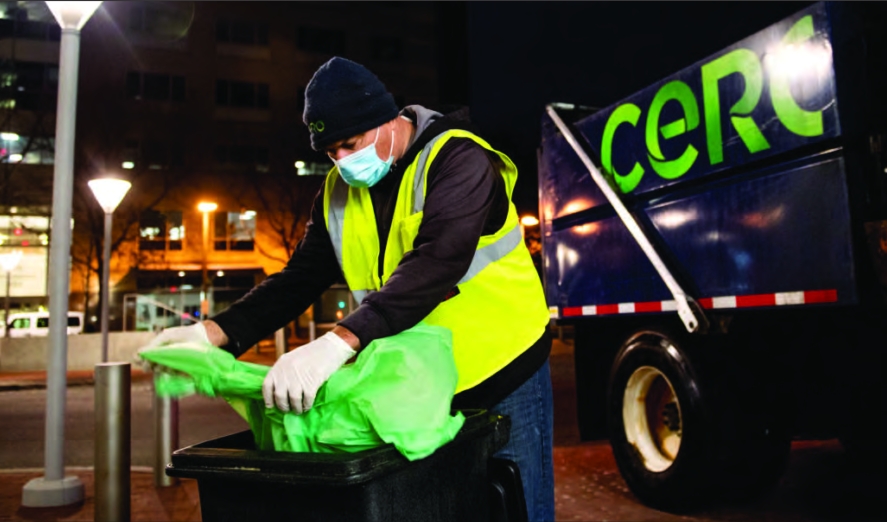
CERO is a worker-owned co-operative and diverts 50 tons of garbage from landfills each week.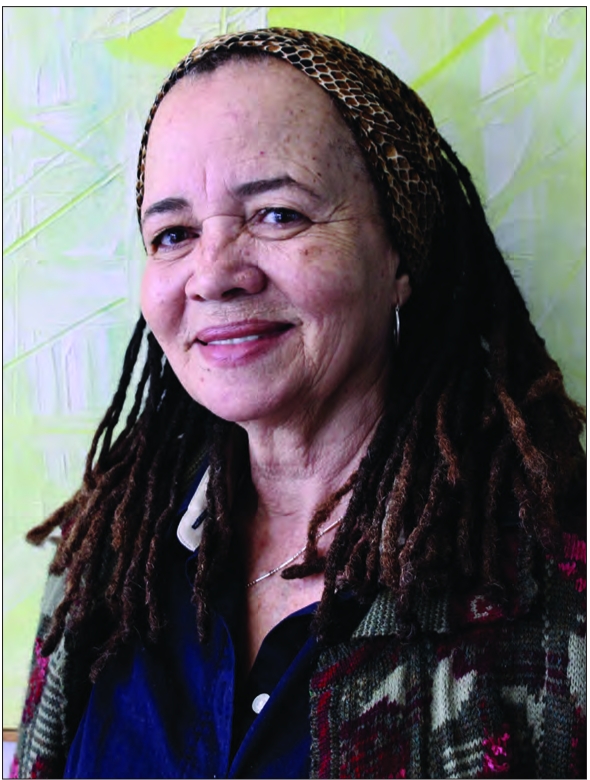
CERO founder and owner Josefina Luna.
Thirty-five years ago Josefina Luna arrived in the city of Boston from New York, where she had lived as a new immigrant from the Dominican Republic.
As she was settling into her Dorchester environment and working in the nonprofit sector to help community members with crisis care and support, Luna decided to also get involved in civic groups.
While volunteering with some of these groups, Luna began to learn about community issues, such as the housing and financial crises that were impacting low-income communities in the city, as well as about new policies regarding food wasting and composting.
Learning about these issues prompted Luna to think about how she could contribute to her new environment, especially as a woman of color in a way that might benefit others like her. Issues around sustainability particularly stuck with her and she wanted to explore how she could venture into the field “while creating meaningful, living-wage jobs in historically underserved neighborhoods.”
Not seeing any opportunities in the city at the time, Luna in 2012 decided to launch her business, called CERO Cooperative, Inc. “CERO” stands for “Cooperative, Energy, Recycling and Organics” and the company’s focus is food waste management. Around 21% — that’s roughly 930,000 tons or more than 2 billion pounds — of all trash generated in Massachusetts is food waste, and when it ends up in landfills, communities lose out on the chance to use those food scraps for other purposes. By offering composting services, CERO helps businesses and residences minimize how much of their food waste ends up in landfills. CERO takes the food scraps it collects to local farms to turn into compost or to use as animal feed.
CERO’s business mission is also aligned with sustainability goals set by Massachusetts. In 2014, the state enacted a law banning commercial food waste and requiring businesses that create more than a ton of food waste weekly to divert that material from trash (the law was updated in 2022 to include any business that generates more than half a ton of food waste).
Already, that law has helped divert 380,000 tons (838 million pounds) of commercial food waste from landfills every year.
But CERO’s mission goes a step further than environmental sustainability. And as a worker-owned cooperative, CERO helps ensure that its employees have safe jobs, a good working environment and decent wages.
Luna said that when she and her team started CERO, they had to work hard to educate local communities about the environmental crisis and how Black and brown communities in the city were particularly vulnerable.
“We went everywhere — the school, church, or community group, everywhere people get together,” said Luna, who is now also CERO’s worker-owner operations manager. “The people in our community didn’t know about food wasting [or] composting. When we went to some places, the people [would be] looking at us like we went crazy.”
Apart from the effort needed to educate the community about why a service like CERO was needed, the company’s early struggles also included having no working capital or all the resources it needed.
“We had to put [on] a good face,” said Luna. “We had to knock [on] the door more than one time to get what we needed.”
Those efforts paid off. Through a direct public offering, where community members were able to invest directly in the business, CERO raised more than $370,000 in 2014 and was able to get off the ground with its work. CERO’s customers have included major businesses in and around Metro Boston, including Northeastern University and Democracy Brewing. CERO customers also get regular reports outlining how much food waste they have kept out of landfills. CERO estimates that since it launched it has helped divert, on average, 50 tons (100,000 pounds) of food waste per week from ending up in trash.
To other Black and minority folks who want to open businesses, Luna says that a lot of passion and dedication is needed, as is the ability to believe in themselves. “Follow your heart,” she said. But she also warns about the realities of being a leader and entrepreneur, whether it’s working longer hours but not necessarily for more pay or not being able to take time off while shouldering extra responsibilities. “That’s the reality — let’s say a struggle,” she said.
Aspiring entrepreneurs can have a happy ending, however, and working within an employee-led model like CERO helps bring value back to the work.
“That’s the thing that motivated me to struggle so hard,” Luna said. In other business models, “the dignity of the person doesn’t have a value, only the dollar [does],” she said. But at CERO, “We value people’s dignity, people’s initiative, people’s creativity. We added the dollar [to the business], but it’s not the dollar that’s the priority.”