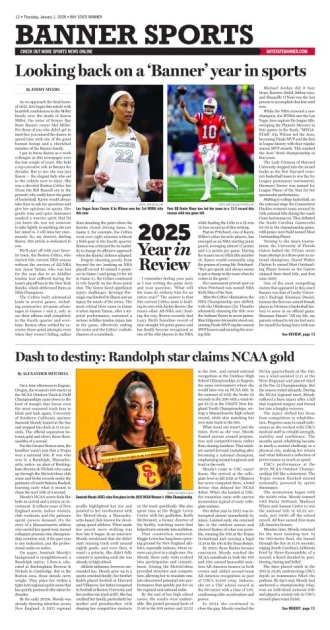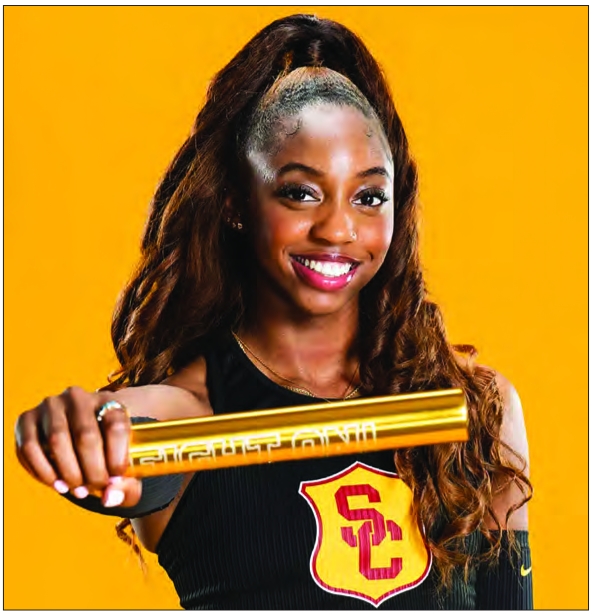
Samirah Moody (USC) wins first place in the 2025 NCAA Women’s 100m Championship.
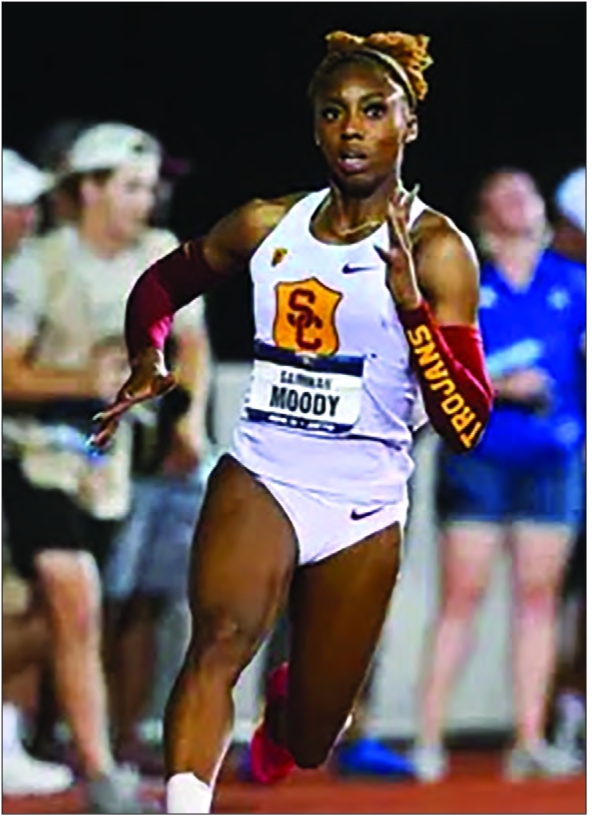
Samirah Moody (USC) at the June 2023 Women’s NCAA Division Outdoor Track & Field Championships at Texas-Mike A. Myers Stadium in Austin, TX.On a June afternoon in Eugene, Oregon, the women’s 100-meter at the NCAA Outdoor Track & Field Championships came down to the kind of margin that forces even the most seasoned track fans to blink and look again. University of Southern California sprinter Samirah Moody leaned at the line and stopped the clock at 11.14 seconds. The official separation between gold and silver: three-thousandths of a second.
For the Greater Boston area, the headline wasn’t just that a Trojan won a national title. It was who won it; a Randolph, Massachusetts, native, an alum of Buckingham Browne & Nichols who came up through the MetroCobras club scene and broke records under the guidance of coach Saleena Rashed, learning early what it meant to chase the next 10th of a second.
Moody’s NCAA crown feels like both an arrival and a return on investment. It reflects years of New England meets, indoor winters, club workouts and the patience sprint careers demand. It’s the story of a Massachusetts athlete who carried her speed west, turned collegiate promise into championship certainty and, if the past year is any indication, put the professional ranks on notice.
On paper, Samirah Moody’s background is straightforward: a Randolph native, 5-foot-4, educated at Buckingham Browne & Nichols in Cambridge. But in the Boston area, those details carry weight. They place her within a tight-knit regional sprint scene that has quietly produced elite talent for decades.
By the early 2020s, Moody was already drawing attention across New England. A 2021 regional profile highlighted her rise and pointed to her involvement with the MetroCobras, a Massachusetts-based club known for developing speed athletes. What made her ascent more striking was how late it began. In an interview Moody mentioned that she didn’t start running track until around eighth grade, and even then, it wasn’t a priority. She didn’t fully commit to sprinting until she was already in high school.
Athletic influence, however, surrounded her. Moody grew up in a sports-oriented family; her brother Kaleb played football at Harvard and Villanova, her father competed in football at Boston University and her mother ran track at BU. She has credited her family, particularly her mother and grandmother, with shaping her competitive instincts on the track specifically. She also spent time at the Reggie Lewis Center with her godfather, Keith McDermott, a former director of the facility, watching meets that helped turn curiosity into ambition.
That connection mattered.
Reggie Lewis has long been a proving ground for New England athletes, especially indoors, where careers can pivot in a single race. For Moody, those early visits evolved into participation and commitment. Joining the MetroCobras provided structure and competition, allowing her to translate raw, late-discovered potential into performances that quickly put her on the regional and national radar.
By the end of her high school career, the results were undeniable. She posted personal bests of 11.48 in the 100 meters and 23.32 in the 200, and earned national recognition at the Outdoor High School Championships in Eugene, the same environment where she would later win an NCAA title. In the summer of 2021 she broke 24 seconds in the 200 with a wind-legal 23.73 at the USATF New England Youth Championships, setting a Massachusetts high school record, while also matching her own state mark in the 100.
What stood out wasn’t just the times. Even as she rose, Moody framed success around preparation and competitiveness rather than chasing numbers. That mindset carried forward, including after becoming a national champion, emphasizing mental toughness and trust in the work.
Moody’s route to USC wasn’t linear. She arrived at the collegiate level in fall 2021 at Villanova but never competed there, a brief detour that delayed her NCAA debut. When she landed at USC, the transition came with uneven momentum typical of early collegiate seasons.
Her debut year in 2022 was interrupted almost immediately by injury. Limited early, she returned late in the outdoor season and showed flashes of what was possible, winning the 200 at the Trojan Invitational and running a legal 11.24 in the 100 at the Texas Relays.
By 2023, those flashes became consistent. Moody reached the NCAA semifinals in both the 100 and 200, earned honorable mention All-America honors in both events and added second-team All-America recognition as part of USC’s 4x100 relay. Indoors, she set a USC school record in the 60-meter with a time of 7.07, confirming elite acceleration and power.
In 2024 she continued to close the gap. Moody reached the NCAA quarterfinals in the 100, ran a wind-assisted 11.11 at the West Regional and placed third at the Pac-12 Championships. But the season ended abruptly. During the NCAA regional meet, Moody suffered a knee injury after a fall that required surgery and forced her into a lengthy recovery.
The injury shifted her focus from competition to rehabilitation. Progress came in small milestones as she worked with USC’s medical staff to rebuild strength, stability and confidence. The months spent rehabbing became as much a mental challenge as a physical one, making her return and what followed a reflection of perseverance as much as speed.
USC’s performance at the 2025 NCAA Outdoor Championships felt like a statement. The Trojan women finished second nationally, powered by sprint dominance.
The momentum began with the 4x100 relay. Moody teamed with DaJaz DeFrand, Madison Whyte and Jassani Carter to win the national title in 42.22 seconds, just 100th off the school record. All four earned first-team All-America honors.
Minutes later, Moody returned for the most isolating test. In the 100-meter final, she leaned through the line in 11.14 seconds, edging South Carolina’s JaMeesia Ford by three-thousandths of a second, a finish decided by positioning, timing and belief.
She later placed ninth in the 200 in 22.86, underscoring USC’s depth as teammates filled the podium. By day’s end, Moody had anchored a championship relay, won an individual national title and played a central role in USC’s second-place team finish.
For a Boston audience, the victory carried a familiar undertone.
Despite competing on the West Coast, Moody’s athletic identity remains rooted in Massachusetts, from Randolph to Metro-Cobras to Buckingham Browne & Nichols, a rise consistently framed through that local lens.
An NCAA title speaks for itself, but the numbers beyond college offer context. Moody’s personal best of 10.93 in the 100, set in June 2025, places her firmly beyond collegiate speed. That same stretch produced a 42.22 relay mark, along with a 22.50 personal best in the 200 and a 7.07 indoor 60. In sprinting, dropping from the low 11s into the high 10s isn’t cosmetic, it changes expectations. Times like 10.93 don’t just open doors, they demand attention. Current international rankings reflect that shift, placing Moody within a global sprint conversation.
It would be easy to credit Moody’s rise solely to USC. But her story only makes sense when the Massachusetts chapters are treated as foundational. Long before national titles, the pattern was there, finding the right environments, learning the craft and competing with urgency.
A 2021 profile described her as a rising sprint talent regionally and nationally. At the time, it sounded like a projection. Four years later, it reads as foresight. Sprint careers rarely follow a smooth arc. Moody’s included a non-competing semester at Villanova, injury interruptions and gradual rebuilding. What followed wasn’t instant stardom, but sustained development that carried her to the NCAA summit.
Away from the track, she built an equally impressive resume. Moody earned an undergraduate degree in communications and a master’s degree in criminal justice. She won USC’s Jackie Robinson Community and Impact Award, served as a peer educator in the Justice, Equity, Diversity, and Inclusion program, co-led the United Black Student-Athlete Association and represented USC as a Big Ten Conference representative.
There is something distinctly Massachusetts about the way Moody’s career has unfolded. It wasn’t built on spectacle or shortcuts, and it didn’t arrive wrapped in hype. Like the region she comes from, her rise has been rooted in work, early mornings, cold indoor seasons and progress measured quietly over time. Greater Boston has never sold itself on flash. It values reliability, effort and showing up day after day, whether in neighborhoods, classrooms or weight rooms.
Moody’s development mirrors that ethos. While cities like New York, Los Angeles, Chicago and Atlanta often dominate the spotlight with scale and shine, Massachusetts has long taken pride in substance over sizzle. Moody didn’t need the glitz to validate her path, she earned her place the same way the region does, by grinding until the results spoke loud enough to the point where nothing else needed to be said.
If 2025 marked Moody’s national breakthrough, it may also mark her transition into a different competitive category. A national title, a sub-11 personal best and elite relay credentials place her firmly in global conversations. For Boston, that evolution matters. New England isn’t always seen as a hub for sprinting excellence, but every Massachusetts-raised athlete who wins on a national stage widens the lane for the next one. Moody did more than win a few races in Eugene. She made a Massachusetts sprint story feel immediate and real. With two national titles and a 10.93 on her resume, the rest of the track world now has to take that speed seriously.