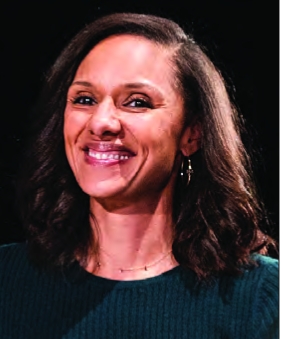
Mary Sheffield, mayor-elect of DetroitElection Night 2025 didn’t just make headlines; it made history. In Detroit, voters shattered a 324-year barrier by electing Mary Sheffield as the city’s first woman and Black woman mayor.
Her victory is more than symbolic; it’s a testament to the transformative power of Black women’s leadership and a powerful addition to the growing sisterhood of Black women mayors who are redefining what executive power looks like in America’s cities.
At 38 years old, Mary Sheffield’s rise reflects both vision and grit. The daughter of longtime Detroit community leader Rev. Horace Sheffield, she has spent her career fighting for economic justice, equitable development, and opportunity for all. She was elected to the City Council in 2013, becoming the youngest member in the city’s history.
Black women are not only showing up to vote, we’re showing up to govern.
In 2022, the members of the City Council elected her to serve as council president, where she earned a reputation for bringing people together, pushing for affordable housing, youth employment and policies that put people, not corporations, at the center of progress. Her leadership has always been rooted in love for her city and an unwavering belief that Detroit’s comeback must include everyone.
Now, as mayor-elect, Sheffield joins a powerful lineage of Black women leading major cities, from Karen Bass in Los Angeles and Muriel Bowser in Washington, D.C., to Cherelle Parker in Philadelphia, Pamela Goynes Brown in North Las Vegas and Vi Lyles, who was reelected to an unprecedented fifth term in Charlotte, North Carolina.
A bright spot in our democracy
Together, these women represent a bright spot in our democracy and a model for the kind of leadership our nation desperately needs: experienced, empathetic, accountable and focused on building stronger, safer, more equitable communities from the ground up.
And
they are doing so whilestanding on the frontlines of crisis. Across the
country, Black women mayors are grappling with the real consequences of
Washington gridlock, a federal government shutdown that has stretched
into a second month, disrupting vital services; the loss of SNAP
benefits that threatens the stability of millions of families; and the
ongoing challenges of federal ICE enforcement in their communities.
While others debate, these women are delivering, ensuring their
residents are fed, housed and safe. They are governing in real time with
limited resources and limitless resolve.
When
Higher Heights Leadership Fund released our first Black Women in
American Politics report in 2014, along with our research partner, the
Center for American Women in Politics, just one Black woman served as
mayor of one of the nation’s 100 largest cities. Today, that number has
grown to eight,
matching our share of the U.S. population. In the last decade, 18 Black
women have served as big-city mayors, including the first to lead cities
like Baton Rouge, Boston, Chicago and San Francisco.
This
is more than a statistic; it’s a sign of transformation. Black women
are not only showing up to vote, but we’re also showing up to govern.
Representation at the executive level matters
These
leaders are guiding America’s largest, most complex cities through some
of the most politically toxic and racially divisive times, and they’re
doing it with grace, innovation and a deep commitment to equity. From
tackling homelessness and housing affordability to rebuilding public
trust and defending democracy, they are proving that when Black women
lead and show up as their full selves, we all move forward.
But
electing them is only the beginning. We must be governing partners by
creating the environment for them to lead boldly, amplifying their
successes, defending them against unjust attacks and ensuring they have
the tools, resources and respect they need to lead effectively.
As
the Black Women in American Politics report underscores, representation
at the executive level matters. It changes how policy is shaped, how
communities are served and how democracy feels to those who’ve too often
been left out.
Sheffield’s
election is a powerful reminder that when Black women lead, communities
thrive. Detroit is now at the forefront of a story of continued
renewal, powered by a young, visionary Black woman mayor who believes in
the power of collective progress. Her victory lights the path forward,
reminding us that even in times of division and doubt, Black women
remain democracy’s strongest defender and brightest hope.
Glynda C. Carr is president and CEO of Higher Heights for America, a 501(c)(4).