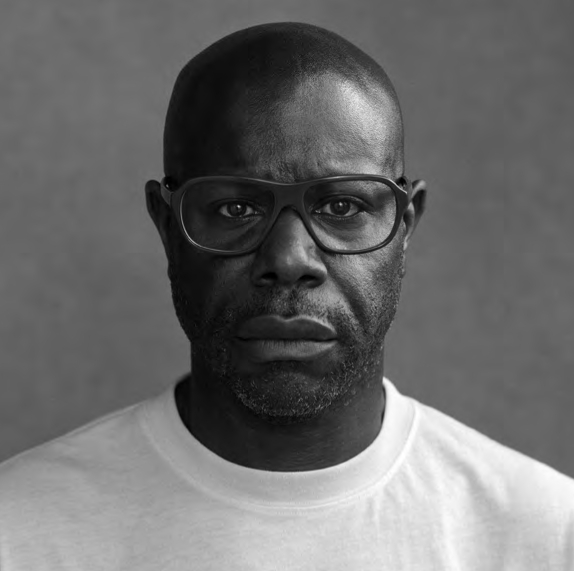
Academy Award-winning filmmaker and artist Steve McQueen is this year’s Charles Eliot Norton Professor of Poetry at Harvard, where he will give six lectures during the academic year. Sir Steve McQueen, one of Britain’s leading film directors and visual artists, is this year’s Charles Eliot Norton Professor of Poetry at Harvard. He will deliver six lectures throughout the academic year, which are open to the public.
McQueen, who divides his time between London and Amsterdam, caught the attention of the world’s moviegoers with “12 Years A Slave,” which won an Academy Award in 2014 for Best Picture. For his work as an artist and filmmaker, he was knighted in 2020 by the British monarchy.
Prior to the enormous success of “12 Years A Slave,” and subsequently, McQueen’s oeuvre has demonstrated fearless engagement. His films and artistic installations reveal hidden or neglected narratives in contemporary life as well as historically.
This year he curated “Resistance: How Protest Shaped Britain and Photography Shaped Britain,” featuring hundreds of photographs and which opened in Margate, Kent. In his introduction to the installation notes, British scholar Gary Younge states that “each act of defiance both draws from the last and nourishes the next, providing a cascading sense of possibility.”
In 2023 “Grenfell,” McQueen’s documentary about the tragic, preventable fire that took 72 lives in a high-rise tower in London, was shown at Serpentine Galleries in London.
And in Amsterdam, his 34-hour movie, “Occupied City,” is being screened continuously through January 2026 at the Rijksmuseum. Based on the book “Atlas of an Occupied City — Amsterdam 1940-1945” written by Bianca Stigter, McQueen’s wife, the movie concerns the German occupation of Holland and the murder of its Jewish citizens. At the press opening for the movie, McQueen described his vision: “the past and the present as one thing.”
“Small Axe,” McQueen’s five films that showed in 2020, is made up of stories of West Indian immigrants in London that illuminate private lives with public constraints, individual identities possessing agency in society.
The magnitude of McQueen’s artistry focuses on the joy and despair of the human condition as it appears in the narratives of the disenfranchised, the dispossessed and the vulnerable. Lammas Park, his film production company, makes his artistic philosophy clear: “We are giving talent the space to explore, inspire and generate work that will disrupt the traditional landscape. What can be achieved when stories are told authentically is boundless. We are dedicated to elevating marginalized voices while pushing for a more inclusive and equitable industry.”
The Banner spoke with McQueen a few weeks ago in Harvard Square.
Banner: You’ve spoken of the burden of being an artist and how you have embraced that.
McQueen: I love being an artist, taking the responsibility for what has been neglected. It’s my bread and butter. It’s not a burden for me. I’m interested in illuminating subjects that have been kept in the dark. Those narratives are the fundaments of what we see.
Your art has urgency.
We live in a time of flux and instability. Artists are needed and valuable. We need to be transparent and present. Questions need to be asked.
I don’t know if readers in this country are familiar with, “Hunger,” your film about Bobby Sands, the Provisional IRA member who died on a hunger strike when he was incarcerated by the British during “The Troubles.” When the IRA went to war against the occupying British army in Northern Ireland.
Bobby Sands died in 1981 after his hunger strike to protest IRA prisoners being treated as common criminals rather than being given prisoner of war status. It was a time of constant danger; it was a colonial war.
In your second talk at Harvard, you mentioned that the finale of the exquisite dance scene in “Lovers Rock,” the second film of the “Small Axe” movies, was spontaneous and unscripted. Were there other improvisational and spontaneous scenes in that series?
Yes! Things happen. The moment allows things to happen. The scripts are there to get the funding. Lots of spontaneity in the groups of actors.
Tell us about “Occupied City.”
The movie is about Amsterdam from 1940 to 1945. I’ve lived there for 30 years and I feel surrounded by ghosts. I thought I was living with ghosts. My son and daughter attended schools that during the period of occupation were, respectively, a Jewish school and a prison.
Your work is an inspiration to younger artists and filmmakers. Any advice for those starting out?
Get on with it. Muck about with the camera. Experiment. Ask, “What are you looking at?” I’ve noticed here that people in the States seem numb and paralyzed. We need artists just to do it.
People need to make decisions.
ON THE WEB
Learn more at a24films.com/docs/occupied-city