(Top)
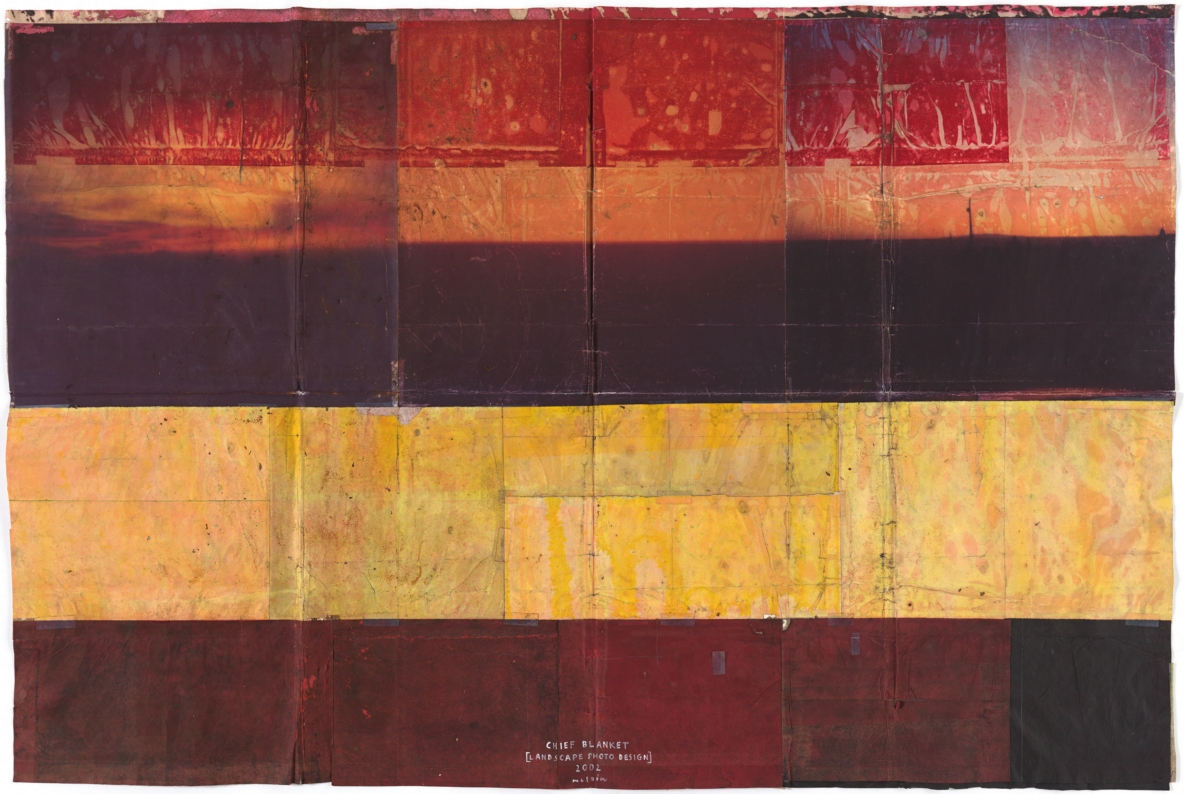
Kimowan Metchewais “Chief’s Blanket,” 2002, photo paper, ink, pigments,
watercolor and colored pencil on paper; National Museum of the American
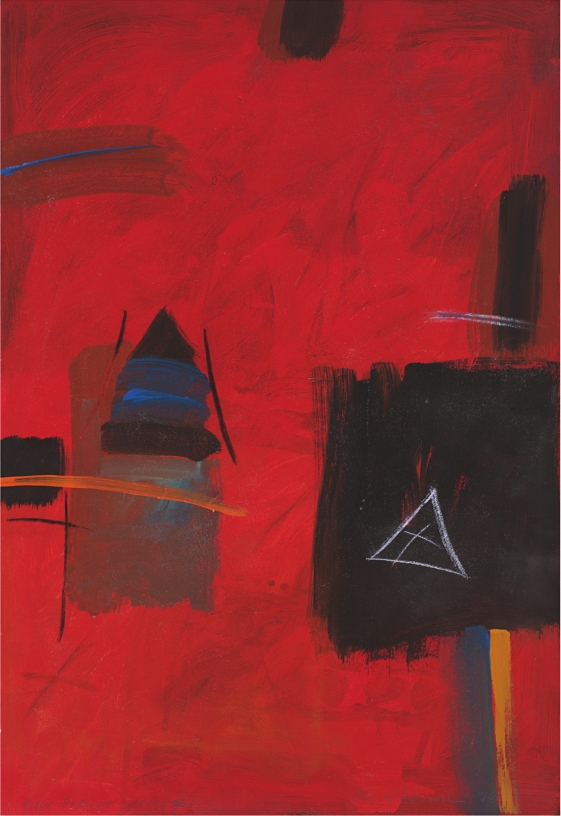
Indian, Smithsonian Institution, Washington, DC; (Middle) Jaune
Quick-to-See Smith, “Cree Prayer Series #1,” 1978, acrylic and pastel on
paper, courtesy the Estate of Jaune Quick-to-See Smith and Garth
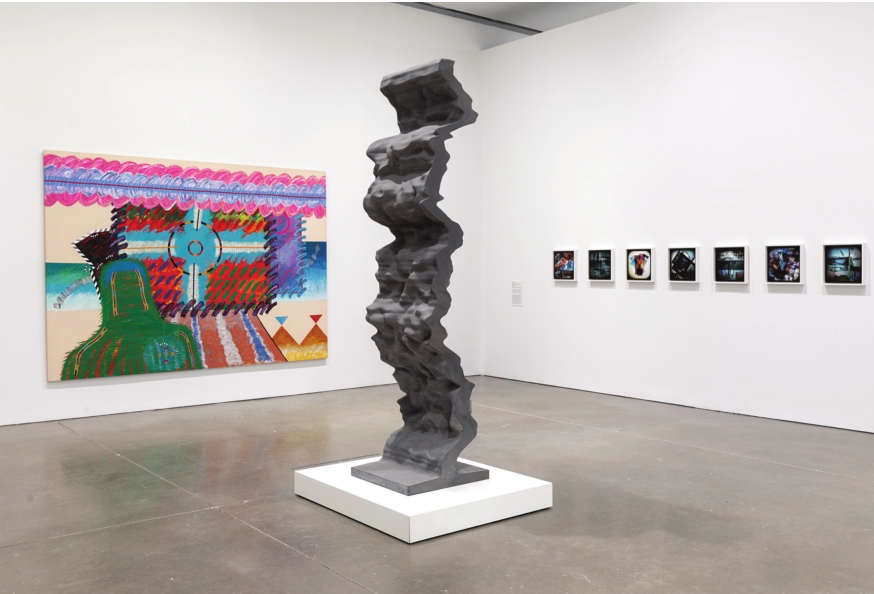
Greenan Gallery, New York; (Bottom) Installation view, An Indigenous
Present, the Institute of Contemporary Art/Boston, 2025-26. ICA show expands, challenges our perception of Indigenous arts
Native artwork takes center stage at “An Indigenous Present,” a sprawling new show at the ICA Boston that encourages visitors to view paintings, sculptures and sound and video installations fully and not solely in the pigeonholed context of tribal heritage.
Artist Jeffrey Gibson and independent curator Jenelle Porter organized the exhibition. Gibson’s first solo museum show was at the ICA was in 2013, curated by Porter. In 2023 the duo published “Indigenous Present,” a 400-page exploration of more than 60 Indigenous contemporary artists.
Now the team is back in Boston reflecting the themes of the book onto the gallery walls in “An Indigenous Present.”
Abstraction is the aesthetic anchor of the exhibition. Fifteen artists are represented, with Mary Sully, George Morrison and Kay WalkingStick grounding the show. Some traditional museum processes are upended in this exhibition. Gibson and Porter kept the curatorial text finite both to encourage viewers to interpret the works their own way and to avoid tying all their work solely to their Indigenous identity, a common and problematic museum instinct.
“This exhibition is a proposal, one that explores the ways that these artists challenge the often arbitrary, historical categorizations of art by Indigenous makers,” said Porter.
Sound is another dominant theme, explored through audio and video installations as well as music scores by Raven Chacon that translate compositions from the traditional Western method into a framework more connected to Native symbology.
Chacon also created a site-specific sound installation for the exhibition that visitors can experience in the ICA’s Founders Gallery, a space marked by floor-toceiling glass windows overlooking Boston Harbor. While visiting the space, Chacon was struck by a flag he could see flying in the wind on Fan Pier in the distance. Though he could imagine that sound a flag would make flapping against the wind, he couldn’t hear it. The resulting sound installation emulates the way that noise would travel.
Materials are heavily explored in the show. Caroline Monnet and Anna Tsouhlarakis both created site-specific installations for this exhibition. Monnet’s is on the Sandra and Gerald Fineberg Art Wall in the museum’s entryway. In response to the way many of Boston’s neighborhoods, like Back Bay and the Seaport where the ICA is, have been manufactured on landfill, Monnet used building materials to create a fractal design on the walls. Those materials are often used to construct the poor-quality government housing found on reservations.
Tsouhlarakis
constructed a cheeky installation titled “IF SHE WAS AT THE PARTY, SHE
WOULD HAVE DUMPED MORE THAN TEA,” a reference to the Boston Tea Party.
The multimedia sculpture, designed like the prow of a ship, uses a broad
spectrum of materials from IKEA remnants and boat fenders to horsehair,
buffalo nickels and artificial elk teeth.
“We
know the Boston Tea Party was a revolt against tariffs,” says Porter.
“It was a contributing factor to the American Revolution. And what are
we talking about these days? Tariffs.”
“An
Indigenous Present” runs at the ICA through March 8, 2026. From here it
will travel to the Frist Museum in Nashville and the Frye Art Museum in
Seattle.
Gibson hopes viewers come away with a better understanding the broad, nuanced spectrum of Indigenous artists.
“My
goal has always been to create a much more expansive perspective and
context for Native artists in particular and makers,” says Gibson. “The
work has always been engaged, it’s never been siloed.”
On the web
Learn more at: icaboston.org/exhibitions/