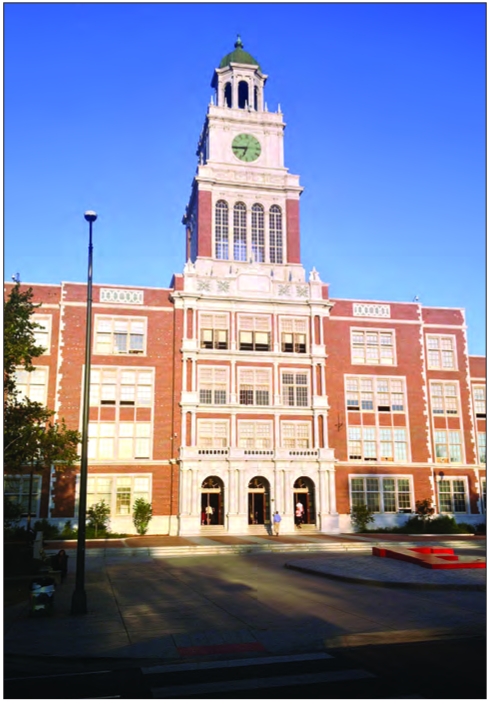
East High School in Denver Colorado boasts numerous graduates who have gone on to achieve fame.
Pam Grier, East High School alum.
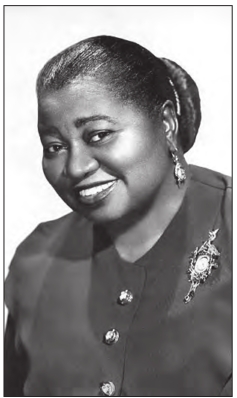
Hattie McDaniel enrolled at East High School in 1908.
New documentary tells story of remarkable Denver public school
What do Hattie McDaniel, Pam Grier, Don Cheadle, Philip Bailey, Larry Dunn, Andrew Woolfolk (three founding members of Earth, Wind & Fire), and billionaire Robert F. Smith have in common? They all received an extraordinary education at a public school, Denver, Colorado’s East High School.
These are just a few of the world-famous figures who graduated from this legendary public school, now celebrating 150 years. The alumni roster is staggering Ruth Handler, creator of the Barbie doll; Antoinette Perry, namesake of the Tony Awards; folk singer Judy Collins; Hollywood pioneers Douglas Fairbanks Sr. and Harold Lloyd; novelist Sidney Sheldon; Olympic gold medalist Jerome Biffle; and J. B. Bickerstaff, current coach of the Detroit Pistons. And that’s only the beginning.
So, what’s in the water at East High? The new documentary “Angel Power: 150 Years of East High Excellence” tells the story in a powerful, 90-minute narrative. Since its origins as the 1859 Union School, East has been Denver’s first and most iconic high school, moving into its landmark building in 1925. More than just a place of academics, East High has been a beacon of diversity and inclusion, long before these words became part of the national conversation.
Even in eras of segregation, East High’s doors were open. In 1908, a young Hattie McDaniel enrolled. She would go on to become the first Black American to win an Academy Award [Best Supporting Actress for “Gone with the Wind]. Her father, a former slave and Civil War veteran, had moved the family to Denver at the turn of the century. Hattie, the youngest of 13 children, was already performing by the time she entered high school. Though she left East after the 10th grade to pursue her career, this school was a crucial part of her journey.
McDaniel’s greatnephew, Kevin John Goff, shared that by the time she arrived in Hollywood, she was already well known. McDaniel quickly built close friendships with Massachusetts-born Bette Davis and screen legend Clark Gable. With her connections and talent, Hattie and her siblings appeared in more than a thousand films — a remarkable footprint in early Hollywood. In “Angel Power,” actress Pam Grier pays tribute to McDaniel, crediting her with paving the way for generations of Black performers.
“Angel Power” was produced by another alum, Robert Dean who spent much of his career as a producer for the TV show “NBC Dateline.” Dean broke the 150-year history of the school into 15 chapters, using each decade to show how diversity and inclusion can be beneficial for everyone involved. Executive producer Elizabeth Fisher Woodard admits that the hardest part of making “Angel Power” was deciding what to leave out.
“There
were simply too many extraordinary stories to fit into 90 minutes,” she
said. “Every corner of East High’s history has a tale of resilience,
creativity or achievement, but we had to make difficult choices to shape
a clear narrative.”
One of the film’s most striking stories recalls how the Ku Klux Klan terrorized Denver in the early 20th
century, infiltrating city hall and government offices. It was an East
graduate, Philip Sidney Van Cise, who as attorney general prosecuted the
Klan and ultimately drove them out of power in the city.
Today,
East is led by Principal Terita Walker, a Chicago native and the fourth
African American to head the school. She describes East’s promise this
way: “To nurture scholarship and inspire creativity. To celebrate beauty
in all its forms. To honor our differences while recognizing our shared
purpose in education. And most importantly, to confront ignorance,
intolerance and hate with love, kindness and empathy.”
The
legacy of East runs deep in many families. My husband, Philip Hart, and
his two brothers graduated from East. Philip was a star basketball
player whose teams won state championships and in 1965 his brother
Christopher became the school’s first Black valedictorian. Christopher
later served as the first African American chair of the National
Transportation Safety Board under presidents Bush and Obama. The Hart
brothers, who are featured in the documentary, like so many alumni
credit East for laying the foundation of their adult success.
But
with all its success stories, East High has not been exempted from the
tragedies of our time. In 2023, the school was shaken by a shooting that
left a beloved soccer star
mortally wounded. In the aftermath, the East High Angels again turned
grief into action, rallying around gun control measures and pressing
lawmakers to pass new protections for students. The spirit of advocacy
that has defined East for 150 years continues to shine through even in
its darkest hours.
This
year also marks a century in East’s current building, designed by an
1893 graduate. When the building was dedicated in 1925, community member
Dorus
Hatch described it as “a structure of ideas and ideals…an institution
whose office it is to beat back the blight of ignorance and push far the
frontiers of knowledge.”
Nearly
100 years later, these words resonate even more deeply, a reminder that
education is both a refuge and a force for change. East High has been
exactly that. From producing artists and innovators to shaping leaders
who changed the course of history, it is proof of how great public
schools create great citizens.
In
the documentary, Robert F. Smith sums it up best: “I have never met a
person from East High that was not a nice person, maybe that’s because
we are all Angels.”
“Angel
Power: 150 Years of East High Excellence” tells this story of
excellence, resilience and vision by showing how one public high school
in Denver shaped not just the city, but the world.