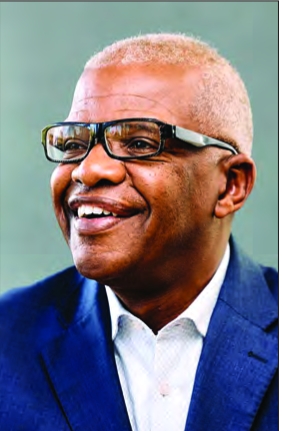
Brown University Professor Marion Orr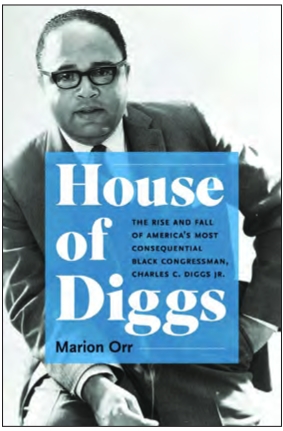
Marion Orr has spent much of his academic career studying the
intersections of race, politics, and education. Now, the inaugural
Frederick Lippitt Professor of Public Policy at Brown University has
turned his attention to a leader whose impact has been overlooked in
history books: Congressman Charles C. Diggs Jr.
In his new biography, House of Diggs: The Rise and Fall of America’s Most Consequential Black Congressman, Orr reconstructs the life of Michigan’s first Black U.S. representative, a man who helped shape the civil rights era at home and abroad, only to see his career collapse in scandal.
“Unfortunately, Charlie Diggs has been sort of almost forgotten,” Orr said in an interview. “What I want people to come away with from this book is reading and understanding this dynamic, this interesting, this complex, this frail, yet effective American leader.”
Born in Detroit in 1922, Diggs grew up in a family that blended entrepreneurial ambition with political awareness. He served as a lieutenant in a segregated Army unit in the Jim Crow South before returning home to study mortuary science and take over the family funeral business. Politics was not his first calling, but as Orr recounts, Diggs was persuaded to run for public office after seeing how little Black Detroiters were represented in city government.
In 1954 he won election to the U.S. House of Representatives, becoming the state’s first Black congressman. The biography follows this unlikely rise in detail, from Diggs’ early campaigns to his arrival in Washington, where he began carving out a role as a civil rights advocate.
Orr’s chapters highlight Diggs’ presence at pivotal moments in American history. In 1955, he traveled to Mississippi to attend the trial of the men accused of murdering 14-year-old Emmett Till, ensuring national attention remained on the case. In Congress, he advocated for desegregation in commercial air travel and fought discrimination in the military, both on and off base.
Diggs built alliances with civil rights leaders, including Rev. Martin Luther King Jr., a friendship that Orr explores in the chapter “Brothers in the Struggle.” Through his position, Diggs provided crucial legislative support for the growing movement.
In 1971 Diggs became the founding chairman of the Congressional Black Caucus, a coalition of African American lawmakers created to amplify Black voices in federal policymaking. The caucus gave Black members of Congress a unified platform on issues ranging from voting rights to social justice.
Orr portrays this achievement as one of Diggs’ most enduring contributions, symbolizing the shift of Black political power from protest to electoral representation. The book also covers Diggs’ role in the 1972 National Black Political Convention in Gary, Indiana, which sought to chart a national agenda for African Americans.
Diggs’ influence extended beyond U.S. borders. As chair of the House Subcommittee on Africa, he became one of the earliest congressional critics of South Africa’s apartheid regime. His commitment to international human rights earned him the nickname “Mr. Africa,” reflecting his efforts to connect the Black freedom struggle in the United States with global movements for equality and social justice.
Chapters such as “Awakening America” and “Mr. Africa” illustrate how Diggs leveraged his position to highlight issues that mainstream Congress often overlooked, making him a leading voice on African policy in the 1970s.
But the story of Charles Diggs is not one of triumph alone. In 1978, he was convicted of mail fraud and false payroll charges for having congressional staff perform personal work. The conviction forced his resignation the following year.
Orr acknowledges this chapter of Diggs’ life but situates it within a broader portrait of a man whose leadership and flaws reflected the complexity of American politics. By tracing his rise and his fall, House of Diggs offers what early reviewers have called a more comprehensive picture of a consequential yet complicated figure.
Historians and journalists have praised Orr for rescuing Diggs’ story from obscurity.
Van Jones, CNN host and bestselling author, called it “the definitive biography of the civil rights legislator we never should have forgotten. This book will change our collective understanding of Charles C. Diggs Jr., the civil rights era and the political battles we’re still fighting today.”
Pulitzer Prize-winning writer Tamara Payne highlighted how Diggs’ coalition building changed American politics. “House of Diggs details how Congressman Diggs’ dogged persistence and a strategically moderate approach to building coalitions changed the landscape of segregated America,” she said.
Other reviewers echoed that sentiment. Jonathan Eig, author of “King: A Life,” praised Orr’s “deep insight, diligent research and crisp writing.” Historian Thomas J. Sugrue described the biography as “a wonderfully readable” book that rewrites the history of Black urban politics through one of its most compelling characters For Orr, this book is the latest in a career dedicated to examining race and politics in American life. He previously published “Black Social Capital: The Politics of School Reform in Baltimore” and co-authored “The Color of School Reform: Race, Politics, and the Challenge of Urban Education.”
His work has earned fellowships and awards, including the Francis “Frank” Rollin Fellowship from the Biographers International Organization, which supported his research for this book.
Why Diggs matters today
In today’s political climate, as debates over race, democracy and representation continue, Orr believes Diggs’ story offers lessons in both leadership and vulnerability.
Though Diggs’s career ended in disgrace, his early work demonstrated the power of coalition building, moderation and persistence in advancing civil rights. His ability to link local struggles with international ones resonates in a world where justice movements are increasingly interconnected.
“Dynamic, interesting, complex, frail, yet effective” — the words Orr uses to describe Diggs capture not just the man but the contradictions of American politics itself. With “House of Diggs,” Orr aims to revive a forgotten leader’s legacy in the story of civil rights and inspire readers to reevaluate the impact of a congressman who left a lasting, albeit complex, mark on American history.
ON THE WEB
Learn more about “House of Diggs” at marionorr.com