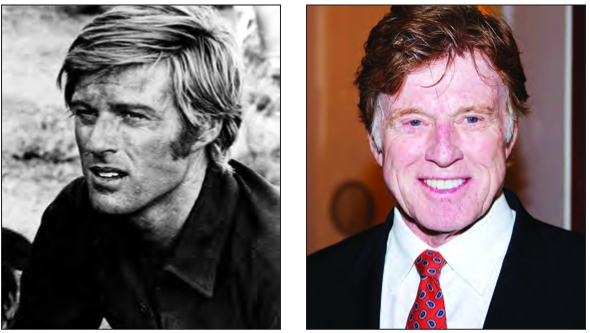
Robert Redford was an Oscar-winning actor, director and founder of the Sundance Film Festival.Robert Redford, the Oscar-winning actor, director, and founder of the Sundance Film Festival whose career spanned more than six decades, died peacefully in his sleep early Tuesday, September 16, 2025, at his home in Sundance, Utah. He was 89. His publicist, Cindi Berger, confirmed that Redford was surrounded by loved ones.
Born Charles Robert Redford Jr. on August 18, 1936, in Santa Monica, California, Redford rose from modest beginnings to become one of the most influential figures in American cinema.
After early work on the stage and television — including an Emmy-nominated performance in ABC’s “The Voice of Charlie Pont” (1962) — his breakthrough came with “Butch Cassidy and the Sundance Kid” (1969).
His charm and rugged good looks made him a star, but it was his instincts for thoughtful, socially aware projects that cemented his legacy. Redford’s filmography includes some of Hollywood’s most enduring works:
“Jeremiah Johnson” (1972), “The Candidate” (1972), “The Way We Were” (1973) opposite Barbra Streisand, “The Sting” (1973), and “All the President’s Men” (1976), where he portrayed journalist Bob Woodward during the Watergate scandal. His ability to move seamlessly between romantic leads, action heroes, and characters grappling with political and moral complexity made him one of the most versatile actors of his generation.
In 1980, Redford made his directorial debut with “Ordinary People,” a family drama that won four Academy Awards, including Best Picture and Best Director for Redford. He later earned nominations for “Quiz Show” (1994) as both producer and director, and in 2002, the Academy honored him with an Honorary Oscar for his contributions to film. Over the years, he collected a BAFTA Award, three Golden Globes, a Screen Actors Guild Life Achievement Award, France’s Honorary César, and in 2016, the Presidential Medal of Freedom from President Barack Obama.
Beyond the screen, Redford’s greatest achievement was founding the Sundance Institute in 1981, followed by the Sundance Film Festival. What began as a platform to nurture new voices in cinema grew into the most influential festival for independent film in the world. Sundance helped launch the careers of filmmakers including Steven Soderbergh, Quentin Tarantino, Damien Chazelle, and Ava DuVernay, and shifted the balance of power in American film by giving space to diverse and daring storytelling.
Redford was also a lifelong activist, known for his outspoken commitment to environmental conservation, Indigenous rights, LGBTQ rights, and progressive political causes. He often spoke of the power of film to spark change, saying that art could both entertain and inspire action.
Tributes poured in from across the entertainment world. Meryl Streep praised his generosity and ability to “make room for others to shine.” Director Ron Howard called him “a tremendously influential cultural figure.” Actress Marlee Matlin said Sundance was “a game-changer” that opened doors for countless filmmakers. Barbra Streisand, reflecting on their work together, wrote: “Every day on the set of ‘The Way We Were’ was exciting, intense and pure joy. He was one of a kind and I’m so grateful to have had the opportunity to work with him.” Bob Woodward, whose life Redford depicted in All the President’s Men, said: “His impact and influence on my life cannot be overstated. I loved him, and admired him—for his friendship, his fiery independence, and the way he used any platform he had to help make the world better, fairer, brighter for others.”
Though Redford formally announced his retirement from acting in 2018, he continued to appear occasionally on screen and remained deeply engaged with Sundance and the film community. To the end of his life, he was committed to storytelling, mentoring, and advocacy. Away from the spotlight, Redford was known for his devotion to family and his private nature. In 1958, he married historian and activist Lola Van Wagenen. The couple had four children together: Scott (who died in infancy), Shauna, David James (“Jamie”), and Amy, who followed her father into filmmaking. The marriage ended in divorce in 1985. In 2009, Redford married longtime partner Sibylle Szaggars, a German artist. They shared their time between homes in Utah and New Mexico and collaborated on environmental and artistic projects. Redford also endured personal tragedies, including the loss of his son Scott in 1959 and his son James in 2020, both of which shaped his compassion and advocacy for health and social causes. Despite his fame, he remained deeply protective of his children’s privacy and worked to ensure that his family life was shielded from the glare of Hollywood. “A Hollywood icon in every sense of the word,” Colorado Governor Jared Polis said in a statement Tuesday, “Robert Redford revolutionized film, advocated for our planet, and brought joy to generations.”
Robert Redford’s life was a testament to the power of art to inspire change. As an actor, director, activist, and mentor, he reshaped both Hollywood and independent films, leaving behind a body of work that will continue to influence generations of artists and audiences. His Sundance Film Festival redefined cinema’s possibilities, while his passion for justice and the environment made him a cultural voice far beyond the screen. Redford’s legacy is one of integrity, vision, and courage a reminder that film can not only entertain but also illuminate and transform the world.


