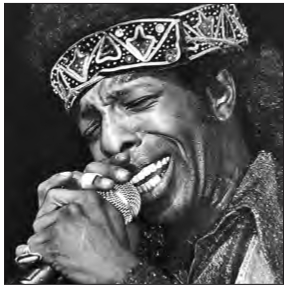
Sly Stone in 1982.
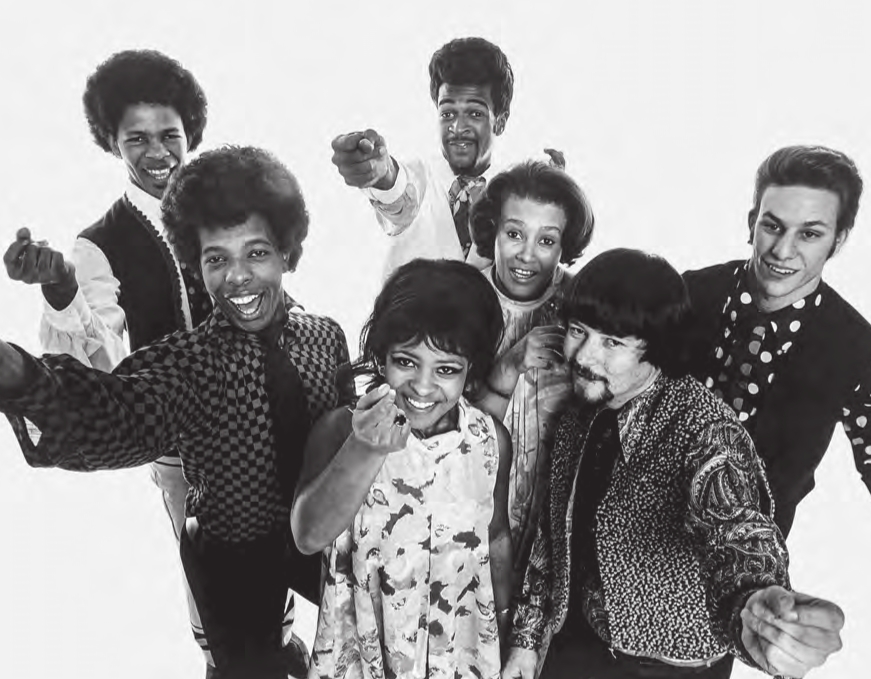
Publicity photo for Sly and the Family Stone. Stone formed the band in 1966.The first time I saw Sly Stone perform live was at White Stadium in Dorchester, during one of the unforgettable “Uptown in the Park” concerts produced by the Elma Lewis School of Fine Arts. It was 1974, and soul music was hot.
The lineup that day read like a dream: Sly and the Family Stone, Tower of Power, and The Hues Corporation (“Rock the Boat”), alongside comedy legend Richard Pryor and jazz-funk innovator Donald Byrd with his group, The Blackbyrds. Tickets? Just $5.50. Yes, those were the days my friend.
By then, Sly and the Family Stone had ascended into fullblown stardom. Their hit “If You Want Me to Stay,” off the 1973 album “Fresh,” was still climbing the charts No. 12 on the Billboard Hot 100 and No. 3 on the R&B/Soul chart. And they delivered a show I’ll never forget. Sly’s unmistakable voice, his groove-soaked style, and his ability to electrify a crowd was more than music it was a movement.
Sylvester
“Sly” Stewart, born March 15, 1943, in Denton, Texas, was raised in
Vallejo, California, the second of five children in a deeply musical,
Pentecostal household. As a child, he formed The Stewart Family Four
with three of his siblings. Their gospel single, “On the Battlefield,”
planted the early seeds of the harmonic magic that would define the Family Stone.
Even
then, Sly was a natural performer. His mother remembered people
reaching out to touch him during performances. “He lit up in front of a
crowd,” she said. “If they didn’t respond, he would cry.”
In
high school, a friend’s misspelling of “Syl” turned into “Sly,” and the
name stuck. He played guitar in local doo-wop groups, mastered multiple
instruments, and crossed racial lines as a member of The Viscaynes, a
racially integrated band rare in 1960s America.
In
1966, Sly formed Sly and the Family Stone, one of the first racially
and gender-integrated bands in American music. They fused funk, soul,
rock, and psychedelic energy with messages of unity, defiance and joy.
Their performances on The Ed Sullivan Show in 1968 and at Woodstock in
1969 catapulted them into the cultural stratosphere.
Albums
like “A Whole New Thing,” “Dance to the Music,” “Life,” “Stand!” and
the darker, more introspective “There’s a Riot Goin’ On” became
soundtracks of an era grappling with revolution and revelation. Their
music was vibrant but never naïve.
At
Woodstock, Sly led a massive singalong, encouraging even skeptics to
join in. His music didn’t just entertain, it united. But behind the
groove, the harmony didn’t last. As the band moved into a Beverly Hills
mansion in the early ’70s, drug use, industry pressure, and internal
tensions began to splinter the group.
Sly’s
growing unreliability led to canceled shows and strained relationships.
“Sometimes you don’t feel your soul at 7:30,” he told Rolling Stone
after missing five straight concerts in 1971. Still, the music evolved.
Albums like “Fresh” (1973) and “Small Talk” (1974) showed cracks but
also flashes of brilliance.
That
same year, Sly famously married actress Kathy Silva onstage at Madison
Square Garden, in front of 20,000 fans. The couple soon divorced. By
1975, the
original Family Stone lineup had dissolved. Sly increasingly recorded
solo, withdrawing from public life. Yet he remained an innovator, one of
the first mainstream artists to record with a
drum machine, laying groundwork for hip-hop and electronic funk. His
bold fashion shiny vests, platform shoes, alien-eye sunglasses and
musical choices continued to push boundaries.
He
was still setting the tone, even in silence: The title track on
“There’s a Riot Goin’ On” was listed at zero minutes and zero seconds.
“I felt there should be no riots,” he later said.
Pharrell Williams, writing in The New York Times in 2003, said it best: “He spoke to a generation and the ones that followed.
He
challenged people’s perception of normalcy. He wore seriously fly
clothes, and to this day, I have no idea how he walked around in those
platforms.”
Now, a new
generation is discovering his story through Questlove’s new
documentary, “Sly Lives!” Described as a dazzling, definitive funk-pop
chronicle, the film uses archival footage and interviews to chart Sly’s
rise from Bay Area DJ to global icon and his descent into personal
turmoil.
Sly Stone
passed away on June 9, 2025, at his home in Granada Hills, Los Angeles.
He was 82. According to his representatives, the cause of death was a
prolonged battle with chronic obstructive pulmonary disease (C.O.P.D.)
and other health complications.
His
grooves. His genius. His raw honesty. Sly didn’t just make music, he
changed it. He gave us rhythm as revolution, funk as freedom, and a
message that still echoes today: “Everybody is a star.” Asked in the
final pages of his autobiography what people should take from his life,
Sly answered simply, “Music. Just music.”


