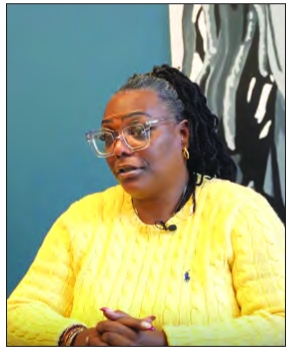
Nicole
Flynt is the Grove Hall Community Leader for both Project RIGHT and
Project Common SENSES, two groups working to combat the environmental
injustice on Blue Hill Avenue.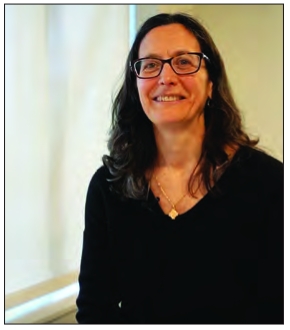
Moira
Zellner, director and project lead of Project Common SENSES, is working
to deploy environmental sensors around Blue Hill Avenue. The street,
described as “Boston’s central spine” by the city, experiences
abnormally high heat.
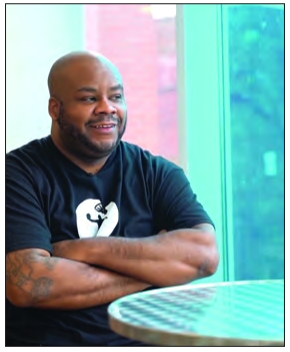
Al
Peebles, youth program director for Project RIGHT, is working to
address violence in his neighborhood, which is exacerbated by the
disproportionately high heat Blue Hill Avenue experiences.
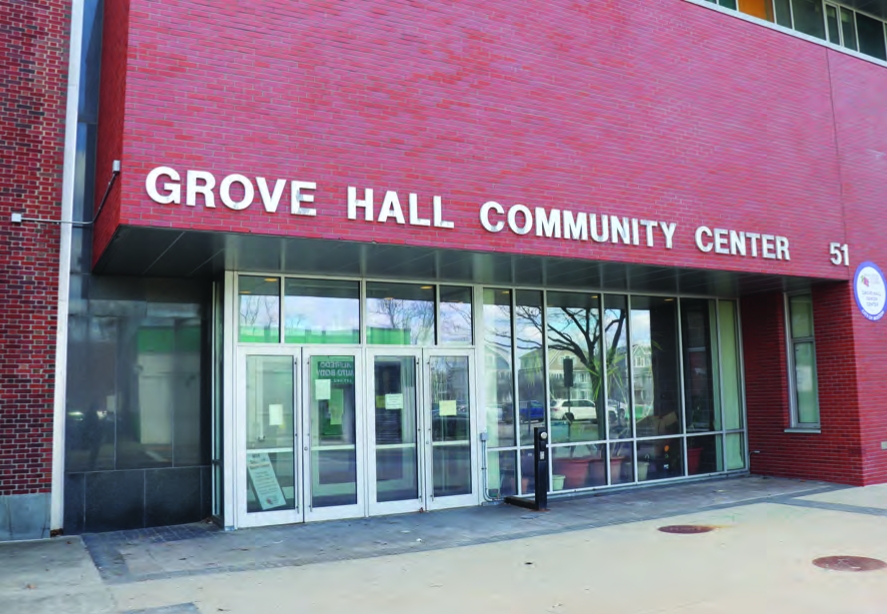
As summer approaches, excessive heat is an extremely serious concern for the residents of Blue Hill Avenue.
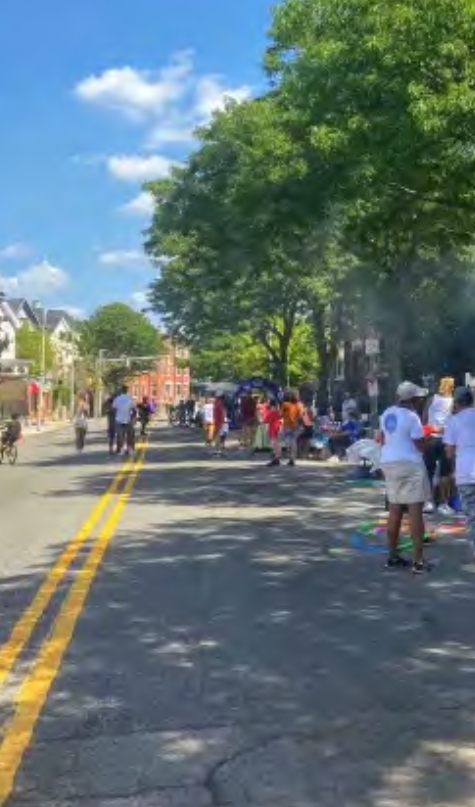
Residents trying to find shade and a cool place on Blue Hill Avenue during an Open Streets Day.
Extreme heat, flooding and lack of tree coverage have serious effects on the well-being of community members
“Green” is not the word that comes to mind when walking down the Blue Hill Avenue corridor in lower Roxbury. Children play in parks with patchy grass and bathe in pools of rain and groundwater on a flooded street on a hot day in summer. This sea of tar and bare concrete isn’t a consequence of cold weather; it is a testament to the chronic lack of greenery in traditionally low-income and minority neighborhoods throughout Boston.
The area around Blue Hill Avenue, the main artery spanning Roxbury and Dorchester and what the city of Boston describes as “Boston’s central spine” is an urban heat island where a high concentration of concrete and a lack of green spaces can lead to local temperatures up to 7 degrees Farenheit higher than surrounding areas. The area is historically home to Boston’s Black and immigrant communities.
Ajemall Peebles grew up on Blue Hill Avenue and is now a youth project director for Project RIGHT (Rebuild and Improve Grove Hall Together), a collaborative organization that is working to address issues of housing, violence and economic development in Grove Hall. He has seen how the community has reacted to environmental stressors and is concerned about how excessive heat leads to more violence.
Peebles’ experiences have led to his role as a youth activity worker for Project RIGHT, which he joined to run the youth basketball league. Growing up, Peebles loved to play sports but had no access to organized leagues. The community has been able to expand these youth programs despite not having adequate resources, such as proper courts or buildings with air conditioning. Last summer, during a pilot program in the new facilities, temperatures reached 95 degrees Farenheit.
Heat islands not only exacerbate the demands for technologies that emit large amounts of climate-warming carbon, like air conditioning, but they can also worsen air quality, contributing to respiratory issues and other pulmonary health effects. In 2023, according to data from the Boston Public Health Asthma Report. Roxbury and Dorchester ranked the second highest in asthma rates.
Areas such as Roxbury, the South End and Dorchester, as well as Allston and Brighton, have elevated surface temperatures.
Community Impact
Residents of Blue Hill Avenue feel these impacts every day, and as the warmer season approaches, community members brace for extreme heat.
According to a survey conducted by the city of Boston, the burden of heat exposure in residential homes “falls disproportionately on Black and Latinx communities.” Residents often feel too hot to stay home during warmer days, leading them to find refuge in community centers.
“We’re coming up on the summer, you will see how hot it is around here. And there’s only one cooling center. … When you have a lack of cooling centers and nowhere for teenagers to go, that creates a problem,” said Peebles.
Other than feeling excessive heat, residents living in
the Blue Hill Avenue area also face adverse health effects because of
increased dust and particulate matter in the air from pollution and mold
from flooding.
These
issues have health implications. For example, asthma due to mold from
flooding or due to air pollution, said Moira Zellner, professor of
public policy and urban affairs at Northeastern University.
Zellner is also director/project lead of Project Common SENSES, a collaboration between Northeastern University, the communities in Roxbury and Dorchester and the city of Boston.
Project
Common SENSES supports environmental justice action for the
neighborhoods along Blue Hill Avenue by deploying environmental sensors
to make more informed decisions about green infrastructure. At the time
of publication, the project has lost funding due to the Trump
administration policies targeting diversity, equity and inclusion and
National Science Foundation grant cuts. Nicole Flynt, Grove Hall
community coordinator for Project RIGHT and Common SENSES, said that
increased construction in the area also leads to environmental issues.
The construction causes noise as well as air pollution. According to the
Occupational Safety and Health Administration (OSHA), excessive dust
created by construction must be maintained through filters or water
hoses to prevent spreading. OSHA also states that construction dust,
including crystalline silica, can cause deadly forms of lung cancer if
inhaled. Flynt said these controls are not in place in her neighborhood.
“This
soot and dirt residue, or whatever residue you want to call it, on the
houses, on the cars. On the sidewalks. It’s all over, and if it’s on
your car, on your house, on your sidewalk, it’s in your mouth and your
lungs,” Flynt said.
Looking ahead
Heat
islands are more intense in areas with less tree coverage. While these
areas already had more tree coverage than the downtown areas, minimal
efforts have been made to increase tree coverage here to help combat
intense heat.
Blue
Hill Avenue runs through the heart of Roxbury and Mattapan to the edges
of the city. The area around Blue Hill Avenue has some of the highest
rates of asthma emergency department visits among 5 to 17 year olds in
Boston.
In Roxbury and
Dorchester, tree coverage has either decreased or remained constant
leading to the area being hotter than surrounding areas in the summer.
According to the Environmental Protection Agency, areas with more tree
coverage can be up to 7 degrees Farenheit cooler than areas without.
Community action
Groups like Project RIGHT are working to achieve their goals through community engagement and activism.
“It’s
an uphill battle, but what’s so amazing is the people. The community
members that are constant. Constant, and steadfast, and resilient.
...They are here for the long run,” said Flynt.
Project
RIGHT hopes to mitigate violence through community and youth
involvement and create spaces that promote community building and
currently has programs focusing on arts, civic engagement, public
safety, sports, substance use, trauma and youth development.
“When
it comes to dense or moderate to low income, or even, I dare say, Black
and brown neighborhoods...we’re overlooked a lot,” said Flynt. “And
that’s not right at all. So, we have to make a change.”
For community members like Flynt, these changes would improve their quality of life for generations to come.
This
is Part 2 of “Blue Hill Avenue’s steep road to redevelopment,” a series
of articles on climate justice in collaboration with the Northeastern
University School of Journalism, led by Prof. Dan Zedek.


