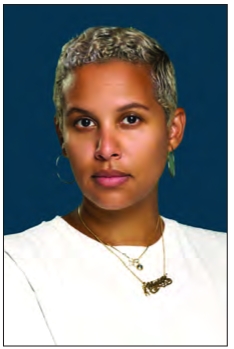
Marguerite Wynter
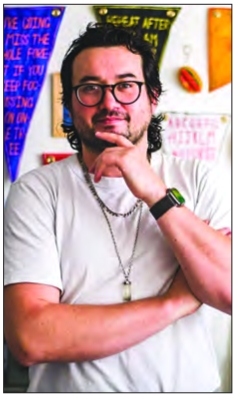
Artist Andy LiBoston Public Art Triennial reinvigorates local outdoor art scene
Boston’s public art scene has grown substantially in the past decade. Bostonians can see rotating installations from local and global artists on the Rose Kennedy Greenway and enjoy murals from beloved street artists like Rob “ProBlak” Gibbs and Victor “Marka27” Quiñonez.
Now a new movement is developing to bring even more public art to Boston—at least every three years.
Having started as Now and There in 2015, the Boston Public Art Triennial (BPAT) will represent a reinvigorated and repurposed effort to bring the best of the local and international art scene to the neighborhoods and residents of Boston.
“We wanted to bring in artists from around the world,” said BPAT Director Marguerite Wynter, “but also wanted to stay true to Boston artists as well.”
Using curated, site-specific installations and offering activities and other means of engagement that will be on display from May 22 through Oct. 31, the Triennial hopes to bring more art to the people and more people to art.
“Triennials… are surveys of what is happening in art and design,” Wynter said.
Though Wynter says her team took inspiration from such popular art events as Counterpublic in St. Louis and Prospect New Orleans, she realized that even these public art events were not always easily accessible to all residents in their respective regions.
“Most of them need in 2020 to create relationships with artists and the public to make Boston “a more equitable and vibrant city.”
During this year of research, the BPAT team explored public opinion about their hometown and about art.
“Boston has a history of being a segregated city,” Wynter said, citing common narratives that the city is “for elite university students who come and leave,” causing the people who truly make the city what it is feeling left out. “For us, public art is a way to open up Boston.”
In addition to bridging gaps between permanent and temporary residents and various neighborhoods, Wynter sees BPAT as a way of opening conversations among residents and stakeholders, just as it has in the planning stages of the inaugural event.
“It can be a catalyst for conversations about what is happening on your street and neighborhood, citywide and globally as well,” she said.
To make sure all cultures and voices are represented, BPAT has engaged such guest curators as public art specialist Pedro Alonzo and Native American art curator Tess Lukey, as well as artists and contributors who trace their roots to cultures around the world.
“We’re
working with over 75 partners,” Wynter said, noting that the ICA
Watershed, the Isabella Stewart Gardner Museum and the MassArt Art
Museum will tie in their exhibitions to the BPAT.
In
addition to site partners, BPAT is working with area institutions and
organizations to support various communities in other ways through a
program called The Exchange.
“One
artist is working with the Urban Farming Institute in Mattapan,” Wynter
said. “Another is working with Breaktime, which is ending youth
homelessness.” She also mentioned partnerships with climate scientists
from MIT and horticulturalists from Harvard, as well as other community
organizations.
As the eventual goal of
BPAT is to bring art to every neighborhood in Boston, Wynter and her
team wanted to be sure that every artist understood the importance of
accessibility and of responding to the issues each neighborhood faces so
that the residents would not only feel included but supported.
So why only every three years?
“Public art is difficult to
make,” Sanchez said, noting that the artist not only has to design the
piece to fit the particular space, but that community response and
permitting can also slow things down. “It takes months, if not years, of
research into a site’s heritage. …[So] we shifted to the three-year
model so we have time to make intentional work for a community and build
relationships.”
In
between the triennials, the organization has plans to support art and
the city in other ways. To this end Sanchez cites programs like The Lot
Lab and the Art Accelerator—the first of which transforms
underused lots into spaces for art and communal gathering and the latter
that offers artists a business accelerator that encourages them to
develop their craft and their business acumen.
“Being
part of the Triennial means so much to me,” said Lot Lab participant
Andy Li. “I grew up here in Boston, so having the opportunity to give a
piece back to the city that helped shape me is something I only dreamed
about.”
In addition to
bringing more art to the people, BPAT hopes to bring more people to the
art and even to change how Boston sees itself and is seen as part of
the larger art world.
“We
see the triennial as a platform that will hopefully get not only local
but national recognition for the art and art change we are getting in
Boston,” Wynter said, predicting that Boston will become an “art city”
like New York, Miami or Mexico City. “We can be more than a sports city,
right?”
ON THE WEB
Learn more at thetriennial.org