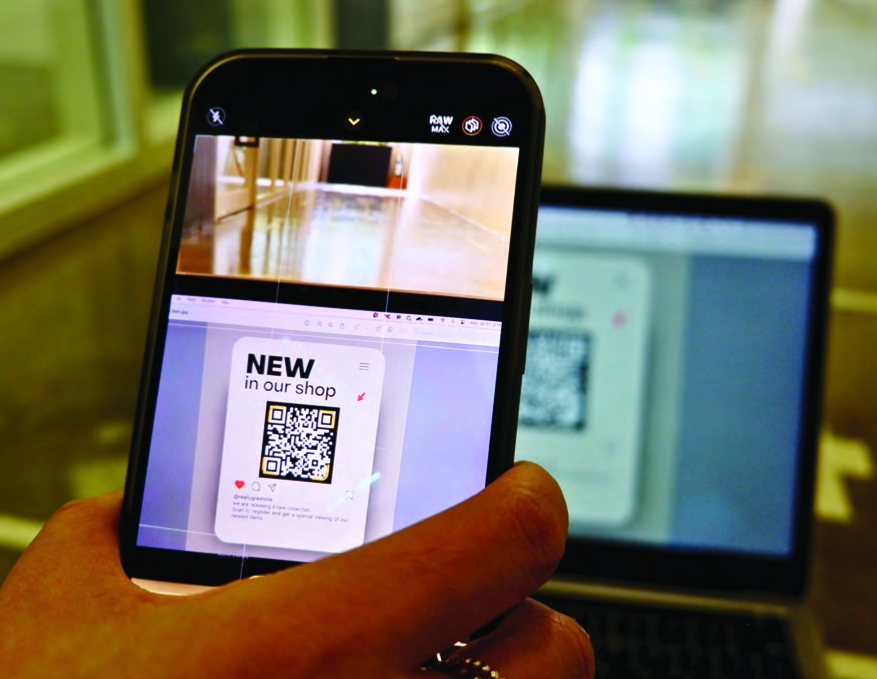
The best QR experiences don’t just send people somewhere. They give them exactly what they need when they need it.
Remember when we transitioned from calling it “surfing the internet” to “Googling”? It was one of those moments when technology became so ingrained in our lives that it became a verb. “QRing” may be on a similar trajectory. Once an underdog of the tech world, QR codes are now a core tool for businesses across industries — not just in marketing but in operations, logistics, security, health care and internal workflows.
According to Uniqode’s State of QR Codes 2025 report, 59% of consumers scan QR codes daily. And they’re not just scanning to check out a menu. Businesses are embedding QR codes deep into their operations, solving real problems — from tracking supply chains to securing access to sensitive data. So, the question isn’t “Should we use QR codes?” but “Are we using them the right way?”
QR Codes are changing more than just marketing. For years, businesses have used QR codes as a shortcut to a website. Slap a code on an ad, send users to a landing page, and hope something happens. But in 2025, that’s just scratching the surface.
Some businesses still treat QR codes as an afterthought — printing them on packaging or ads without a clear plan. But more companies are building QR codes into their strategy, infrastructure and revenue models.
Supply Chain and Inventory Management — 43% of businesses use QR codes for logistics tracking and 39% for improving inventory management.
Health care and Patient Information — Hospitals and pharma companies use QR codes for secure patient data access, prescription tracking, and even digital health records.
Payments and Transactions — Contactless payment adoption continues to rise, with 62% of people encountering QR codes for secure transactions.
Sustainability and Paper Reduction — 89% of businesses believe QR codes will play a major role in sustainability efforts by replacing printed manuals, receipts, and packaging inserts.
Security and Authentication — 59% of users have encountered QR codes for secure logins, employee access and multifactor authentication. This isn’t about better marketing. It’s about better operations, security, efficiency and customer experience.
A snapshot of the state of QR codes in 2025 QR codes are reshaping customer engagement.
Here’s a quick look at the key shifts shaping QR adoption in 2025:
QR scanning is habitual — 59% of users scan QR codes daily to access information, offers and services instantly.
Engagement is high-intent — A QR scan isn’t a casual scroll; it’s a decision. As a result, QR-initiated journeys see a 37% average clickthrough rate (CTR) — a number most marketers would kill for.
First-party data is the new gold — With third-party cookies on their deathbed, QR codes offer a transparent way to understand customer behavior at each interaction level. 95% of businesses confirm QR codes help collect valuable first-party data.
Customer journeys are evolving — 79%
of businesses use dynamic QR codes to deliver personalized,
context-aware interactions instead of static, one-size-fits-all
experiences.
More
than half of respondents work in companies with over 1,000 employees,
and nearly a quarter represent businesses making over $100 million in
annual revenue.
Why QR codes matter for customer engagement — A
QR scan represents a deliberate action. It’s not a passive click, it’s
not someone mindlessly clicking an ad or scrolling past a post.
This
is why QR-initiated journeys have an average clickthrough rate (CTR) of
37%—a much higher engagement rate than standalone campaigns or
channels.
The role of first-party data in the world of customer data — First-party
insights are becoming essential. As thirdparty tracking becomes less
reliable, businesses are turning to first-party data to gather
important, permission-based data directly from consumers.
The
report finds that 95% of businesses gather valuable firstparty data
through QR codes. We don’t mean personally identifiable information but
scan data.
This
isn’t just about tracking consumers. It’s about understanding customer
behavior to benefit both the customer and the business.
How QR codes add value to businesses — QR
codes are no longer just a way to share links. They’re a way to create
value. One of the most significant benefits of QR codes is how they
allow businesses to scale touchpoints without adding extra resources.
Companies
can engage more customers by turning every product, package and surface
into a point of interaction. It’s an efficient way to boost growth and
improve customer experience.
The
“phygital” shift: Blending the physical and digital in 2025, customers
are constantly moving between the physical and digital worlds. QR codes
are the bridge that allows businesses to meet customers where they are —
whether in-store, at an event or in their own homes. By embedding QR
codes into physical touchpoints, businesses can connect with customers
at the moment they’re ready to engage.
The best QR experiences don’t just send people somewhere. They give them exactly what they need when they need it.
Is
your business ready for QR codes in 2025? As QR codes become an even
more important part of business infrastructure, it’s time to think
beyond static codes and start exploring dynamic, personalized
experiences.
The question is: Are you using QR codes in a way that’s meaningful to your customers?
This story was produced by Uniqode and reviewed and distributed by Stacker.