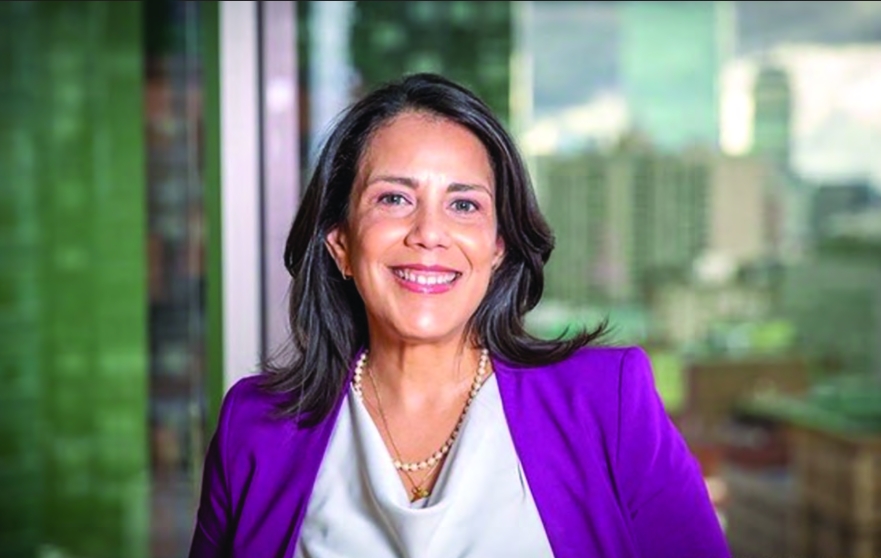
Michelle De La Isla, CEO of Hack.Diversity.After almost 10 years of working to diversify the Boston tech startup workforce, Hack.Diversity plans to shut down this summer. The nonprofit dedicated to boosting diversity in tech startups said its current cohort would continue as planned, but that it would not be enrolling any additional cohorts afterward and will cease operations on Aug. 30.
The closure of Hack.Diversity marks the loss of another pivotal resource for the Boston tech ecosystem, coming a week after Innovation Studios, the nonprofit co-working space provider with studios in Boston and Roxbury, filed for Chapter 7 bankruptcy protection. The Roxbury location of Innovation Studios specifically catered to programs for entrepreneurs and founders of color. Now, with the loss of Hack. Diversity, diverse startup founders will have fewer opportunities and resources available, making it harder to break into a crowded tech ecosystem.
The closure is coming during a time when diversity initiatives across the United States, including those in Boston, are facing scrutiny and criticism from the federal government. According to co-founder and board member Jeff Bussgang, the
nonprofit began preparing for the potential attack on diversity last
year, changing the language around DEI and emphasizing overall
excellence instead.
Fellowships provided by Hack.
Diversity
were primarily funded through partnerships with companies, as well as
grants and contributions. As AI tools continue to advance, Bussgang says
there’s a decreasing need for entry-level coding positions. Coding AI
tools have improved significantly in helping engineers write and adjust
code, to the point where 95% of the code in one quarter of Y Combinator
startups was written by AI, according to Y Combinator CEO Garry Tan.
Bussgang
and the board at Hack.Diversity decided that there was no clear path
forward for Hack.Diversity into 2026. “The best junior engineers are
going to be those that figure out how to leverage the tools to
self-teach, which potentially exacerbates the access problem and the
diversity problem in the industry,” Bussgang said. “Because people who
are going to have those tools might be the ones that have the resources
and the influences around them because they’re raised in the ecosystem.”
The
nonprofit dropped from 30 partner companies to 18 within the last
couple of years, as more companies dropped internship positions
altogether, Michelle De La Isla, the current CEO of Hack. Diversity told
The Business Journal. According to De La Isla, fewer partnerships
result in fewer internships, and fewer internships have a direct impact
on funding. “That was what really impacted us. Our philanthropic
partners are incredible, but HACC doesn’t work without internships, host
companies or jobs for the fellows,” De La Isla said.
This article first appeared in the Boston Business Journal.


