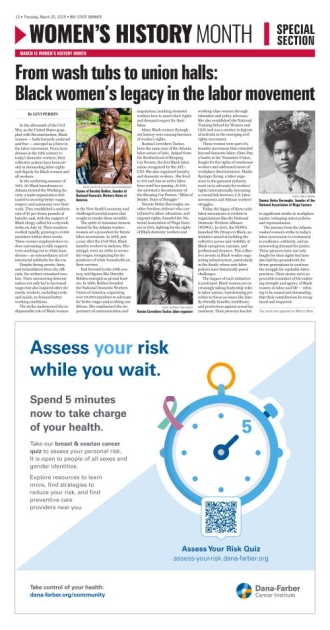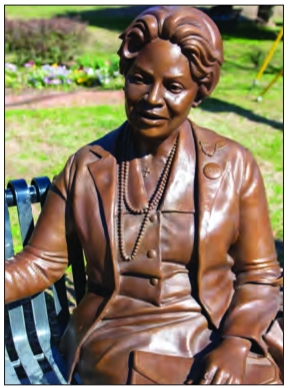
Statue of Dorothy Bolden, founder of National Domestic Workers Union of America 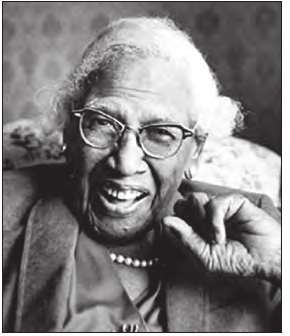
Rosina Corrothers Tucker, labor organizer
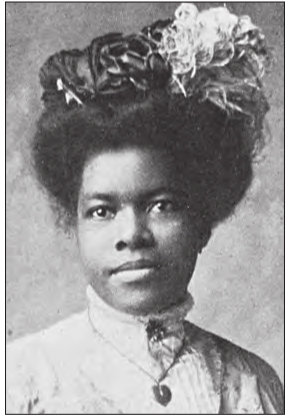
Nannie Helen Burroughs, founder of the National Association of Wage Earners
In the aftermath of the Civil War, as the United States grappled with Reconstruction, Black women — both formerly enslaved and free — emerged as a force in the labor movement. From laundresses in the 19th century to today’s domestic workers, their collective actions have been pivotal in demanding labor rights and dignity for Black women and all workers.
In the sweltering summer of 1881, 20 Black laundresses in Atlanta formed the Washing Society, a trade organization dedicated to securing better wages, respect, and autonomy over their work. They established a uniform rate of $1 per dozen pounds of laundry and, with the support of Black clergy, called for a citywide strike on July 19. Their numbers swelled rapidly, growing to 3,000 members within three weeks. These women employed door-todoor canvassing to rally support, even reaching out to white laundresses—an extraordinary act of interracial solidarity for the era.
Despite facing arrests, fines, and intimidation from city officials, the strikers remained resolute. Their unwavering determination not only led to increased wages but also inspired other domestic workers, including cooks and maids, to demand better working conditions.
The strike underscored the indispensable role of Black women in the New South’s economy and challenged societal norms that sought to render them invisible.
The
spirit of resistance demonstrated by the Atlanta washerwomen set a
precedent for future labor movements. In 1866, just a year after the
Civil War, Black laundry workers in Jackson, Mississippi, went on strike
to secure fair wages, recognizing the dependence of white households on
their services.
Fast
forward to the 20th century, and figures like Dorothy Bolden emerged as
pivotal leaders. In 1968, Bolden founded the National Domestic Workers
Union of America, organizing over 10,000 members to advocate for better
wages and working conditions. She emphasized the importance of
communication and negotiation, teaching domestic workers how to assert
their rights and demand respect for their labor.
Many Black women throughout history were unsung heroines of worker’s rights.
Rosina
Corrothers Tucker, born the same year of the Atlanta labor action of
1881, helped form the Brotherhood of Sleeping Car Porters, the first
Black labor union recognized by the AFL- CIO. She also organized laundry
and domestic workers. She lived to 105 and was an active labor force
until her passing. At 100, she narrated a documentary of the Sleeping
Car Porters, “Miles of Smiles. Years of Struggle.”
Nannie
Helen Burroughs, another freedom stalwart who contributed to labor,
education, and migrant rights, founded the National Association of Wage
Earners in 1921, fighting for the rights of Black domestic workers and
working-class women through
education and policy advocacy. She also established the National
Training School for Women and Girls and was a mentor to legions of
activists in the emerging civil rights movement.
These
women were part of a broader movement that extended beyond domestic
labor. Clara Day, a leader in the Teamsters Union, fought for the rights
of warehouse workers and addressed issues of workplace discrimination.
Maida Springer Kemp, a labor organizer in the garment industry, went on
to advocate for workers’ rights internationally, becoming a crucial link
between U.S. labor movements and African workers’ struggles.
Today,
the legacy of these early labor movements is evident in organizations
like the National Domestic Workers Alliance (NDWA). In 2015, the NDWA
launched We Dream in Black, an initiative aimed at building the
collective power and visibility of Black caregivers, nannies, and
professional cleaners. This collective invests in Black worker
organizing infrastructure, particularly in the South, where anti-labor
policies have historically posed challenges.
The
impact of such initiatives is profound. Black women are increasingly
taking leadership roles in labor unions, transforming priorities to
focus on issues like family-friendly benefits, healthcare, and
protections against sexual harassment. Their presence has led to
significant strides in workplace equity, reshaping union policies and
representation.
The
journey from the Atlanta washerwomen’s strike to today’s labor
movements is a testament to resilience, solidarity, and an unwavering
demand for justice. These pioneers have not only fought for their rights
but have also laid the groundwork for future generations to continue
the struggle for equitable labor practices. Their stories serve as
powerful reminders of the enduring strength and agency of Black women in
labor and life — refusing to be erased and demanding that their
contributions be recognized and respected.
This article first appeared on Word in Black.