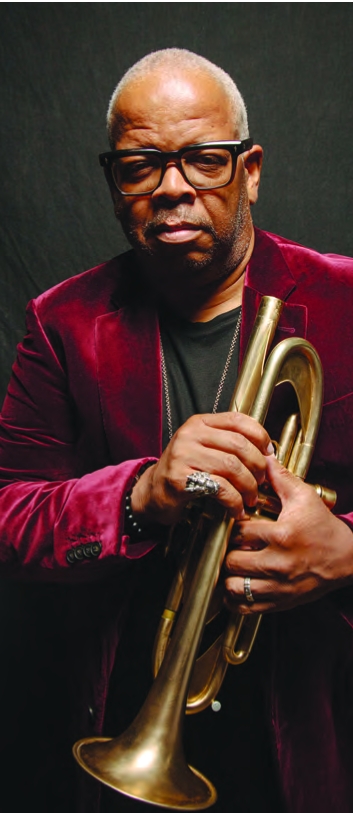
Trumpeter and composer Terence Blanchard 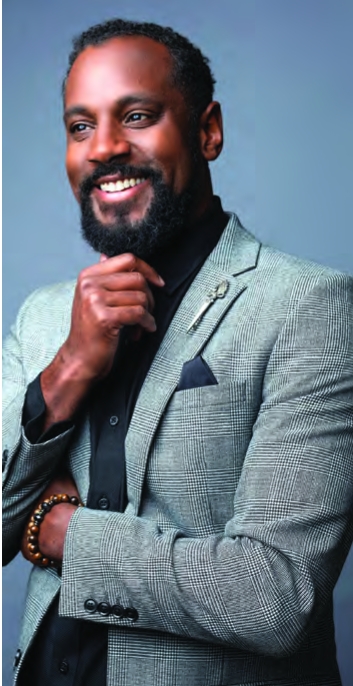
Carlos Simon, composer chair, Boston Symphony Orchestra
Terence Blanchard joins the BSO for an evening of symphonic exploration
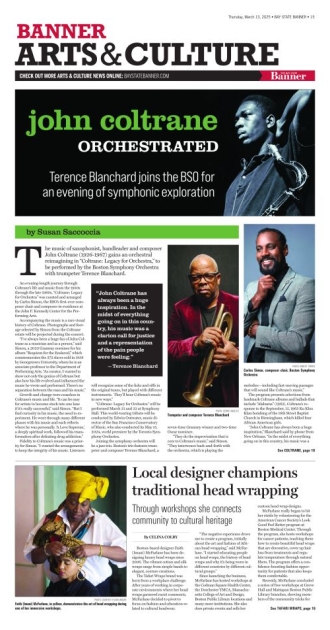
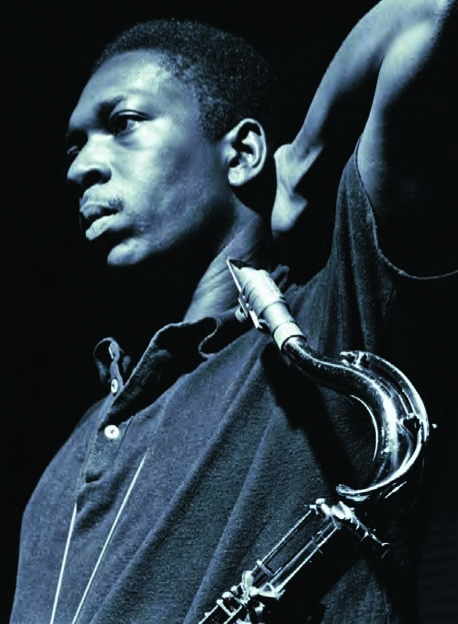
The music of saxophonist, bandleader and composer John Coltrane (1926-1967) gains an orchestral reimagining in “Coltrane: Legacy for Orchestra,” to be performed by the Boston Symphony Orchestra with trumpeter Terence Blanchard.
An evening-length journey
through Coltrane’s life and music from the 1950s through the late 1960s,
“Coltrane: Legacy for Orchestra” was curated and arranged by Carlos
Simon, the BSO’s first-ever composer chair and composer-in-residence at
the John F. Kennedy Center for the Performing Arts.
Accompanying
the music is a rare visual history of Coltrane. Photographs and footage
selected by Simon from the Coltrane estate will be projected during the
concert.
“I’ve always
been a huge fan of John Coltrane as a musician and as a person,” said
Simon, a 2023 Grammy nominee for his album “Requiem for the Enslaved,”
which commemorates the 272 slaves sold in 1838 by Georgetown University,
where he is an associate professor in the Department of Performing
Arts. “As curator, I wanted to show not only the genius of Coltrane but
also how his life evolved and influenced the music he wrote and
performed. There’s no separation between the man and his music.”
Growth
and change were ceaseless in Coltrane’s music and life. “It can be easy
for artists to become stuck into one lane if it’s really successful,”
said Simon. “But I find curiosity in his music, the need to experiment.
He went through many different phases with his music and each reflects
where he was personally. ‘A Love Supreme,’ a deeply spiritual work,
followed his transformation after defeating drug addiction.”
Fidelity
to Coltrane’s music was a priority for Simon. “I wanted the
arrangements to keep the integrity of his music. Listeners will
recognize some of the
licks and riffs in the original tunes, but played with different
instruments. They’ll hear Coltrane’s music in new ways.”
“Coltrane:
Legacy for Orchestra” will be performed March 21 and 22 at Symphony
Hall. This world-touring tribute will be conducted by Edwin Outwater,
music director of the San Francisco Conservatory of Music, who also
conducted its May 15, 2024, world premiere by the Toronto Symphony
Orchestra.
Joining the
symphony orchestra will be a jazz trio. Boston’s trio features
trumpeter and composer Terence Blanchard, a seven-time Grammy winner and
two-time Oscar nominee.
“They
do the improvisation that is core to Coltrane’s music,” said Simon.
“They interweave back-and-forth with the orchestra, which is playing the
melodies—including fast-moving passages that will sound like Coltrane’s
music.”
The
program presents selections from landmark Coltrane albums and ballads
that include “Alabama” (1963), Coltrane’s response to the September, 15,
1963 Ku Klux Klan bombing of the 16th Street Baptist Church in
Birmingham, which killed four African American girls.
“John
Coltrane has always been a huge inspiration,” Blanchard said by phone
from New Orleans. “In the midst of everything going on in this country,
his music was a clarion
call for justice and a representation of the pain people were feeling.
Back then he was performing aggressive, high-energy music such as ‘Giant
Steps,’ but he slowed it all down with this brooding, beautiful ballad
expressing the pain of losing these four little girls.”
Coltrane’s
innovations can also inspire evolution in the classical canon, notes
Blanchard, whose “Fire Shut Up in My Bones” (2021) was the first opera
by a Black composer to be performed by the Metropolitan Opera. Blanchard
is now composing his third opera while developing a new album with his
band, E-Collective, and scoring an upcoming film by Gina
Prince-Bythewood, who directed “Woman King” (2022).
Recalling
that the Met rejected three operas by distinguished African American
composer William Grant Still Jr. (1895-1978), whose music often drew
from spirituals, Blanchard said, “The orchestra didn’t know the language
from which his phrases and rhythms were created. But much of the music
we now study in school and hear in symphonic settings is rooted in folk
music, like the works of Stravinsky. And Aaron Copeland adopted
harmonies and rhythms he heard in jazz.”
Blanchard
welcomes the symphonic exploration of Coltrane’s compositions. “As a
listener, I wouldn’t want to miss this. You never know where it may lead
in effecting change in the symphonic world and expanding its canon. And
for me, performing with an orchestra is always a beautiful experience
and a blessing.”
ON THE WEB
Learn more at bso.org/events/coltrane-legacy-for-orchestra