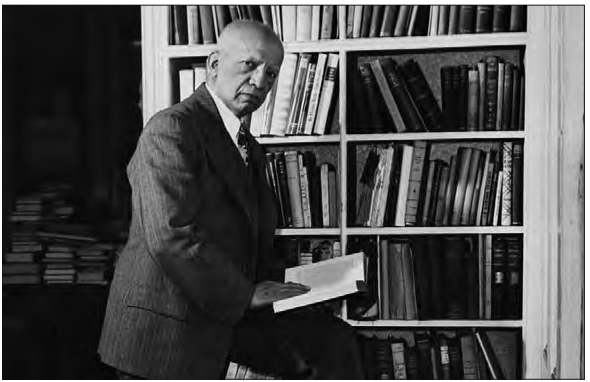
Carter G. Woodson
As a very difficult February comes to a close, we conclude another Black History Month in America, in the face of a direct assault on our Black history and cultural value. This celebration of our history and heritage has long roots that can be traced back to Harvard scholar Dr. Carter G. Woodson, creator in 1915 of the Association for the Study of Negro Life and History, Inc. In 1926, Woodson launched Black History Week. Highlighting the accomplishments of such figures as the formerly enslaved orator, writer and abolistionist Frederick Douglass served as a counternarrative to the growing influence of the Ku Klux Klan and the false prophets of racism and eugenics. Black History Month was created as a tool to fight hate and racism. This year more than ever, as we face the far-right’s attempt to erase our history and culture, we must continue to use it as a tool to fight racism.
So to that end, the Banner reached out to a few members of our community and asked them to share their thoughts and feelings about our Black history and culture. We think you will find their responses as inspirational as we did. — Ronald Mitchell, Publisher and Editor, Bay State Banner
From
the beginning Woodson deeply and rightly believed in the value of
celebrating the wonderful contributions of African Americans to this
country from its beginnings in the first settlements along the Atlantic
coast. The story of slavery and Jim Crow dominates the first three
centuries of African presence on the North American continent.
Profiteers in human bondage suppressed stories of Black talent in order
to degrade the value of African American life and our contributions. But
this sub-human representation of African people long predated the
establishment of slavery on our shores. European slave-traders deemed it
necessary to dehumanize the slave in order to justify their oppression.
The European gentry wanted to present themselves in a good light, not
as evil people, so they turned African slaves into something less than
human to rationalize enslaving them. There were even those who argued
that enslavement provided Africans the opportunity to learn new skills, a
sentiment shockingly echoed more recently by a certain American
politician. The racist propagandists simply overlooked the fact
that Africans were masters of science, agriculture, engineering and
architecture for thousands of years before Europeans, borrowing from
African technology, established their own cities.
Since
the Civil Rights Movement of the 1950s and 60s, there have been many
attempts to tell the myriad stories of the true history that makes up
the African American experience. The most prominent example of the
monuments to our people is the Smithsonian’s National Museum of African
American History and Culture in Washington, D.C. The popular attraction
presents our shared history of African American struggle from
pre-enslavement and Jim Crow through the Civil Rights Movement to the
election of President Barack Obama and the present. The museum embraces
the music, arts, culture, inventions, politics, military service,
travel, pain and joy of the entire African American experience.
And
we in Boston are justly proud of our own Museum of African American
History and the iconic African Meeting House on Beacon Hill, where so
many important figures of the abolitionist, civil rights and racial
justice movements have spoken truth to power from a pulpit built by
Black hands.
Though
our national African American history celebration spans only one month,
it is important that we teach and learn African American history every
day — all over America. That history has been largely left out of
textbooks. And it still faces active threats of removal. School systems
around the country are canceling Black history out of a misguided sense
of racial grievance, as if trumpeting Black history somehow cancels or
diminishes others.
Make
no mistake. This is a movement that wants to turn back the clock of
time and deny or hide racial wrongdoings. Clearly, some hope that
suppressing past injustices will somehow absolve our country from taking
account and accepting responsibility to make up for centuries of
exploitation.
We
cannot move forward in a society with systemic racism and oppression,
with a rigged legal and economic system. We cannot allow those
imbalances to continue. We as a nation must compensate victims for the
centuries of oppression our ancestors endured and that we continue to
suffer. We throw away so many brilliant Black children by minimizing
their opportunity for a good education by pre-judging them or consigning
them to second-class schools and then blaming them for falling behind
as too many end up behind bars.
African
American history must be shared each and every day as part of the
process of addressing the past and moving into the future. A better
national understanding of how our economic and educational systems were
rigged against Black Americans provides a more solid basis for
understanding the joy, pain and humanity of our people. That in turn
will help create the impetus to account for the damage done, accelerate
the process of providing reparations for that harm, and finally create
the equal society our country deserves.
— Ronald Mitchell