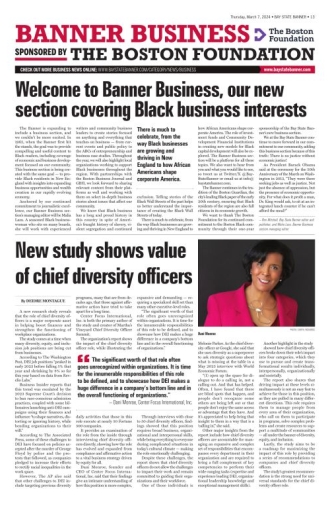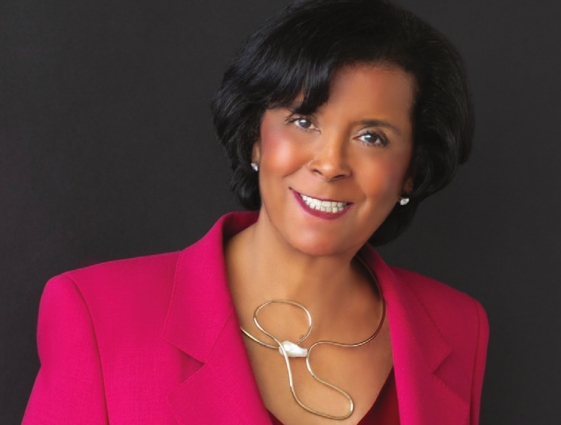
Dani Monroe A new research study
reveals that the role of chief diversity officers is a major corporate
asset in helping boost finances and strengthen the functioning of
workplace organizations.
The study comes at a time when many diversity, equity, and inclusion job positions are being cut from businesses.
According
to The Washington Post, DEI job positions “peaked in early 2023 before
falling 5% that year and shrinking by 8% so far this year based on data
from Revelio Labs.”
Business
Insider reports that this trend was escalated by the 2023 Supreme
Court’s decision to ban race-conscious admission practices, coupled with
some billionaires launching anti-DEI campaigns using their finances and
influence “to shape narratives, distorting or ignoring history, while
bending organizations to their will.”
According
to The Associated Press, some of these challenges to DEI have focused
on policies accepted after the murder of George Floyd by police and the
protests that followed, as companies pledged to increase their efforts
to rectify racial inequalities in the work space.
However,
The AP also said that other challenges to DEI include targeting
previous diversity programs, many that are from decades ago, that those
against affirmative action have tried to take apart for a long time.
Center
Focus International, Inc. is both the primary author of the study and
creator of Martha’s Vineyard Chief Diversity Officer Summit.
The
organization’s report shows the impact of the chief diversity officer
role, while illustrating the daily activities that those in this role
execute at nearly 50 Fortune 500 companies.
It
provides an examination of the role from the inside through
interviewing chief diversity officers directly, showing how the role has
evolved and expanded from compliance and affirmative action to a vital
business strategy driven by equity for all.
Dani
Monroe, founder and CEO of Center Focus International, Inc. said that
their findings give an intimate understanding of how this position is
more complex, expansive and demanding — requiring a specialized skill
set than many other executive-level roles.
“The
significant worth of that role often goes unrecognized within
organizations. It is time for the innumerable responsibilities of this
role to be defined, and to showcase how DEI makes a huge difference in a
company’s bottom line and in the overall functioning of organizations.”
Through
interviews with close to 50 chief diversity officers, findings showed
that this position requires broad business, organizational and
interpersonal skills, while being everything to everyone during
complicated situations in today’s cultural climate — making the role
emotionally challenging.
Despite
these challenges, the report shows that chief diversity officers do not
allow the challenges to impact their work and remain committed to
guiding their organizations and their workforce.
One of those individuals is Melonie Parker. As the
chief diversity officer at Google, she said that she uses diversity as a
superpower to ask strategic questions about what is missing at the
table in a May 2023 interview with World Economic Forum.
“(I)
open up the space for dialogue to do a calling in, not a calling out.
And that has helped. Often, I have found that there are blind spots that
happen, and people don’t recognize some others are being left out or
that people don’t enjoy the same access or advantage that they have. And
it’s appreciated to help bring that insight to them in a way that is a
‘calling in’,” she said.
Other
major insights from the report include how chief diversity officers are
accountable for managing an expansive and complex set of
responsibilities that encompasses every department in their organization
and are required to bring a full complement of key competencies to
perform their wide-ranging tasks (expertise and experience leading DEI,
organizational leadership knowledge and exceptional management skills).
Another
highlight in the study showed how chief diversity officers broke down
their role’s impact into four categories, which they use to pursue and
create transformational results individually, interpersonally,
organizationally and societally.
The
report also shares that driving impact at these levels simultaneously
is not an easy feat to achieve for those in this position, as they are
pulled in many different directions. This role requires them to manage
people from every area of their organization, who call on them to
participate in programs, solve complex problems and create resources to
support a multitude of communities — all under the banner of diversity,
equity, and inclusion.
Lastly,
the study aims to be a roadmap for maximizing the impact of this role
by providing a series of recommendations to companies and chief
diversity officers.
The study’s greatest recommendation is the strong need for universal standards for the chief diversity officer role.