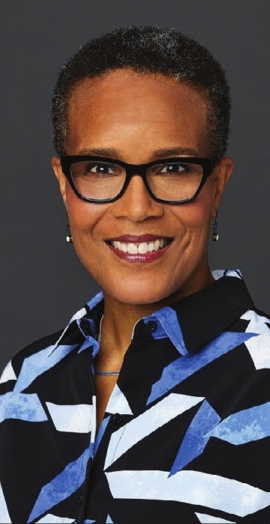
Tracy Heather Strain
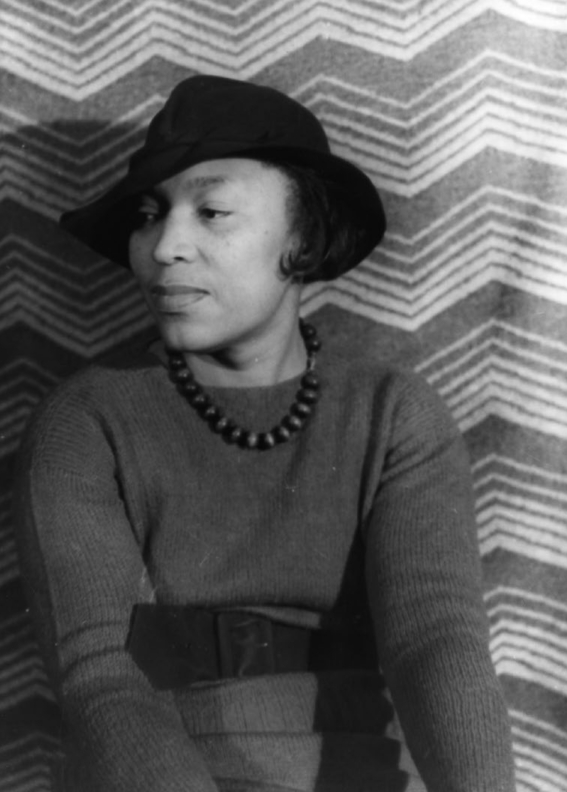
Zora Neale Hurston
Premieres Jan. 17 on PBS’s American Experience
“Zora Neale Hurston: Claiming A Space,” premieres on PBS Tuesday, Jan. 17 at 9 p.m. as part of the network’s “American Experience” series. A major writer and anthropologist, Hurston was a leader of the Harlem Renaissance in the 1920s and 1930s. Famous for her novel, “Their Eyes Were Watching God,” Hurston’s scholarly work in anthropology created the space needed for the true narratives of varied Black experience in the United States. Directed by Tracy Heather Strain, produced by Randall MacLowry and executive-produced by Cameo George, the new documentary brings to light Hurston’s work and life, positioning these matters in ways that make clear their contemporary importance. The Banner spoke with Strain about the film.
In what ways is Zora Neale Hurston’s life critical for the world we live in now?
One thing I found very interesting about making the film is how much hasn’t changed since the 1930s for African Americans and minoritized people. Hurston wrote at a time when most images of African Americans were demeaning, and so she decided that anthropology was a way to fight the stereotypes and to celebrate the richness of the culture. Black culture is not set in amber, not stuck in time. Her work addresses modernity, and recognizes that folklore, for example, is made and remade.
How does her scholarly research in anthropology appear in her fiction?
Hurston
was closely identified with Eatonville, Florida; she grew up there.
Eatonville was one of the first incorporated all-Black towns in the
United States, established by newly freed slaves, and she saw all walks
of life there. It was innate anthropology, listening to the stories that
people told at the general store or on their porches. After public
night high school, she entered Morgan Academy in Baltimore and then
Howard Academy in Washington, finally receiving her high school degree.
Then she entered Howard University and on to Barnard College in New York
City. She decided she was going to do everything to study Black lives.
And it was at Barnard where she met Franz Boas, the groundbreaking
leader of cultural anthropology who was teaching at Columbia. So it was
in her novel, “Their Eyes Were Watching God,” that the characters she
had known growing up, who she drew from her reserves, grew rich in
descriptions. That autobiographical richness was a mix of memory and
academic research.
Can you say a few words about Boas and how we might see his influence in Hurston’s work, fiction and nonfiction?
I
think that you see it in her sense of trying to interact with people,
to have them speak for themselves. The thing about Hurston is that in
some way she decided, from what she was taught, that a lot of African
Americans were used to giving people the answers they wanted to hear. On
her first solo research trip to the South, in 1927, she didn’t get good
answers. A lot was lost in what she called “laugher and pleasantries,”
as she termed it, “feather-bed resistance.” On her second trip, that
same year, she used a different methodology: she became a participant,
and people were more comfortable with her.
Tell us about the movie.
For
people who never heard of Zora Neale Hurston, this film is an
introduction to an unsung hero. For those familiar with her fiction,
this documentary provides greater context and information about the
challenges of her life. She wrote an American classic, a masterpiece,
but her life was very challenging and did not end so well. Zora Neale
Hurston’s work enables us to look at Black culture with new eyes.
Fortunately, her popularity has increased with the release of more of
her writings: “Barracoon: The Story of the Last ‘Black Cargo’” in 2018,
and “You Don’t Know Us Negroes and Other Essays” in 2022.
ON THE WEB
Learn more at www.pbs.org/wgbh/americanexperience/films/zora-neale-hurstonclaiming-space


