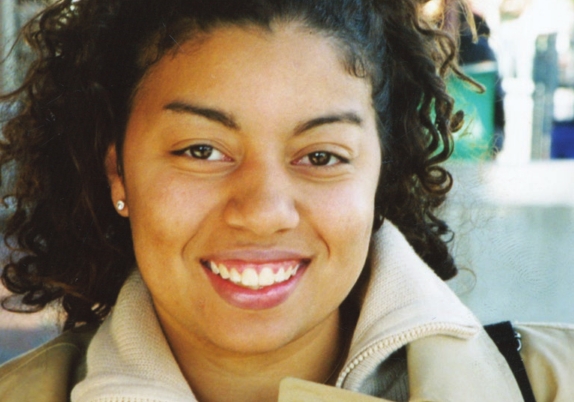
Rep. Liz Miranda
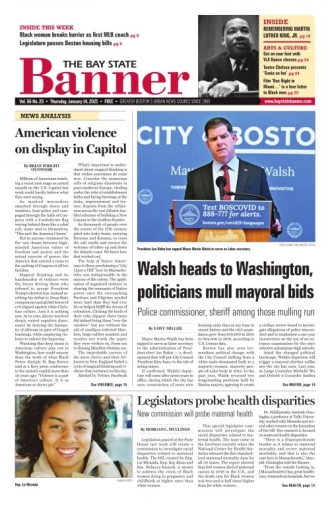
New commission will probe maternal health
Legislation passed at the State House last week will create a commission to investigate racial disparities related to maternal health. The bill, created by Rep. Liz Miranda, Rep. Kay Khan and Sen. Rebecca Rausch, is meant to address the crisis of Black women dying in pregnancy and childbirth at higher rates than white women.
This special legislative commission will investigate the racial disparities related to maternal health. The issue came to the forefront recently when the National Center for Health Statistics released the first standardized maternal mortality data for all 50 states. The report showed that 658 women died of maternal causes in 2018 in the U.S., and the death rate for Black women was two-and-a-half times higher than for white women.
Dr. Ndidiamaka Amutah-Onukagha, a professor at Tufts University, worked with Miranda and several other women on the formation of the bill. Her research is focused on maternal health disparities.
“There is a disproportionate burden as it relates to maternal mortality and severe maternal morbidity, and that is also the case here in Massachusetts,” Amutah-Onukagha told the Banner.
“From the outside looking in, [Massachusetts] has great healthcare, tremendous hospitals, but we know that disparities still exist,” she said.
The
commission will have 25 members, likely led by Black women who are
midwives, doulas, nurses, researchers and community members who have
survived a dangerous childbirth experience. If signed into law, two of
the commission’s members will be appointed by the governor.
The
purpose of the group, Amutah-Onukagha said, is to put together a set of
recommendations that will change the way maternal health care is
delivered in Massachusetts.
“Addressing severe maternal morbidity and maternal mortality
is
a multifaceted problem,” she said. “You have to address it from
multiple lenses, including acknowledging the role of structural and
institutional racism in the way Black women are treated when we walk
into clinical encounters.”
The
bill passed in the House as a 23-member commission in July and included
a member of the Massachusetts Maternal Mortality & Morbidity Review
Committee. That committee’s latest review in 2017 found that the
mortality rate for pregnant Black women in Massachusetts alone was
almost two times higher than that of non-Hispanic white women.
Though
recent legislation on a state and city level has been focused on racial
justice through police reform, this bill is intended to pursue racial
justice in other Massachusetts institutions.
“Maternal justice is racial justice,” Miranda said in a statement.
“This
legislation allows us to approach the maternal mortality crisis as both
a racial justice and public health issue by seeking to understand both
the socioeconomic determinants of health while also tackling the issue
of racism head-on.”
Some
issues already at the forefront of maternal care are the use of doulas
in the Black community, major complications like preeclampsia, and
medical biases that endanger Black women. Amutah-Onukagha founded the
MOTHER Lab at Tufts to continue research into these topics, and half of
its members are Black women, many of them undergraduate students.
If
the bill is signed into law, the new commission’s work would begin in
March 2021 and likely review the research done at the lab.
Legislators
also worked with Brandy Watts, community action network coordinator for
the Boston Public Health Commission’s Healthy Start Initiative. In this
role, Watts raises awareness for racial health inequities in maternal
and child health. Miranda also credited maternal health advocates
Timoria McQueen Saba and Nneka Hall, members of NARAL Pro-Choice
Massachusetts, and the Massachusetts Medical Society.