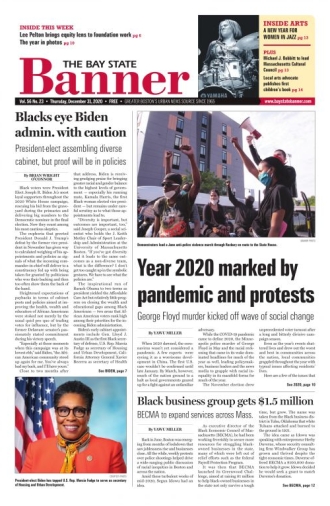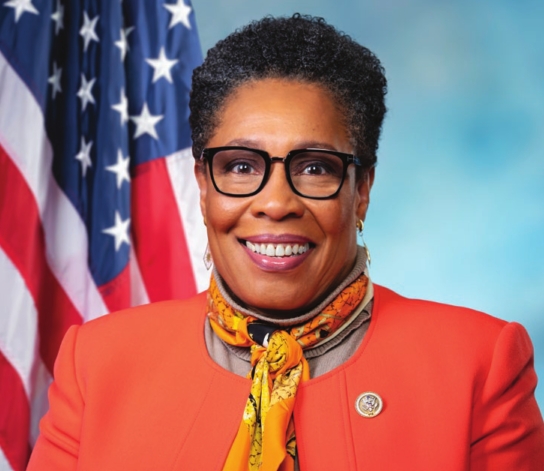
President-elect Biden has tapped U.S. Rep. Marcia Fudge to serve as secretary of Housing and Urban Development.

President-elect assembling diverse cabinet, but proof will be in policies
Black voters were President Elect Joseph R. Biden Jr.’s most loyal supporters throughout the 2020 White House campaign, rescuing his bid from the graveyard during the primaries and delivering big numbers to the Democratic nominee in the final election. Now they count among his most cautious skeptics.
The euphoria that greeted President Donald J. Trump’s defeat by the former vice president in November has given way to calculated weighing of his appointments and policies as signals of what the incoming commander-in-chief will deliver to a constituency fed up with being taken for granted by politicians who woo their backing and then too often show them the back of the hand.
Heightened expectations of paybacks in terms of cabinet posts and policies aimed at improving the health, wealth and education of African Americans were stoked not merely by the usual quid pro quo of trading votes for influence, but by the former Delaware senator’s passionately stated commitment during his victory speech.
“Especially at those moments when this campaign was at its lowest ebb,” said Biden, “the African American community stood up again for me. You’ve always had my back, and I’ll have yours.”
Close to two months after that address, Biden is receiving grudging praise for bringing greater racial and gender balance to the highest levels of government — especially his running mate, Kamala Harris, the first Black woman elected vice president — but remains under careful scrutiny as to what those appointments lead to.
“Diversity is important, but outcomes are important, too,” said Joseph Cooper, a social scientist who holds the J. Keith Motley Chair of Sport Leadership and Administration at the University of Massachusetts Boston. “If you’ve got diversity and it leads to the same outcomes as a non-diverse team, what is the difference? I don’t get too caught up in the symbolic gestures. We have to see what the policies are.”
The inspirational run of Barack Obama to two terms as president yielded the Affordable Care Act but relatively little progress on closing the wealth and educational gaps among Black Americans — two areas that African American voters rank high among their priorities for the incoming Biden administration.
Biden’s early cabinet appointments include Gen. Lloyd J. Austin III as the first Black secretary of defense, U.S. Rep. Marcia Fudge as secretary of Housing and Urban Development, California Attorney General Xavier Becerra as secretary of Health and
Human Services and U.S. Rep. Debra Haaland as the first Native American
to head the Department of the Interior. He chose Michael Regan, North
Carolina’s top environmental regulator, as administrator of the
Environmental Protection Agency.
Biden
passed over Susan Rice, the first Black woman to serve as National
Security Adviser, for secretary of state, but named her to head up the
Domestic Policy Council, a position that would round out the resume of
the former United Nations ambassador and groom her for future elective
office. He also appointed Princeton Professor Cecilia Rouse as the first
Black head of the White House Council of Economic Advisers and
Louisiana Congressman Cedric Richmond, the former chair of the
Congressional Black Caucus, as director of the White House Office of
Public Engagement, responsible for broad outreach to the nation’s
diverse constituencies.
With
a national clamor for a long-overdue racial reckoning in the courts and
police practices in the wake of George Floyd’s death beneath the knee
of a Minneapolis cop last May, Biden is under pressure to name an
African American as attorney general. Former Massachusetts Gov.
Deval
Patrick, who served as head of the Justice Department’s Civil Rights
Division under President Bill Clinton, and Suffolk County District
Attorney Rachael Rollins have both been mentioned among possible
nominees.
Calls for bold reforms
U.S.
Rep. Ayanna Pressley, who campaigned for Biden in more than a dozen
states, has already challenged the president-elect to abolish the
federal death penalty. She gathered the signatures of more than 40
fellow House Democrats in a letter asking him to sign an executive order
on the day of his inauguration halting all federal executions and
banning prosecutors from seeking the death penalty.
The
7th District representative from Massachusetts, who has become a
national leader in the progressive movement since her upset election
victory over an 18- year incumbent just two years ago, sees no advantage
in drawing out the honeymoon for the incoming president and vice
president. She named student-debt cancellation, reversing anti-choice
regulations and criminal justice reform as further priorities in the
progressive change she hopes to emerge from the new administration.
“The
Biden and Harris administration have a mandate from the people to
pursue bold structural reforms that meet the scale and scope of the
crises before us, and I intend to hold them accountable for that,” said
Pressley. “I have been in active conversation with the transition about
everything from cabinet appointments to policy priorities, and I expect
that to continue once the president-elect and vice president-elect take
office.”
Pressley
added that she was encouraged by the appointments of Fudge and Haaland,
whose presence in key cabinet posts augur the possibility of real change
in policies towards housing, inner-city economic growth, Native
Americans and federal land resources, “but I am not yet satisfied,” she
said.
“As the
president-elect continues to build his cabinet, he must prioritize
progressive leaders who will pursue the structural reforms we need to
get us out of this crisis, root out the disparities facing our
communities and finally move us towards our nation’s promise of
justice,” Pressey said.
Stephanie
Robinson, a lecturer at Harvard Law School and the first Black woman to
serve as chief legal counsel to U.S. Sen. Edward M. Kennedy, said she
wants to see broad-based policy changes that cut across cabinet fiefdoms
to implement big reforms.
“Health
care is a big one,” Robinson said, “but we’re not just talking about
improving Obamacare but about addressing COVID disparities, preventative
health measures, increasing access to prescriptions and conducting
research that encompasses every demographic.”
A
new conversation is needed, she added, to look at economic uplift “and
the differences between policies of a rising tide that lifts all boats
versus what you can do in targeting Black and brown communities.
Employment and jobs are essential, but so is wealth, building wealth to
erase historic inequities. And of course there are educational
disparities, from 0 to 3, K to 12 and in higher education.”
While
demands from the Black community for police and criminal justice reform
in the wake of the Trayvon Martin, Breonna Taylor and George Floyd
cases must be heeded, Robinson said a return to the bread-and-butter
issues of housing, jobs, health care and education through comprehensive
policy initiatives will address conditions that cause Black community
needs to be conflated with courts and prisons.
“We
must go back to the domestic agenda so important to working people and
the Black community,” said Robinson. “At this point, I don’t want to
give Biden a grade on appointments or what he says about policy. I
prefer to grade results.”