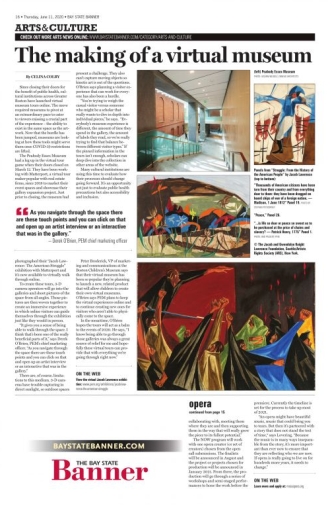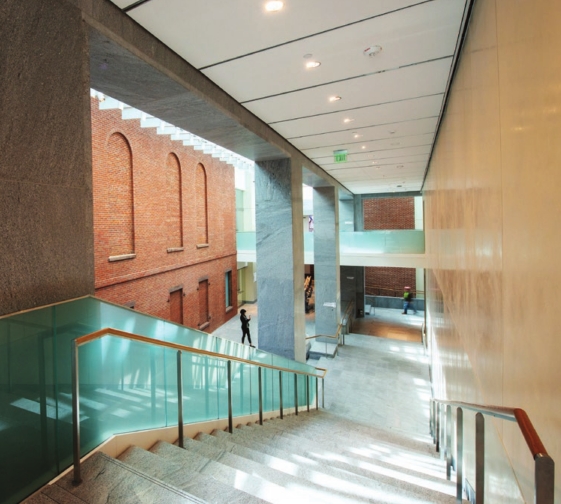
Peabody Essex Museum
Panels from “Struggle: From the History of the American People” by Jacob Lawrence (top to bottom):
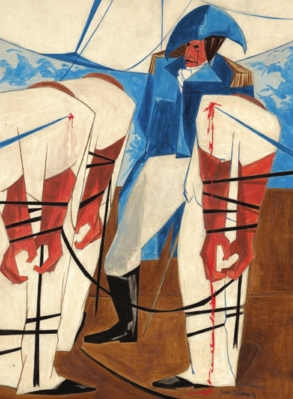
“Thousands
of American citizens have been torn from their country and from
everything dear to them: they have been dragged on board ships of war of
a foreign nation. — Madison, 1 June 1812“ Panel 19.
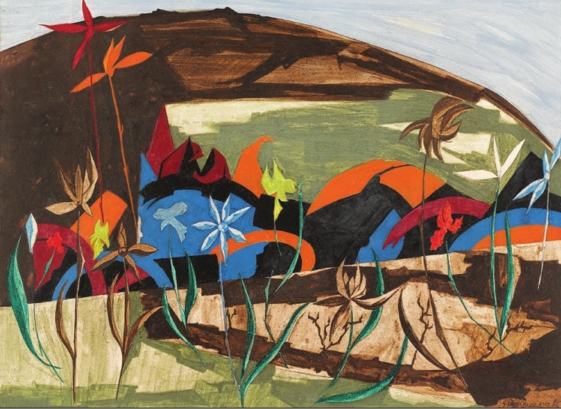
“Peace,” Panel 26.
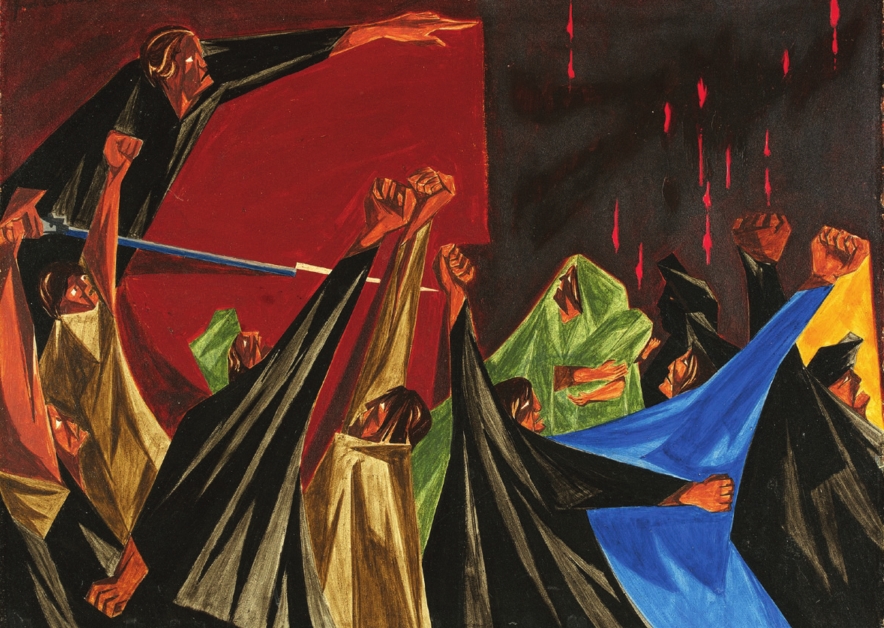
“...is life so dear or peace so sweet as to be purchased at the price of chains and slavery? — Patrick Henry, 1775” Panel 1.
© The Jacob and Gwendolyn Knight Lawrence Foundation, Seattle/Artists Rights Society (ARS), New York.
Since closing their doors for the benefit of public health, cultural institutions across Greater Boston have launched virtual museum tours online. The move required museums to pivot at an extraordinary pace to cater to viewers missing a crucial part of the experience – the ability to exist in the same space as the artwork. Now that the hurdle has been jumped, museums are looking at how these tools might serve them once COVID-19 restrictions are lifted.
The Peabody Essex Museum had a leg up in the virtual tour game when their doors closed on March 12. They have been working with Matterport, a virtual tour maker popular with real estate firms, since 2018 to market their event spaces and showcase their gallery expansion project. Just prior to closing, the museum had photographed their “Jacob Lawrence: The American Struggle” exhibition with Matterport and it’s now available to virtually walk through online.
To create these tours, 3-D camera operators will go into the galleries and shoot pictures of the space from all angles. Those pictures are then woven together to create an immersive experience in which online visitors can guide themselves through the exhibition just like they would in person.
“It gives you a sense of being able to walk through the space. I think that’s been one of the really beneficial parts of it,” says Derek O’Brien, PEM’s chief marketing officer. “As you navigate through the space there are these touch points and you can click on that and open up an artist interview or an interactive that was in the gallery.”
There are, of course, limitations to this medium. 3-D cameras have trouble capturing in direct sunlight, so outdoor spaces present a challenge. They
also can’t capture moving objects so kinetic art is out of the
questions. O’Brien says planning a visitor experience that can work for
everyone has also been a hurdle.
“You’re
trying to weigh the casual visitor versus someone who might be a
scholar that really wants to dive in depth into individual pieces,” he
says. “Everybody’s museum experience is different, the amount of time
they spend in the gallery, the amount of labels they read, so we’re
really trying to find that balance between different visitor types.” If
the pinned information in the tours isn’t enough, scholars can deep dive
into the collection in other areas of the website.
Many
cultural institutions are using this time to evaluate how their
processes should change going forward. It’s an opportunity not just to
evaluate public health precautions but also accessibility and inclusion.
Peter Broderick, VP of marketing and communications at the Boston Children’s Museum says that their virtual museum has been so popular they’re planning to launch a new, related product that will allow children to create their own virtual museums. O’Brien says PEM plans to keep the virtual experiences online and to continue creating new ones for visitors who aren’t able to physically come to the space.
In the meantime, O’Brien hopes the tours will act as a balm to the events of 2020. He says, “I know being able to go through those galleries was always a great source of relief for me and hopefully these virtual tours can provide that with everything we’re going through right now.”
ON THE WEB
View the virtual Jacob Lawrence exhibition: www.pem.org/exhibitions/jacob-lawrence-the-american-struggle