Community marks life of public service
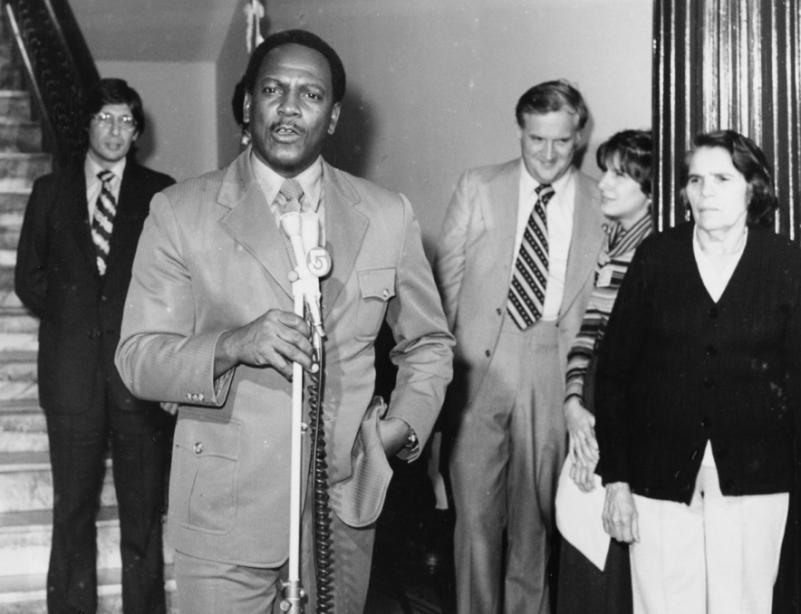
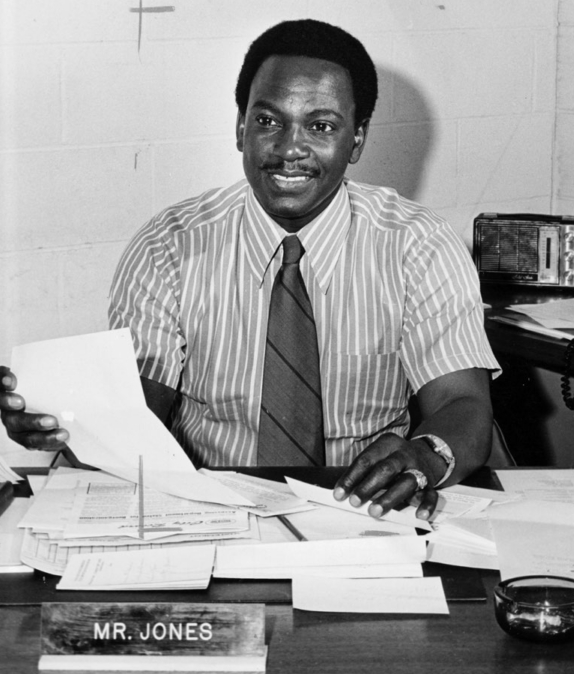
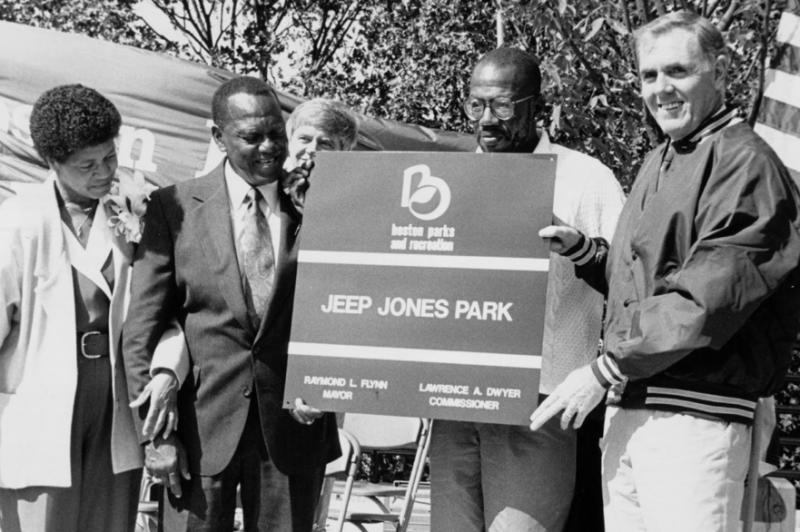
Clarence Jack “Jeep” Jones Jr., Boston’s first and only black deputy mayor, died at age 86 on Feb. 1, the first day of Black History Month.
On Friday, mourners at the Twelfth Baptist Church in Roxbury, where he was a member for more than 50 years, remembered Jones for his vigilant work to keep the city calm during the turbulence of the busing era. Others recalled his guidance of the Hub’s powerful development agency during his 32 years on the board, 24 of them as chairman.
And some, like his daughter Meta Jones, remembered more private moments, like a monthlong cross-country trip in a Winnebago with his eight children in the summer of 1977. “We will always treasure that memory,” said Jones. “He took us to the Grand Canyon and Universal Studios in California. We were in Memphis when Elvis died. And as we passed through cities in the South, he told us what it was like for black folks there back in the day.”
Though
Jones did his best to shield his family from the stress and strain of
his demanding job, Meta Jones recalled a friend telling her in April
1976 that she thought her father had been assaulted by a flag-wielding
demonstrator on City Hall Plaza. “I was terrified to hear that and so
relieved to learn he hadn’t been the one attacked,” she said.
In
fact, according to his longtime aide Clyde Thomas, Jones had witnessed
the assault on attorney Ted Landsmark by anti-busing protester Joseph
Rakes from a window at City Hall and rushed downstairs to comfort
Landsmark before EMTs arrived. The Pulitzer Prize-winning photo of the
attack endures as a lasting image of the hostilities unleashed by the
crosstown busing plan, which Jones — who was installed as deputy mayor
just weeks before Old Glory was wielded as a spear — was enlisted to
dampen.
“Word had
gotten out that Kevin White was going to appoint a black individual to
serve as part of his cabinet,” said Thomas. “And so a number of
prominent minorities began applying for the job. But some people,
especially Rev. Michael Haynes, supported Jeep.”
The
backing of the late Twelfth Baptist Church minister, former state
representative and colleague of the Rev. Martin Luther King Jr., proved
crucial in White’s choice. “It was a tough job,” added Thomas. “He
worked the streets and the policy suites, he had liaisons with the
police department and helped lead the mayor’s task force on busing, and
he went out to countless meetings in the neighborhoods as the face of
the administration. If he ever wanted to leave, he never shared that. He
was a religious man and used to pray in his office.”
In 1981, White appointed Jones to
the Boston Redevelopment Authority board, where over the next three
decades he helped shape the skyline of Boston and oversaw efforts to
spread the benefits of downtown development to the neighborhoods. Among
his allies was a fellow veteran of Mayor White’s political machine,
Boston City Councilor Bruce Bolling. Joyce Ferriabough, wife of the late
councilor, said her husband, as the only African American in the
nine-member city council elected in 1981, took over from Jones much of
the constituency and advocacy work he had done in City Hall.
Ferriabough,
after attending the overflow funeral for Jones at the historic Warren
Street church, said Jones should be counted among the most influential
leaders of Boston’s black community.
“Like
Chuck Turner, Melnea Cass, Robert Coard, Bruce and Royal Bolling, Mike
Haynes, the Guscott brothers and so many others,” she said, “we will
always stand on their shoulders.”
Jones’
death and the recent passing of Haynes left Roxbury without two of its
pillars of church and state, noted the Rev. Jeffrey Brown, associate
pastor of the Twelfth Baptist Church. “Jeep Jones’ name and work are
synonymous with the uplift of Roxbury and progress in Boston,” said
Brown.
“I was blessed
to drink regularly from his deep spiritual reservoir of faith. He was
part of the church’s ‘Friday Community Walkers.’ Along with Pastor
Arthur Gerald, he would walk Warren Gardens and all through Dudley into
the evening, greeting residents and listening to concerns, for years,
well into his 80s.”
Born
in Roxbury, Jones was known as “Junior” but later acquired the nickname
“Jeep” after a dog who followed him around the neighborhood. He
attended Boston Public Schools and graduated from Winston-Salem
University in 1955, excelling in sports and helping to win a basketball
championship for the historically black college.
Along
with Haynes, Jones in the 1950s formed a mentors program at the Norfolk
Settlement House in Roxbury called the Exquisites. The program taught
high schoolers to play basketball and also exposed them to etiquette and
how to navigate social situations and job interviews. “It was a
blessing for the young men to learn social skills and the importance of
academics and good sportsmanship and not just the game of basketball,”
said a statement from the Jones family.
Jones
joined the U.S. Army during the Korean War and served in Germany as a
medic. Returning to Boston, he taught school, worked as a probation
officer, and directed Mayor White’s Youth Opportunities Program and his
Youth Activities Commission. White later appointed Jones as director of
the Office of Human Rights, where he pushed for increased minority
hiring in the police and fire departments and city agencies.
Named
as White’s deputy mayor in March 1976, he spent five years in the post
before his appointment to the BRA. Boston City Councilor Michael
Flaherty’s first job was at the agency, and he remembered Jones’
kindnesses to him and his strong leadership. “Jeep left a lasting mark
on me and on Boston and did so with grace and dignity,” he said.
Always close to the Twelfth Baptist Church, Jones served as a trustee, deacon, Sunday school teacher and usher.
Jones
is survived by Wanda Hale Jones, whom he married in 1983; three
daughters, Meta Jones, Melissa Elow and Nadine Jones; four sons, Kenneth
Cunningham, Michael Jones, Mark Jones and Mark Cunningham; a sister,
Jacqueline Hoard; 15 grandchildren; and four great-grandchildren.


