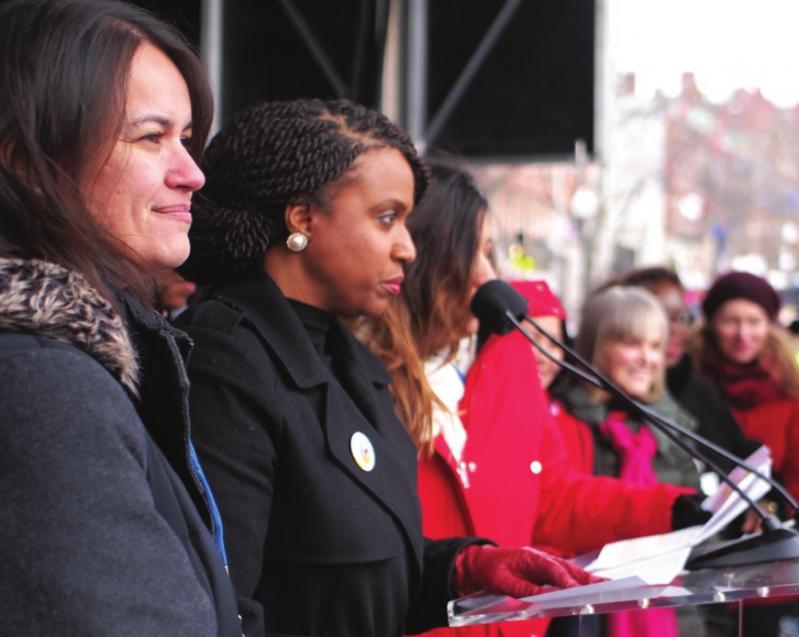
City Councilor Annissa Essaibi-George and U.S. Rep. Ayanna Pressley were among those who spoke during the Boston Women’s March.
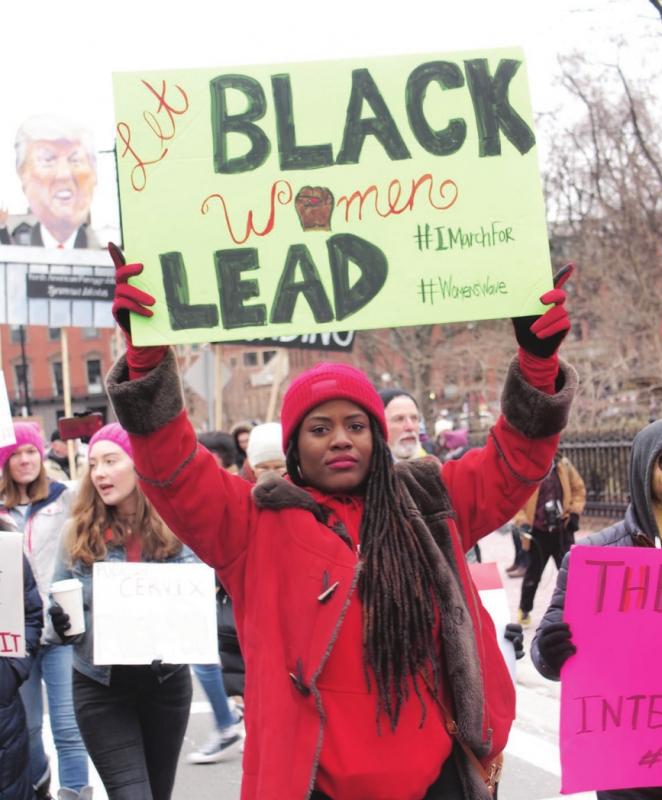
Demonstrators
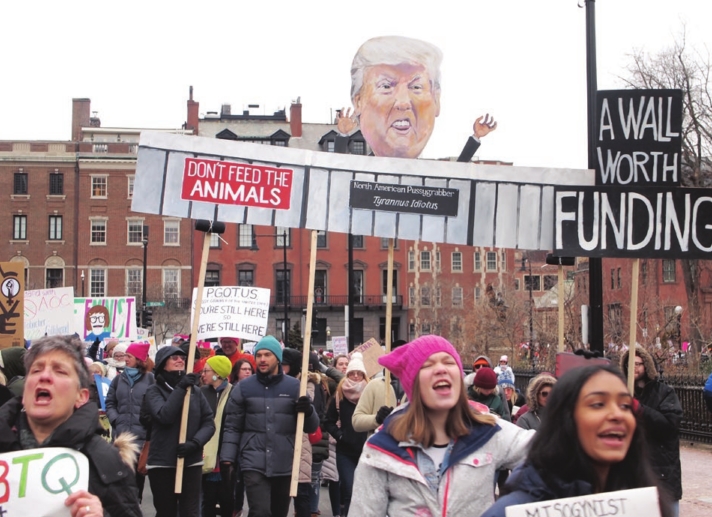
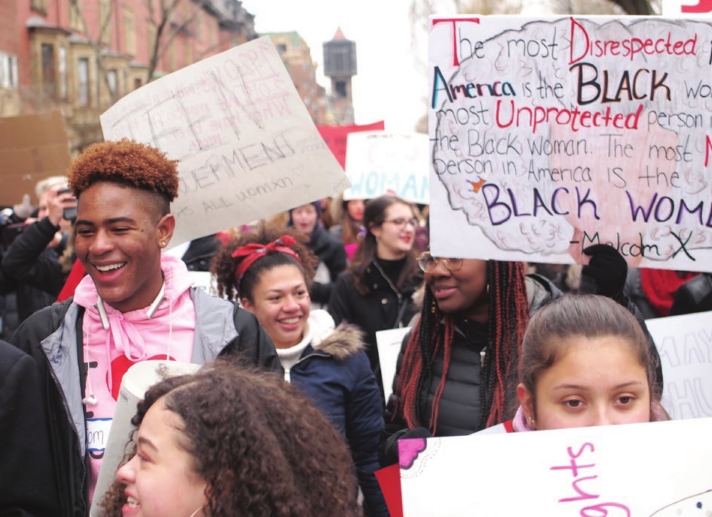
brought signs with messages of empowerment to the Women’s March, which
proceeded from the Boston Common to Commonwealth Avenue, then looped
around the Public Garden to the Common.
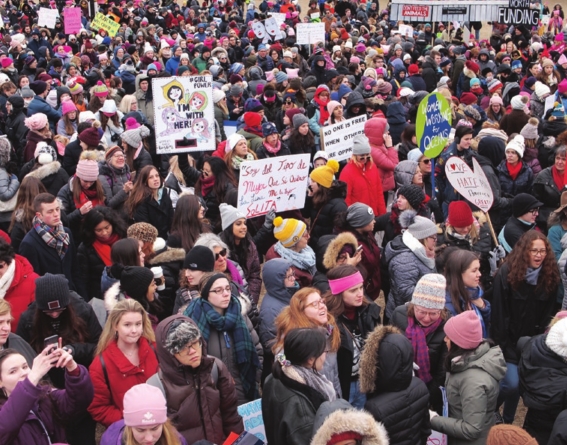
Thousands turned out for the Boston Women’s March Saturday.
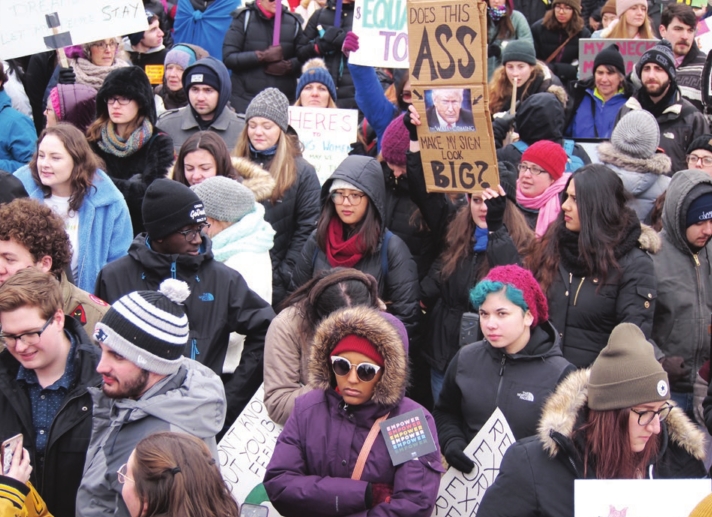

Speakers
and demonstrators celebrated women’s electoral victories, including
that 36 women newly elected to Congress. Newly-elected U.S. Rep. Ayanna
Pressley delivered the keynote address.
Electoral successes signal turning point in movement
Thousands of people turned out onto Boston Common Saturday for the third annual Women’s March, but the message this year seemed different from those of past years.
Speakers and sign-waving attendees alike again spoke out against President Donald Trump and his administration’s detrimental effects on various women’s issues, but after 2018’s election season changed the face of the federal government, the focus of the march was more on what women can do to change things: run for office.
“Women who answered the call to run, to serve, who didn’t ask permission to lead, who didn’t wait their turn,” said U.S. Rep. Ayanna Pressley, the march’s keynote speaker and honorary chair of the steering committee. “You can talk about waves and you can talk about magic all you want, but what we put in and what we saw play out in 2018 was work.”
Last November, 36 new women were elected to Congress, including the first-ever Muslim women and Native American women.
Mehreen Butt, town councilor in Wakefield and the first Muslim woman to be elected to a municipal
office in Massachusetts, spoke about being proud to see the growing
diversity in public office. She said that when she was elected in 2017,
it had seemed unbelievable, because there were no other women like her
in office.
“It has now
become imaginable to have a hijab-wearing, refugee Somali-American
Muslim in Congress,” Butt said. “All those victories seemed unimaginable
in 2016, and now in 2019, they are not only imaginable, they are
reality.”
Butt went on to say that more women should continue running for office, to continue the momentum and create more change.
The
march also brought the theme of diversity to the spotlight, bringing up
speakers to talk specifically about the rights of people of color,
Native Americans, Jewish women, people with disabilities, LGBTQ+ people,
victims of violence and immigrants.
“I’m
going to ask that you continue to fight for gender rights and other
issues that matter to women and our families, but that you not forget
the intersection and the weight of this country’s most constant and
persistent foe: racism,” said Tanisha Sullivan, president of Boston
NAACP. “Equality and justice for women of color is a non-negotiable.”
The
Boston Women’s March, organized by March Forward Massachusetts, is not
affiliated with Women’s March Inc., the organization responsible for the
original Washington, D.C. march. Women’s March Inc. has recently been
the subject of allegations of anti-Semitism among its guiding members.
Although this was not explicitly addressed at the Boston march, Cindy
Rowe, executive director of the Jewish Alliance for Law and Social
Action, spoke onstage with Sullivan against a long list of prejudices,
including anti-Semitism, racism, xenophobia and homophobia.
“We
are here by the thousands on Boston Common to reject all forms of hate,
and to speak out against the forces that seek to tear us apart,” Rowe
said. “We are here to say we will not be divided.”
Despite
the optimism from many speakers due to the changes observed since the
first Women’s March in 2017, it was clear from the speeches, chants and
overall expression of anger that none of the attendees were ready to
stop fighting yet.
“I
have been in Washington now for two weeks and people have asked me if
I’m disillusioned, if I’m dismayed,” Pressley said. “I tell them that
cynicism is not a luxury we can afford. I wake up every day clear eyed,
with purposed feet and a strength of conviction that you have delivered
me to Washington with a mandate to fight for justice.”


