More radical ideas ignored as efforts to memorialize King went mainstream
When Martin Luther King, Jr. was felled by an assassin’s bullet 50 years ago, the news of his death shook the nation.
In
the immediate aftermath of the April 4, 1968 murder, violence broke out
in 125 American cities, leading to 48 deaths, more than 1,600 injuries,
extensive property damage and more than 10,000 arrests. The federal
government deployed 57,000 soldiers and National Guardsmen to quell the
unrest, the largest force ever deployed for a civil emergency in U.S.
history.
While the
initial reactions were violent, King’s death left a legacy of positive
change in the United States that, while falling short of his lofty aims
to build a more just and equitable society, nevertheless had profound
impacts on the lives of people of color. As the gains of the civil
rights movement in housing, employment and public accommodation
solidified in the 1970s, King’s ideas and calls for a nation free of
prejudice became more widely accepted.
But
not all his ideas. Some aspects of King’s legacy remained controversial
in American politics — in particular, his anti-war stance and his calls
for trans-racial anti-poverty and labor movements.
King, the radical
In
the months leading up to his death King was outspoken in his opposition
to the war in Vietnam and drew fire from critics with his calls for
demonstrations against poverty in the nation’s capital. As part of his
Poor People’s Campaign, King had planned to create a poor people’s
encampment later in April on the 15-block Washington Mall to demand that
Congress act to take action on anti-poverty and civil rights
initiatives.
King told
reporters he was willing to risk being arrested to lead the
demonstrations, which had the endorsement of the American Federation of
Teachers, the AFL- CIO major civil rights groups and organizations
representing Puerto Ricans, Mexicans and Appalachian whites. The planned
demonstrations underscored growing dissatisfaction with the Johnson
administration’s War on Poverty and pressed for race-neutral policies,
including King’s call for a national basic income.
King’s assassination
quickly derailed the Poor People’s Campaign, taking with it the
activists’ best chance at a broad-based, multi-racial movement. But in
the months and years that followed, there were increased responses to
the conditions in which blacks lived — the issues that had provided the
impetus of the Civil Rights Movement.
Initial response
In
the immediate aftermath of his assassination, King’s image in the
popular consciousness began to change. His legacy became less about the
the Poor People’s Campaign and the controversial anti-war stance that,
more than anything else, put him in the crosshairs of J. Edgar Hoover’s
FBI, and more about the heart of the civil rights movement — its call
for black equality.
Georgetown
University Sociology professor and author Michael Eric Dyson argues
that at the time of King’s death, many whites celebrated his passing.
King’s image, Dyson argues, has been sanitized with time.
“His
danger has been sweetened,” Dyson told National Public Radio in a 2008
interview. “His threat has been removed. There are only smiles and
whispers and applause now without the kind of threat that he
represented.”
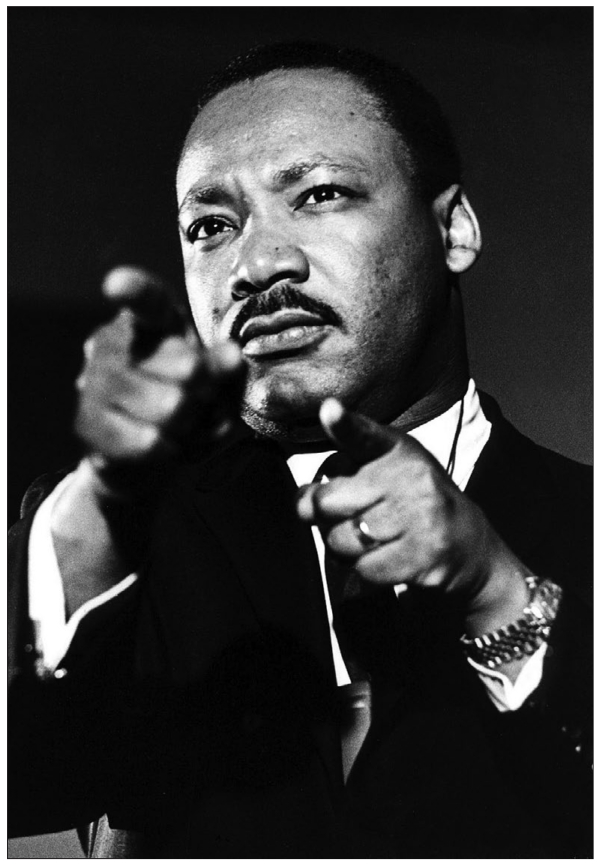
Martin
Luther King’s legacy of activism around labor rights and the war in
Vietnam has taken a back seat to his calls for racial unity.
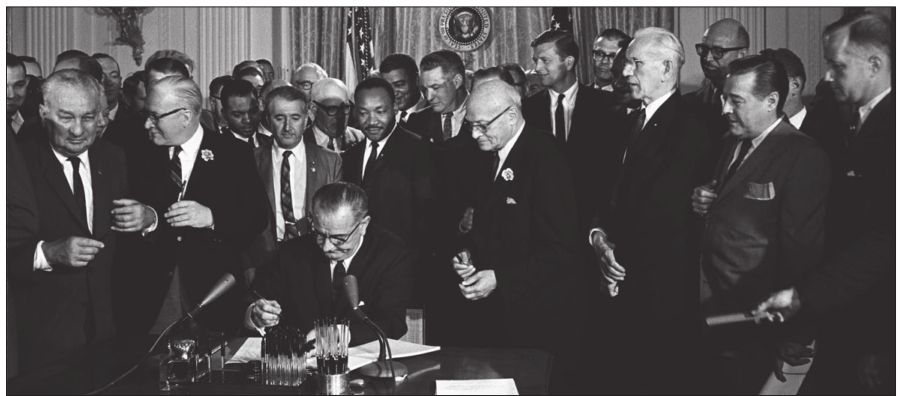
King with President Lyndon Johnson as he signs civil rights legislation into law.
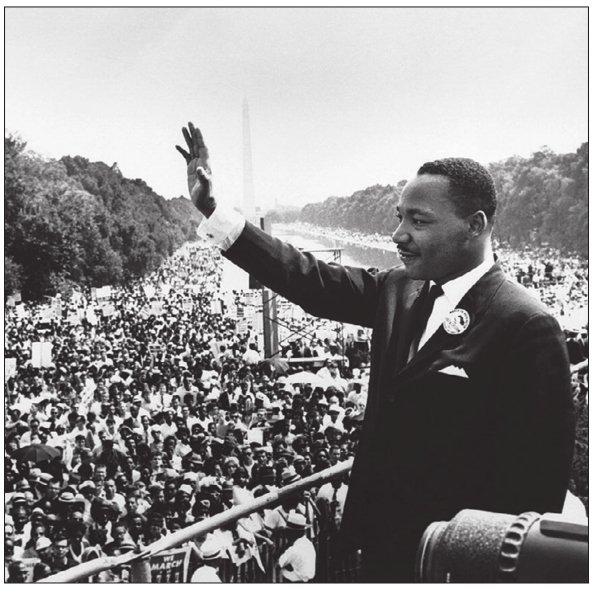
Martin Luther King during the historic March on Washington.
Thus,
King’s “I have a dream” speech — which he delivered at the 1963 March
on Washington — came to symbolize King in America’s popular
consciousness. His anti-war, pro-labor stands from the latter half of
the decades, while not erased from history, receded to the background.
Yet
even with the sanitized version of King that emerged in the years after
his death, the near-universal acceptance of King and his civil rights
legacy seen in the United States today took more than three decades to
cement.
The King holiday
Boston
was an early adopter of an annual holiday honoring King. In 1970, the
then all-white City Council voted in favor of the official holiday, with
South Boston Councilor Louise Day Hicks casting the sole dissenting
vote. While city and state workers did not have a day off, Boston Public
School students did, and 34 Boston businesses, agencies and community
schools agreed to close on Jan. 15 as well.
King’s
birthday did not become a national holiday until 1983 — after nearly 15
years of advocacy by civil rights activists. Much of the initial
resistance to the King holiday centered on his ties to communists and
his opposition to the Vietnam war.
Massachusetts
Sen. Edward Brooke and Michigan Rep. John Conyers first introduced the
bill authorizing the holiday in 1979, but it fell five votes short with
congressional representatives arguing that U.S. holidays should not be
designated for private citizens who never held elective office.
Supporters
collected 6 million signatures in support of the holiday in 1980 — the
largest petition drive in U.S. history. U.S. Sen.
Jesse
Helms of North Carolina led opposition, submitting a 300- page document
detailing what he said was evidence of King’s ties to communists. U.S.
Sen. Daniel Patrick Moynihan of New York threw Helms’ papers on the
floor of the Senate, stomped on it and called it a “packet of filth.”
The
bill passed the U.S. House of Representatives 338 to 90 later that year
and Ronald Reagan signed it into law. Although the day became a federal
holiday, several U.S. states declined to observe the day. In 1990, the
National Football League moved Super Bowl XXVII from Arizona to
California to protest the state’s refusal to adopt the holiday. Two
years later, voters in Arizona passed a statewide referendum to observe
the day. In 1991, New Hampshire created a “Civil Rights Day” holiday to
mark King’s birthday. South Carolina, the last holdout, marked King’s
birthday in 2000, a few months after Utah had moved to do so.