Debra
Britt and her sisters are lifelong doll collectors. Their collection of
historical black dolls was just a personal passion until Britt’s
daughter came home from elementary school one day and said her teacher
wouldn’t allow her to write a report on Madam C. J. Walker. According to
the teacher, the African American entrepreneur, philanthropist and
social activist was not important enough to cover. Britt and her
daughter marched down to the school with a full project on Walker, and a
group of dolls to back up the presentation. In that moment, the
National Black Doll Museum of History and Culture was born.
Britt’s
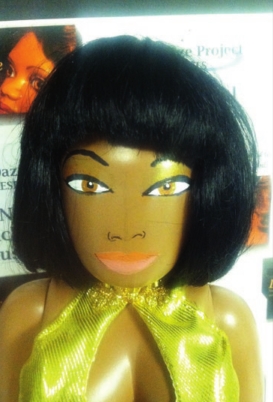
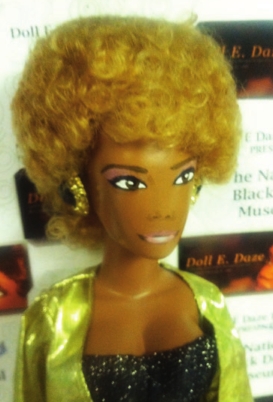
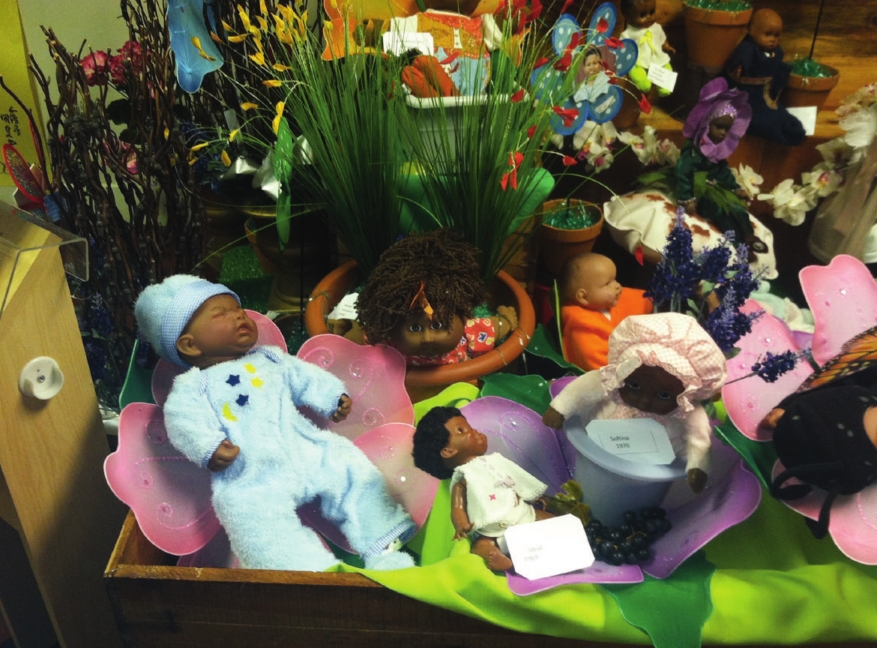
education program, teaching black history through the lens of black
dolls, spread like wildfire. The dolls became a narrative and physical
resource with which to teach history. Britt gives the example of a
Topsy-Turvy doll, a two-faced creation made by enslaved mothers with one
black side and one white side. Britt says, “Dolls are an art form. They
tell a story based on the materials they used, the fabric, the colors.”
In
2012 she secured a contract with the public school system to create and
present educational programming. As the business continued to grow, she
secured a physical space in Mansfield to store and sort through
the dolls. That space, at 288 N. Main St., now serves as the Black Doll
Museum, open to the public. The museum is a family owned and operated
501(c)(3) nonprofit and run as a volunteer effort. Donations are
accepted through their website, www.nbdmhc.org, to keep the institution running.
Britt
grew up on Harlem Street in Dorchester and lived there for 40 years.
Her experiences with racism in schools sparked her desire not only to
bring black history to school-aged children, but to serve as a resource
for them. “It’s important to let black kids know that they can do
anything,” she says. “They can’t quite see the future and it’s scary.”
In
February, the museum will feature a black college exhibition titled
“Endless Possibilities,” with dolls and stories of historically black
colleges and The Divine Nine fraternities and sororities. It is also
currently accepting submissions for a Martin Luther King Jr. student art
show scheduled to exhibit at the museum in January. In addition, Britt
hopes to create walking tours with the Black History Trail in Mansfield.
She
reports that most of the museum’s visitors are from out of state and
hopes that more Boston guests will visit in the new year. The museum is a
four-minute walk from the Mansfield MBTA Commuter Rail station.
ON THE WEB
For more information about the museum and to donate, visit: http://nbdmhc.org.