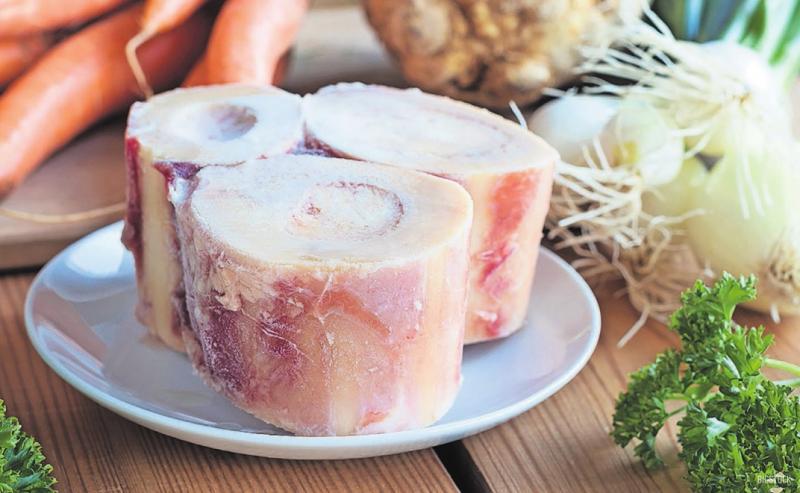
  To properly appreciate bone soup is to potentially upend how you view meat itself. While most meat eaters focus on the muscle flesh, a brotharian values the bones even more. Muscle meat has protein, but so does a bowl of rice and beans. Bones contain different things, a diverse cocktail of nutrients that become available in stages, as the bones cook. After a few hours of heat, the tendon, cartilage and other pieces of connective tissue attached to bones begin to melt into collagen, gelatin and other base proteins that are hard to get from non-animal sources. Just ask any vegetarian Jell-O lover. Those melted connective tissues are good for our own connective tissues, helping them rebuild. Many prefer to cook their bones even longer, in order to extract minerals like calcium. A common practice is to add a tablespoon of vinegar to the bones to enhance the mineral leaching. The difference between stock and broth is that broth is ready to eat while stock is an ingredient. In fact it’s the primary ingredient in broth. Stock is low-key, while broth can be colorful and indulgent. Stock is uncommitted and versatile, while broth is just a few added ingredients away from being soup. Unadulterated stock is not something you would want to drink, unless you’ve added salt and some kind of fat. At which point you would be drinking broth. Whole birds can be cooked into a broth in much the same way that bones can. So the directions that follow can apply to either. Ari LeVaux writes Flash in the Pan, a syndicated weekly food column that’s appeared in more than 50 newspapers in 25 states. Ari can be reached at [email protected]. See also
|


