Illinois sends students with special needs out of state, at high cost to troubled teens.
Ted likes to say he was in the wrong place at the wrong time. He was 17, doing well at a college prep boarding school in Indiana, when a classmate went on a violent rampage while high on a combination of potent drugs. When cops searched that classmate’s phone, they found that Ted had fulfilled his request for LSD, so he got charged with a felony (which is why he asked us not to use his last name).
His defense attorney got a plea deal: Ted could do three months in jail, or six months at a boarding school in Utah. Ted chose Discovery Academy in Provo, expecting it to be like his prep school only with horses and a weekly therapy session.
“When I was packing for there, I was bringing all sorts of things like my lacrosse stick and all my clothes, my cellphone, my wallet…. And as soon as I got there, they take everything away,” he says. “They stripped me completely naked and did a search. Not a cavity search, but I did do jumping jacks.”
Initially considered a flight risk, Ted was put on “run watch,” and had to sleep in the common area on a bare floor. One morning, he woke up in a pool of blood.
“There was a kid next to me, and he sliced his neck with this razor in the middle of the night, like hundreds of times,” Ted says. “When they turned the lights on, I’m like: Oh, I’m in some shit. This is not a normal place.”
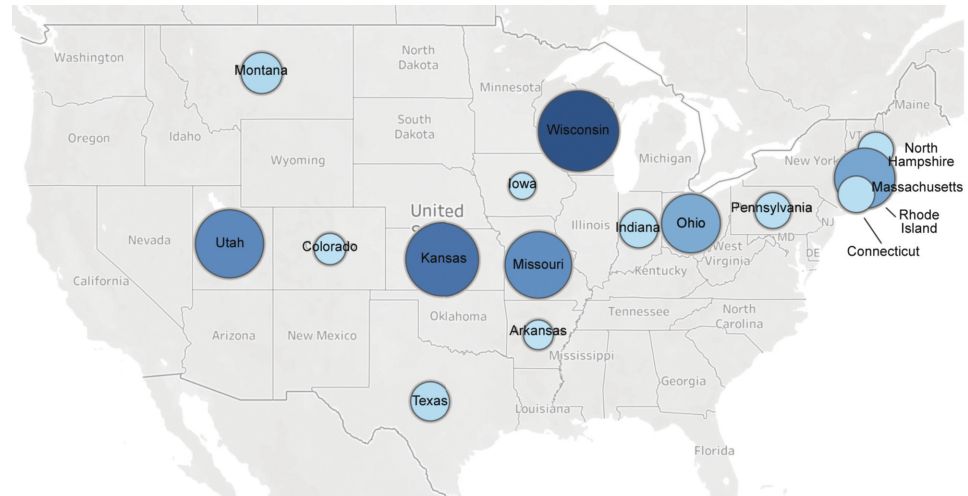
It is, however, a place that Illinois school districts send some students with special needs to live. In the 2017-18 school year, a handful of students (mostly from wealthy suburban Chicago districts) were sent to Discovery Academy or one of its associated facilities, and at least 70 more to other Utah boarding schools. That’s according to documents obtained under the Freedom of Information Act, from the Illinois State Board of Education.
“When they turned the lights on, I’m like: Oh, I’m in some shit. This is not a normal place.”
–Keagan Autry
Utah offers a veritable smorgasbord of boarding facilities for “troubled teens.” A 2016 story in the Deseret News reported that the state had more than 100 such programs, and served more than 6,000 clients in the previous year, more than 92 percent from other states. The report cited a 2015 economic impact study based on survey results from about half of those programs showing they earned about $270 million, contributed $22 million in state and local taxes, and added $423 million to the state’s GDP. In return, the state keeps regulations to a minimum.
Brent Hall, president of Discovery Academy, told Deseret News the industry’s business model was “recession-proof.”
But Ted, now 22, didn’t appreciate being part of Hall’s business. When he was finally allowed to call his parents, a month into his stay, Ted begged his mother to get him out of Discovery Academy and let him do the jail time instead.
“I said that multiple times. Very many times,” he says. “I still say it today.”
Ted’s parents paid for his stay at Discovery Academy. But in the 2018 school year, Illinois paid for at least 344 special needs students to live in private schools in other states. Most were in facilities certified to provide treatment for a range of issues like autism, traumatic brain injury, intellectual and emotional disabilities.
Every child in America has the right to a “free and appropriate public education,” thanks to the Individuals with Disabilities Education Act, signed into law by President George H.W.
Bush. And if that education
can’t be provided in the student’s home district, the student can go
elsewhere – also for free. Illinois taxpayers typically spend at least
$25 million per year to place hundreds of students outside the state.
Here’s
how that works: If a local school district doesn’t offer the services a
student with a disability needs, the district is required to help fund
that student’s tuition at another facility. The amount the district
contributes depends on two factors: 1) the normal cost of educating a
student in the home district and 2) whether the student is placed at a
public facility (such as a special education co-op) or a private
facility.
That first
factor is known as the district’s “per cap,” and it’s a complicated
calculation dividing the difference between certain district expenses
and revenues by average daily attendance. Across Illinois’ 852
districts, that dollar amount ranges from a low of $5,000 to more than
$29,000. If a student is placed at a private facility, the district is
obligated to contribute an amount equal to two times per cap, and the
state board of education reimburses most of the remainder of the
tuition. If a student is placed at a public facility, the district is
obligated to contribute four times per cap. Federal funds pay for room
and board.
Because the
cost to the home school district is so much higher for public instead
of private placement, many special education advocates argue that
Illinois’ funding structure leaves public facilities starved for
resources while incentivizing placement in private facilities. Melissa
Taylor, past-president of the Illinois Alliance of Administrators of
Special Education (IAASE), surveyed other states and concluded that
Illinois is unique in this funding structure.
“Illinois
is the only state in the nation that funds private special education
placements and public special education placements differently,” she
says.
For more than a
decade, IAASE has been pushing lawmakers to equalize the reimbursement
formula, but private school advocates have lobbied against it. Even with
sponsorship by Democrats in a Democratcontrolled legislature, the
proposal has never even gotten out of committee.
It’s
hard to see how that will change anytime soon, since some of those
public cooperative programs were revealed to rely on seclusion rooms in
the recent investigation published by the Chicago Tribune and
ProPublica. However, that investigation was made possible because the
public facilities are required to document seclusion. New rules enacted
by ISBE in the wake of that investigation will now require private
facilities to document seclusion.
Decisions
about where to place a student with special needs typically begin in
their home district when the student’s parents meet with the special
education team to craft the student’s Individualized Education Plan,
known as an IEP. It’s in these meetings, which happen every three years
(or more often if needed), that the idea of placing a student in a
residential program would be discussed.
Stephanie
Jones, an education attorney and former general counsel for ISBE, says
residential placement is sometimes proposed by the teachers, social
worker, school psychologist and others on the IEP team.
“There
are kids that have very significant mental health disabilities or even
kids that are on the autism spectrum as they get older that can’t be
controlled in a school setting that need a much more therapeutic setting
with people that are trained to handle a lot of violent outbursts,” she
says. “So I’m aware of kids that have, you know, broken plate glass
windows and things like that. And that’s where I’ve seen school
districts actually recommend a residential placement that has
round-the-clock mental health.”
Other times, she says, that request comes from the family.
“I
see the cases where parents just can’t handle the kids at home
anymore,” Jones says. “The kids are either physically aggressive or
behaviorally just cannot be managed in the home environment. And those
are a lot of the types of cases where I see parents coming to school
districts asking for residential placements.”
Jennifer
Smith, a partner in Franczek P.C. (a law firm that represents more than
100 Illinois school districts), says sometimes, a residential placement
happens even before the student has an IEP.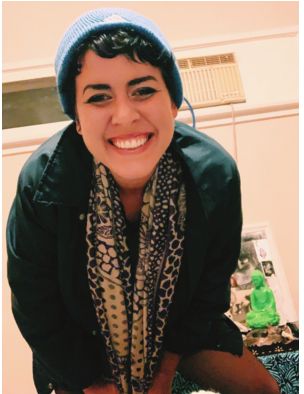
“Under
federal law, parents have the right to send their child to a private
school that they pay for upfront and then seek reimbursement from the
school district, if they believe the school has not offered their child
an education that satisfies a number of complicated legal requirements,”
she says. “Then, after they’ve made the placement, they ask the
district to evaluate the student for an IEP and fund that placement
that’s already been made.”
This
process, known as unilateral placement, is typically used by families
who have substantial financial resources – families who bring attorneys
with them to the IEP meetings.
If the district refuses to create or amend the IEP, the family can
take their case before an ISBE hearing officer. If the officer rules in
the family’s favor, the district is on the hook for not only a chunk of
the student’s tuition, but also legal fees – its own as well as the
family’s.
Tom Tebbe,
executive director of the Illinois Association of School Social Workers,
says more families would take advantage of unilateral placement if they
could.
“Wealth,” he
says, “is a great unequalizer.” Because of that substantial monetary
risk, some districts choose to settle the dispute by offering to just
pay the family the amount the district would owe if it had placed the
child.
Such settlements are never reported to ISBE and aren’t reflected in funding figures we obtained for this story.
Residential
placements come with another type of risk – risk to the safety and
well-being of the child. At least one central Illinois student was
withdrawn from a residential facility, Great Circle in St. Louis, after
suffering physical abuse. In May, Great Circle’s CEO was arrested and
charged with assault and endangering the life of a child. Illinois had
52 students at Great Circle in the 2017-18 school year, according to
data obtained from ISBE.
Also
that year, 55 Illinois students were placed in various private schools
in Oconomowoc, Wisconsin. A suburban Chicago mom, who asked that her
name be withheld, says she was shocked when she visited her autistic son
in one of those.
“I
saw a member of the staff kicking a child who was on the floor, crying
for their mother,” she says. “They had wet their pants, and the guy who
was in charge of the building kept saying, like, ‘Hey! Hey! You want to
see your mom? You’re gonna cut it out right now!’ ” She alerted
administrators, but, dissatisfied with their response, she ultimately
withdrew her son from the school.
“If
[that staff member] did that on the street, he would be arrested,” she
says. “If he’s doing it to one, he’s doing it to others.”
In
January 2019, NPR aired a story about the use of electrical shock to
control autistic students at Judge Rotenberg Educational Center in
Massachusetts, where a handful of Illinoisans reside. A Utah school that
has housed Illinois students closed last year after a riot and
allegations of sexual abuse. Two dozen staffers at that
facility were investigated for child abuse; one staff member was accused
of fathering a child with a 14-year-old former resident of the
facility. The company that owns that school operates several others in
Utah, including one where several Illinois students were placed during
the 2017-18 school year.
In
2018, a therapist who worked at numerous programs in Utah, including at
least two where Illinois students have lived, pleaded guilty to three
counts of first-degree felony rape involving a minor patient.
“I saw a member of the staff kicking a child who was on the floor, crying for their mother”
Smith,
an attorney who attends IEP meetings where some of the decisions on
placements get made, says sending a child out of state should be a last
resort.
“These schools
vary in quality and appropriateness and should not be used unless
they’re truly, truly needed,” she says. “It’s just a balance between
safety and, you know, some of these techniques to keep [students] safe
obviously mean really restricting their freedoms.”
When
it comes to facilities focused on “emotional disabilities,” the
treatment might not be what the parents imagine. Ted – the prep school
student who got sent to Discovery Academy to work off a drug charge –
was disappointed to discover that “equine therapy” didn’t involve riding
a horse.
“They made us try to direct
horses without touching them, like try to direct them around courses
using ‘good communication.’ I don’t know how you necessarily learned
communication from talking to a horse,” he says.
Erin Woolridge, now 42, worked at three different behavior modification programs in Utah – a wilderness boot
camp, Heritage School and Discovery Academy, a few years prior to Ted’s
stay. She confirms his horse tale.
“They
give [students] a horse before they train them at all, and just said,
‘Here, try to bring the horse over here,’” she says. “So the kid … would
be chasing the horse all around, like frustrated because the horse
wouldn’t do what he wanted them to do.”
Once
it became clear the student couldn’t control the horse, the therapist
would compare the student’s frustration to how their parents must feel,
trying to manage their behavior. Woolridge says this strategy was partly
meant to promote empathy with the parents.
“But also,” she says, “it’s certainly a form of shaming.”
Many
schools that offer “behavior modification” still use some version of a
confrontational or “attack” group therapy model that dates back to
Synanon – a drug rehab that morphed into a dangerous cult. Students are
asked to vote on punishment for their peers, and can lose basic
privileges if they resist the program. Ted says he resorted to lying.
“I
mean, I had this whole pamphlet of me promising my therapy, my parents
and myself that I would never drink alcohol. And I wasn’t even old
enough to drink alcohol,” he says. “But I had to sign this packet and
talk about it with my parents in order to graduate the system.”
Avital
van Leeuwen, who’s now 24, found herself at Alpine Academy, another
Utah boarding school, in 2011. She was placed there by the Los Angeles
Unified School District; Illinois placed eight students at Alpine in the
2017-18 school year, according to ISBE.
Like
Ted, she realized there was no escape, and resigned herself to
cooperating, outwardly at least, while inwardly trying to resist.
“Actually,
one of the most traumatizing parts of being there: I had to stand up in
front of everyone and read this speech that they make all of us do
called, ‘Yes, I’m getting better,’ ” she says. “I had to, like, put on
this show and the smile like loving the place and having had a great
experience, when all I was thinking about was how horrible it was and
how much I couldn’t wait to get out.”
She
says the school put her on medication that came with debilitating
withdrawal symptoms when she tapered off, but helped her tolerate Alpine
by making her numb.
“It’s
a spiritual kind of oppression,” she says. “You’re being abused,
emotionally and psychologically, every day by people who are telling you
that they’re helping you, that they love you, they care about you, and
that this is the best for you.”
Keagan
Autry, who’s from Arizona, was one of van Leeuwen’s classmates. To him,
the worst part was the use of social isolation as punishment.
“If you did something wrong,” he says, “you wouldn’t be allowed to talk to people.”
If
you did something “bad enough,” this punishment could last for more
than a week. And the worst thing you could do was kiss a girl.
“There
were cameras in the home, you had no privacy. I didn’t even feel safe
in my own thoughts,” Autry says. “It felt like I wasn’t even allowed to
think badly of Alpine. And I think that’s partially why I started loving
Alpine, in a way.”
For
a couple of years after graduation, he felt intensely loyal to the
school. But troubling memories kept bubbling up in his mind.
“It took a lot of time for it to sink in, just the depths of how wrong a lot of the things that happened there were,” he says.
Looking
back, Keagan Autry – and that’s now legally his name – realizes he was
struggling with gender dysphoria. Alpine is an all-girls school, and
since Autry was assigned female at birth, he was expected to behave like
a girl.
In an email,
Alpine director Christian Egan said school policies have evolved since
then, shifting to honor masculine and non-binary gender pronouns around
2015-16.
“Alpine Academy accepts and affirms our students in their preferred
gender identity and presentation,” Egan wrote. “Students are not
punished for nor discouraged from discussing, exploring, and
experimenting with gender identities different from their birth-assigned
identity or the one initially presented at Alpine Academy.”
In
2018, ISBE amended the school code to try to prevent districts from
sending students to any state that doesn’t provide oversight of
residential facilities. The only state excluded by that provision was
Utah.
Stephanie Jones
was general counsel for the State Board of Education in 2017, and she
advocated for the change. But today, she acknowledges that families
quickly resorted to unilateral placement as a workaround.
Why would parents want to send kids someplace all the way on the other side of the country, and there’s no oversight?
“That is a fantastic question,” she says.
“I
have never understood why – when we’ve raised issues that the
[out-of-state] school doesn’t have special education teachers or doesn’t
have oversight by DCFS – why either parents or hearing officers or
parents’ attorneys think that they’re appropriate placements.”
Utah
recently instituted new oversight provisions, but Smith, an attorney
who represents dozens of school districts, says she has no way to gauge
the new law’s effectiveness.
“These
places are so far away, there’s no reasonable way to monitor from
Illinois, whether they’re safe or unsafe,” she says, “let alone
effective for students with disabilities.”
Dusty
Rhodes is Education Desk reporter at NPRIllinois. This story is an
excerpt of her fivepart series that aired last month. To read the series
and listen to the stories, go to NPRIllinois.org and type Far From Home
into the search box.