Farm income is down, prices continue low. Stress grows.
The seeds of a trade war, severe weather, plummeting prices and corporate farming competition mean that many farmers are harvesting a bumper crop of problems, especially those people loosely defined as “family farmers.”
“They call them ‘the farmers in the middle,’ and their numbers are declining pretty rapidly,” said National Farmers Union President Roger Johnson. “Unfortunately that is the size of the family farmer that is most essential to rural America. They are the guys and gals who tend to shop more locally, who live in those rural communities, who are the civic boosters, and who buy most of their inputs locally.”
Farm income is down, bankruptcies are up and both trends will likely continue, according to market experts. Big farms are getting bigger, there are fewer small farms, and the stress of staying viable is causing serious mental health concerns for those who work the soil for a living.
“There’s no question we are in a very tough time right now,” Johnson said. “Net farm income has been declining for six years in a row, and the (federal government’s) Market Facilitation payments are likely to go away after the next election. That’s not good.”
Another exacerbating factor is that fewer young people are embracing the farm as a career.
“Student loan debt is a much larger barrier to folks starting in agriculture today than it was when I started,” Johnson said. “They just can’t afford to take on more debt to buy land, machinery or livestock because they are already trying to service their very large debt that they left college with.”
But there might be a silver-silo lining to this crop-growing cloud, Johnson said, and that is the opportunity for family farmers to get bigger and make money through higher volume, or become smaller and more specialized by marketing unique commodities to targeted consumers.
U.S. Secretary of Agriculture Sonny Perdue told the World Dairy Expo on Oct. 1 last year that the current trend in agriculture is the “big get bigger and small go out.” Rather than “go out,” one Morgan County family farmer decided to get bigger to survive.
“You build this monster”
“We have tremendous risk, huge overhead, the operating costs would stagger most people,” said Andy Mason, who farms approximately 3,000 acres with his wife, Delores, son, Cody, and daughter-in-law, Brittany, just west of Jacksonville. “For what we farm, it takes a million dollars just to plant the crop. That’s a risky thing to do, we have no control over what we get for it or whether it will rain or not. It is a huge gamble.”
Mason
and his late father farmed 240 acres in the late 1970s when Andy went
away to college. He returned to the family farm with his new bride,
Delores, after a brief career on the corporate world, and the young
couple made the decision that a bigger family farm would be the best way
to weather the profession’s inherent volatility. Over the years the
Masons have purchased as much adjoining farmland as they could and are
leasing the rest. They also have a hand in the family farm on which
Delores Mason was raised, a 4,000-acre operation in Missouri.
“Now
we are looking at doing more specialty grains, things that add more
value to the farm, and some livestock that are a little different,”
Mason said. “We do everything ourselves, we spray, we spread, we don’t
hire out work very often.”
Cody
Mason will be the sixth generation family farmer on both his mother’s
and father’s sides of the family, and he and Brittany are expecting a
baby this spring that they hope will mean a seventh farming generation.
Cody and Brittany are already buying into the operation.
“You
build this monster, we’ve had some rough years, but we’ve always gotten
through it together,” the 59-year-old Andy Mason said. “Our retirement
is in the equity and value we have in our land and machinery, which we
will transition to Cody.”
“Nothing like this had occurred in Illinois during the last 60 years”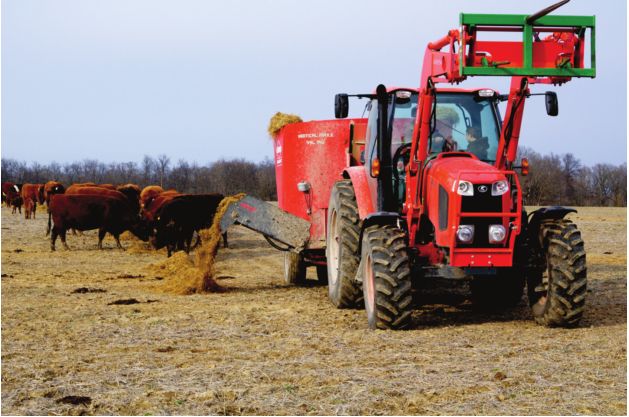
The
United States Department of Agriculture (USDA) projects that 2019 farm
income will reach $88 billion, 29 percent below the record high in 2013,
and nearly 40 percent of this past year’s income is tied to federal
trade and disaster assistance, the farm bill and insurance indemnities,
according to American Farm Bureau chief economist John Newton.
University of Illinois researcher Michael Langemeier, in his study,
“Measuring Financial Stress,” estimated that 56 percent of all farms
reported negative income during the 2007 to 2016 period.
The
2019 Illinois Farm Economics Summit, held during December at several
Illinois locations, including a Dec. 17 session in Springfield, told the
farmers and agribusiness leaders in attendance to expect more of the
same in the near future. As always, weather has influenced farmers’
bottom lines.
“Planting
delays (due to excessive rain) were particularly severe with Illinois
not reaching 50 percent planting progress for corn until early June,”
said Scott Irwin of the University of Illinois Department of Agriculture
and Consumer Economics. “Nothing like this had occurred in Illinois
during the last 60 years.”
Irwin’s
colleague, Dale Lattz, said that “even with the additional government
assistance, farm incomes are expected to continue at the lower levels
that have occurred since 2013.” Lattz said with 2020 corn and soybean
price projections, and assuming no more federal programs to protect
against certain price and production risks, it would “result in a
negative $17 per acre farmer return for corn and a negative $58 per acre
farmer return for soybeans.”
The
federal Market Facilitation Program (MFP) that pays farmers for lost
revenue due to trade issues “has more than offset the shortterm damages
associated with trade retaliation” during 2018 and 2019, said the
University of Illinois’ Nick Paulson. “However, there exist concerns
over the longer-term implications of current trade policy and the
unique nature of farm support via MFP. These include foregone export
market growth and reduced U.S. global competitiveness and the lasting
reputation effects associated with U.S. trade policy moving forward.”
The one potential bright spot: African Swine Fever, assuming it doesn’t reach the United States.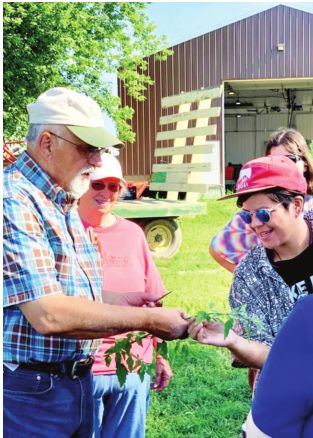
“The
shortfall in world protein due to disease issues throughout Asia looks
to encourage livestock production and domestic crop demand for feed,”
said the University of Illinois’ Todd Hubbs.
The
Farm Bureau’s Newton has forecast that 2019 farm debt will reach a
record $416 billion with corresponding all-time high repayment terms.
Farmers are taking longer to service their debt, Newton said, a trend
made easier due to very low interest rates.
Newton
said all regions of the nation saw higher Chapter 12 bankruptcy rates
over the previous year, with more than 40 percent of the nation’s farm
bankruptcies in the 13-state Midwest region. Chapter 12 bankruptcy was
enacted in the mid 1980s specifically to address farm debt, and includes
terms that make it easier for farmers to make debt payments and keep
their land.
The United
States Bankruptcy Court for the Central District of Illinois covers the
central third of the state, 46 counties, including Sangamon County,
from the Quad Cities to Quincy to Paris to Kankakee. Chapter 12 filings
with the court in 2019 totaled five, with one in 2018, two in 2017, five
in 2016, two in 2015, and one in 2014. The five Chapter 12 bankruptcies
last year is a higher than usual figure for the Central District.
“Nobody is talking about the big elephant in the room”
“I
hate to say it, but I think the small farmer may fall by the wayside,”
said 76-year-old Norbert Brauer, who farms approximately 400 acres near
Altamont, in Effingham County. He’s been farming for 50 years, and his
farm has been in the family since the 1860s.
“The
profit margins are pretty slim, and the competition isn’t there where
we can market to various companies,” Brauer said. “Around here it really
doesn’t matter who you sell it to, the ultimate buyer is ADM. And in
the hog industry,
look at Smithfield – it’s owned by the Chinese, and that company actually owns one in every four hogs in the United States.”
Smithfield Foods is a Virginia-based global food company and the world’s largest pork processor and hog producer.
Brauer
remembers $3.30 per bushel corn in the 1980s and 1990s when diesel fuel
was 79 cents per gallon and potash fertilizer was $150 per ton. Corn
prices today are still under four dollars a bushel, while diesel fuel is
$3 a gallon and potash costs $450 per ton. The only recourse now is to
produce more bushels per acre, Brauer said.
Wendel Lutz farms 460 acres near the Champaign-Ford County line.
“I’m
a small farmer, I shouldn’t even exist by most parameters,” Lutz said.
“I’m 52 years old, I ain’t going to be around forever. When I started
farming in the 1970s the sky was the limit. But by 1987 it looked pretty
dismal, we had a drought in 1988, then they kicked in a pretty good
farm program that paid, but that got done away with in the 1990s.”
Lutz
has noticed a trend in the past few decades of farmers retiring, and in
order to keep their land they rent it out to large farming operations,
who can produce more grain on a thinner profit margin. Some farmers have
downsized and now concentrate on specialty crops that they
direct-market to consumers, but Lutz said there’s not enough consumer
demand to allow every family farmer to copy that business model.
“Nobody
is talking about the big elephant in the room, and that’s perpetual low
prices,” Lutz said. “It has to start with the government. They have to
restore a decent price.
“I’m not optimistic or pessimistic, I’m realistic,” Lutz said. “I understand the situation and I don’t think it’s very good.”
David Ramsey still enjoys working his 500- acre farming operation near Rochester, but he’s always needed a secondary income.
“I’ve
always done other things. I was a township road commissioner, I’ve had a
seed franchise for the last 40 years, and I’ve held
construction-related jobs,” Ramsey said. “Whatever spare time I’ve had,
I’ve always done other things.”
This
year has been the toughest in his 51 years of farming, Ramsey said,
because of the extreme wet weather in the spring that caused him to
replant his crops several times. Low commodity prices and higher
operating costs have only added to the problem.
“Cash
flow is everything in a farming operation, having the money to do the
things you need to do on the day you need to do them.
That
gets tougher in this kind of environment,” Ramsey said. “Most small
farmers don’t buy anything new. I haven’t bought a new piece of
equipment since 1983. I work with good used stuff, I do almost
everything myself that I can physically do and get done in a timely
fashion.”
Farmers like
Brauer, Lutz and Ramsey are part of the majority, the three-quarters of
farmers in Illinois considered “small” by the USDA, meaning they have
less than $250,000 in total sales each year. But that majority is slowly
eroding.
The 2017
USDA agriculture census found that the total number of farms in central
Illinois decreased between 2012 and 2017. Selected area counties, with
the number of farms, percent change in that five-year period and average
farm size, are listed below.
• Cass: 429 farms, down 4 percent, average size 461 acres.
• Christian: 794 farms, down 3 percent, average size 507 acres.
• Logan: 683 farms, down 12 percent, average size 518 acres.
• Macon: 589 farms, down 13 percent, average size 471 acres.
• Macoupin: 1,169 farms, down 2 percent, average size 360 acres.
• Menard: 386 farms, up 5 percent, average size 435 acres.
• Morgan: 693 farms, down 8 percent, average size 433 acres.
• Sangamon: 1,083 farms, down 1 percent, average size 491 acres.
Rod
Stoll is the vice president of marketplace engagement for Farm Credit
Illinois, and he has noticed some small farm trends as part of his job.
Of the operations in Farm Credit’s 60-county southern Illinois service
area, 32,856 of the 40,735 total farms fit the USDA definition of
“small.”
“We work with
many farmers who have off-farm income and/or are part-time farmers,
many of whom fall into the ‘small farm’ definition,” Stoll said. “While
the trend towards larger average farms continues, just as it has over
the past hundred-plus years, we have still seen a robust segment of
small farms in our 60-county service area. There are also farmers who
are specialty growers whose acreage may be smaller than average but
whose gross farm sales far exceed the $250,000 ‘small farm’ gross sales
threshold.”
David
Bishop of the Logan County community of Atlanta is one of those small
farmers who successfully pivoted his 480-acre farm to produce mainly
specialty crops. The farm is called PrairiErth, and he produces corn,
soybeans, oats, alfalfa, grass hay, vegetables, fruits, herbs,
pasture-raised beef cattle and pasture-raised heritage breeding pigs.
Bishop markets his products directly to consumers, restaurants and other
end users and reaps the profits that would normally go to other
businesses between farm and table.
“There was no business
model, and the closest thing I had was memories from my childhood when
pretty much all farms were small, diversified and organic,” Bishop said.
“We wouldn’t be here if we hadn’t done it. There are no 480-acre farms
making a living here today.”
“Capturing
the value adding and marketing part of the raw materials that we
produce on the farm is key,” Bishop said. “Every farm is going to have
to do something different. The idea that you can keep doing what you are
doing and get different results, it’s just not going to happen.”
In short, it takes a different frame of mind about farming. But what happens if your mind simply isn’t up to the task?
“We are seeing a lot of stress” 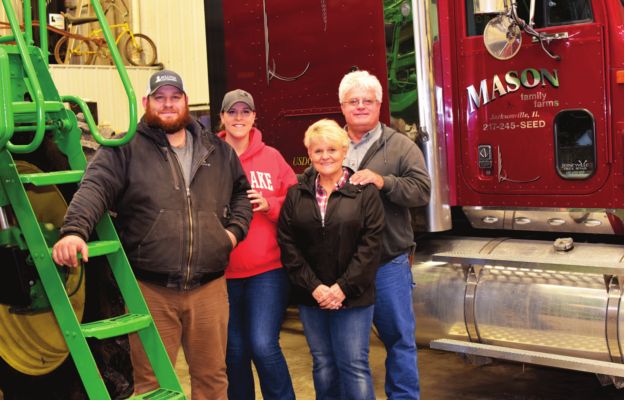
The
American Farm Bureau Federation conducted a national research poll
through Morning Consult in May 2019 that found a large majority of
farmers and farm workers say financial issues, farm or business
problems, and fear of losing the farm impact farmers’ mental health.
The
Farm Bureau’s poll results were similar to those found in a separate
study by Josie Rudolphi, assistant professor of agricultural safety and
health at the University of Illinois Urbana-Champaign.
“In
general we are seeing a lot of stress in the population and among
surveyed individuals, a high prevalence of positive screen for anxiety
and depression,” Rudolphi said. “We (also) observed an association
between anxiety and depression and non-financial stressors like time
pressures and interpersonal relationships (employees and family
members). This suggests we need to focus on mental health and wellbeing
of farmers all the time, not just when commodity prices are low.”
Rudolphi co-authored the 2018 “Depression, Anxiety and Stress Among Young Farmers and Ranchers: A Pilot Study,” which concluded:
“The
prevalence of depression and anxiety were much higher among young
farmers and ranchers compared to the general population. The average age
of farmers is increasing, creating a demand for younger farmers and
ranchers. As the industry becomes reliant on the young adult workforce,
reducing stress and improving mental health should be a priority.”
National
Farmers Union President Roger Johnson agrees with all of it – there’s a
perfect storm of financial, political, environmental and emotional
factors that are making it increasingly tough to keep the family farm
viable.
“Farmers of
all sizes are facing challenges in this country right now because most
prices are well below the cost of production,” Johnson said. “But not
every solution is right for every farmer. There’s sometimes this
sentiment that all family farmers look and act alike, and that’s not
really true.”
And despite the gloomy outlook, Johnson and many in his line of work have one vital quality that keeps them going.
“I
don’t know any farmers that aren’t optimists,” Johnson said. “If they
aren’t optimists I don’t know how they’d ever survive in the business.”
David Blanchette is a freelance writer from Jacksonville and is also the co-owner of Studio 131 Photography in Springfield.


