Chances are good that if you serve on a nonprofit organization’s board, your fellow board members look and act a lot like you. That might be a problem, according to a Springfield-based initiative that is seeking to make those boards more reflective of the communities that they serve.
The Building Board Diversity (BBD) initiative was started one year ago to study and begin to remedy the “sameness” that pervades many nonprofit boards. Homogeneous board meetings full of well-meaning citizens often contain limited world views and experiences that may not represent the lives, outlooks and needs of the people the board hopes to serve.
“It’s not diverse as far as color, age, economic status, vocation. They all look like each other, they are from the same parts of town,” said Sarah Tapscott, director of statewide partnerships for Forefront and one of the BBD organizers.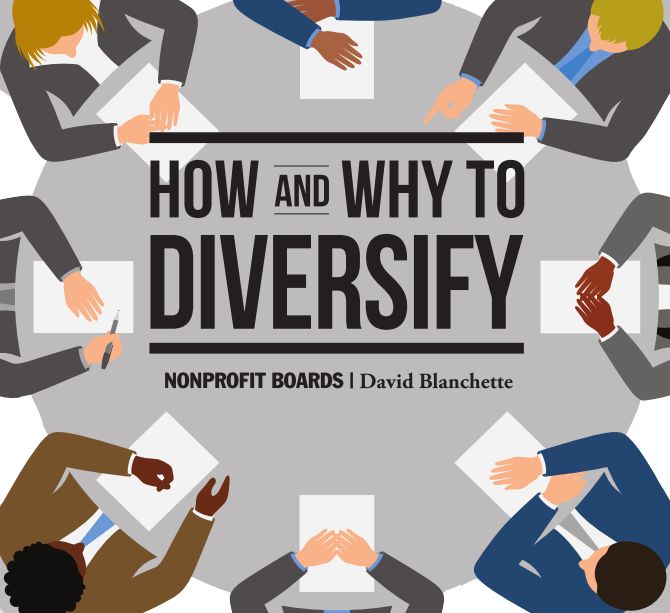
Forefront is the nation’s only statewide membership association for nonprofits and grant makers, and late in 2018 Forefront and United Way of Central Illinois began assembling leaders from the African-American community and nonprofit executive directors to discuss how to build diversity on local nonprofit boards. Those first meetings resulted in the formation of the Springfield BBD initiative, which began to provide executive directors with the tools to assess their current board makeup and recruitment practices so they could increase their board member diversity.
Raychel Yokem, a member of the Corporate Social Responsibility Committee at Horace Mann, agreed to chair the BBD effort.
“Culturally we are all a bit different and if you don’t have that perspective at the table, you are constantly going to miss it,” Yokem said. “There is always going to be a disconnect between the community that you serve and the work that you are trying to do if you don’t have that diversity.”
United Way of Central Illinois president and CEO John Kelker has been one of the driving forces of the BBD effort, along with Tapscott and Yokem.
“You don’t know what you are missing until you get other people’s opinions at the table. To have a little bit of disagreement, a little bit of devil’s advocate, just makes every conversation richer,” Kelker said. “If everybody looks alike and thinks alike, it’s a really boring conversation. Every one of us brings in a different circle of influence. So it’s even good to say, ‘Who else would be good to be our next board member?’”
“They are doing for, rather than doing with.”
To
find out where you’re going, you need to see where you are. No one had
done a comprehensive look at existing board diversity in the Springfield
area, so that’s where the BBD organizers decided to start. They
developed a short survey to gauge the current board makeup of local
nonprofits, as well as the resources that current and future board
members might need in order to be successful in the boardroom.
The
results of that survey are coming in much more slowly than expected,
Tapscott said, so it may be some months before a true picture emerges of
current Springfield area board member demographics. In the meantime,
BBD has been working with community leaders, including Dr. Wesley
McNeese of the SIU School of Medicine, to get a feel for the current
situation.
“I
have told the group that the lack of racial board diversity is stark in
this community, largely because boards are not trying to accomplish
it,” McNeese said. “The effects are that many such boards of
organizations are operating for and among underrepresented groups, such
as African-Americans, Latinos, Native American Indians, Alaskan Natives
and Pacific Islanders, without having valid input from those groups.”
“They are doing for, rather than doing with,” McNeese said.
“The course of action is rather straightforward – get more racial diversity on the boards.”
Organizers
are prepared for the survey results to show a critical lack of board
diversity, and that will give them a goal to work toward.
“I
hope that no one would be ashamed or think that they have done a
horrible job,” Tapscott said. “Just being aware of the situation and
being willing to move forward, make some sort of conscious effort, is a
huge step.”
The United Way’s Kelker sees a lot of opportunity even if the survey results are dismal.
“When you have a bad season you can become the most improved,” Kelker said.
Several
organizations are trying to diversify their boards, but are doing so by
asking familiar people to serve. As a result, you often see the same
person serving on multiple boards.
“You
find a good African-American board member and you ask them to serve on
two or three boards, and then you burn them out,” Kelker said.
Yokem serves on two nonprofit boards and was recruited by both of them.
“As
an African-American person, I had never known anyone on a board. No one
asked me to sit on a board, no one in my family talked about sitting on
a board, nor did my circle of friends,” Yokem said. “Now, with the same
people serving on multiple boards, it creates a concern that I didn’t
hear about until the age of 35.”
“The reality is that we need them all.”
The
BBD has two main goals – to provide training and resources to ensure
that board leadership is a reflection of the community, and to train
prospective new board members so they are equipped with the knowledge
and understanding to be effective. Through Forefront, the BBD continues
to hold seminars about diverse board building, unconscious biases,
current board culture and what qualities, skills, life experiences,
contacts and professional and personal backgrounds would be most helpful
to an organization.
They also want people to realize what the term “diverse” means.
“Right
now nonprofits are literally thinking black and white, and that’s where
we need to change the conversation,” the Forefront’s Tapscott said.
“That’s a huge problem, because it eliminates all the other minority
groups because they are not even being thought of. They’re thinking they
just need a few African-Americans across the table, maybe a younger
person, and then they’re diverse.”
BBD
chair Yokem said having diversity on a nonprofit board doesn’t mean you
have to give up having people who can provide a specialized service to
the board.
“Get those
bankers and accountants and whoever that you need, but you also need
people that are passionate about the people that you are serving and
that can open up other doors for you,” Yokem said.
“We know the board is not going to do the best work without the person
who has the big enough wallet to kind of throw money at certain things.
The legal person, the HR person. The reality is that we need them all.”
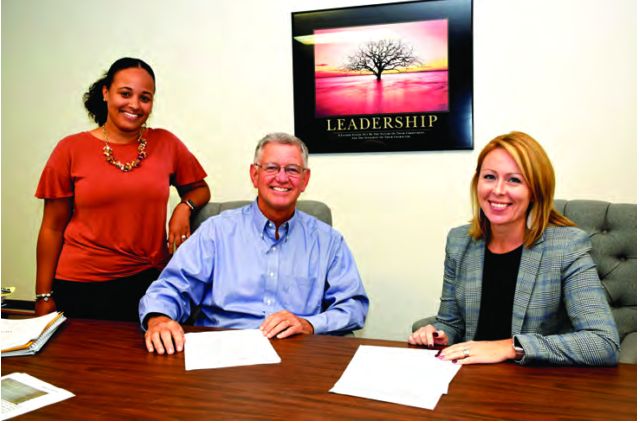

Having a diverse board may also mean establishing a new meeting schedule.
“If
you meet at 8 a.m., 11 a.m. or 3 p.m., you’re not going to get a
schoolteacher, you won’t get somebody that works for the state of
Illinois, you’re only going to get the salaried employees that can come
and go,” Kelker said. “Some executive directors will say, ‘Well, I’ve
had a long day, why would I want to have a board meeting at 6 p.m.?’ We
as executive directors need to say that our days go longer because the
board meetings need to be held when the right board members can be
there.”
Tapscott said
the BBD wants to actively recruit new potential board members to help
nonprofits that want to become more diverse, and if enough candidates
are identified, some matchmaking could be done.
“We
want to get the organizations and the potential board members together
in a room, like a job fair only for potential board members, so they can
see what’s available and what catches their interest,” Tapscott said.
“Then the executive directors can follow up with people who are
interested to see if they would be a good fit for the organization.”
“Have conversations with people who don’t look like you.”
Representatives
of nonprofit boards who are interested in diversity gathered Oct. 22 in
Springfield for the day-long seminar, An Introduction to Systemic
Racism, taught by Crossroads Anti-racism Training. Participants had
frank and open discussions about the diversity culture on their boards
and what might be done about it.
Carol Harms is the executive director of Senior Services of Central Illinois.
“I
think we are improving on our diversity,” Harms said. “We look at the
ages of the individuals on our board as well as their race. That’s why
I’m hoping to learn more and get our board more actively involved to see
how we can better represent the community through our board and our
programs.
“Because our
organization is open to the public, we want anyone to feel safe and
welcomed,” Harms said. “In order to do that, you want your board to look
and be diverse so you can bring all different aspects and ideas and
thoughts to the table.”

Jennifer Duprey works with Harms as Senior Services of Central Illinois’ director of nutrition and RSVP services.
“I
feel you should have conversations with people who don’t look like you
and be open to learning a little bit more to make it easier,” Duprey
said.
The Outlet is a
mentoring organization for fatherless youth, and board member Justin
Blandford said they want to keep making progress with their board
diversity.
“Building a
diverse board is an important, early step for nonprofit organizations
who want to fulfill their mission in the community,” Blandford said.
“These nonprofit boards have to continually develop so they are
listening to the audiences they are serving, and making sure that the
biases we all have are being realized and understood. That the power
that goes into racism is not infiltrating that board.”
Springfield’s
west-side Hope Church is a primarily white congregation, and Lisa
Miller is a member of the church’s racial reconciliation group.
“How
can you become more diverse if you don’t know what that means? You
can’t just say ‘everyone is welcome’ and then everyone shows up,” Miller
said. “Our goal is to find out how we can be good neighbors to our
community. And you can’t do that if you don’t have awareness of people
who are different from you.”
“Go outside of your traditional comfort zone.”
There’s
room to improve overall diversity in Springfield, according to the
Sangamon County Citizen Survey, a recent sampling of 8,000 households.
The project measured residents’ assessments of the quality of life in
Sangamon County.
The
survey found that 6% of respondents described race relations in the area
as very good, 65% fairly good, 25% fairly bad, and 4% very bad. There
were 35% who felt that everyone in their community is treated equally,
but that figure dropped to 32% for nonwhites and 28% for those surveyed
who were between 18 and 34 years of age.
There
were 46% of nonwhite respondents who reported that being a person of
color is a large barrier to career success in Sangamon County.
The
Citizen Survey is a collaborative effort between the UIS Center for
State Policy and Leadership, the United Way of Central Illinois and the
Community Foundation for the Land of Lincoln. Community Foundation
president and CEO John Stremsterfer said his organization is actively
working to diversify its board.
“For
board members we have kind of a matrix that helps to lead our work. It
has a number of categories and boxes to check to insure we have a group
on our board that is as representative of the community as it can be,”
Stremsterfer said. “In addition to race and ethnicity we have gender,
age range, and we serve Sangamon and adjacent counties so we look at
geography, Springfield versus rural Sangamon County.
“I
think you have to be very intentional and sometimes go outside of your
traditional comfort zone and social networks of people that are already
on your board,” Stremsterfer said. “To do that you also have to keep in
mind the professional background and all of those other factors.”
The Springfield area is not alone regarding a dearth of board diversity. A Philanthropy News Digest article
from February 2019 cited a Koya Leadership Partners survey of board
members at more than 100 nonprofits. The report “found a significant gap
between respondents’ intention to increase diversity and the actions
they’ve taken to do so,” according to the article.
A
recent BoardSource study, “Leading with Intent,” found that 90 percent
of nonprofit CEOs are white, as are 84 percent of board members, up from
89 percent and 80 percent respectively from about three years ago.
The
BoardSource study also showed that 65 percent of CEOs and 41 percent of
board members were dissatisfied with their board’s diversity, but only
20 percent considered fixing it a top priority.
BBD wants to turn those numbers upside down in central Illinois.
“I think the biggest win that we’ve had so far is we’re asking nonprofit boards to have the conversation, and that
they are,” said BBD chair Yokem. “To me, that’s big. Because just by
doing that, on my own personal board, Big Brothers Big Sisters, I’ve
seen improvements.”
Yokem
also noted that the CEO of Horace Mann took the PwC CEO Action Pledge,
and that means “the company will commit to administering continued
unconscious bias education, create space for difficult conversations,
externally share outcomes and report on diversity plans to the board of
directors,” she said.
BBD collaborator McNeese said he’s encouraged by the local commitments to board diversity he’s seen so far.
“I
believe Springfield is ready to embrace the concept of true board
diversity, but will need to be educated about the problem, plus
groundwork needs to be done so that boards will be prepared to receive
members of different races and have some idea about how to recruit such
individuals,” McNeese said. “Boards need to get past the idea that only
those who look like them, or come from their particular group, have
something of value to offer or that people from underrepresented groups
are inferior and have nothing to give in the way high level leadership.
“Nothing will be different five, ten or more years down the road unless we begin to work on the problem today,” McNeese said.
United Way CEO Kelker said true board diversity will be an uphill struggle, but he hopes Springfield will see it through.
“If you bang your head against the wall enough times, do you just stop trying?” Kelker said. “I hope the answer is no.”


